.jpg)


Posted by:
Category:
Comments:
Post Date:
Cable Management in High-Temperature Zones: Why GI Trunking Outperforms PVC in Outdoor GCC Projects
30 Second Summary
- Extreme Heat Performance: PVC trunking warps and buckles in 50°C+ GCC temperatures, while GI trunking remains structurally stable.
- UV Resistance: High UV indices in the Gulf cause PVC to become brittle and shatter; Hot Dip Galvanized (HDG) steel resists photo-oxidation.
- Mechanical Integrity: GI trunking provides superior protection against sandstorm abrasion and physical impact (IK ratings).
- Long-Term Value: While PVC is cheaper initially, GI trunking prevents costly replacements and ensures compliance with DEWA and industrial standards.
Introduction
Let’s be honest. In the construction world, we often look for the quickest, cheapest path. But when the mercury hits 50°C (122°F) in Riyadh or Abu Dhabi, "cheap" becomes expensive very fast. If you are designing infrastructure cabling companies' projects, you know that the material choice dictates the lifespan of the entire cable infrastructure.
The debate of GI Trunking vs PVC Cable Management isn't just about aesthetics. It is about the fundamental physics of materials. Whether you are dealing with a rooftop solar farm or an industrial plant in Jebel Ali, the environment is actively trying to destroy your cable management system.
The "Thermal Expansion" Problem: Why PVC Warps in 50°C Heat
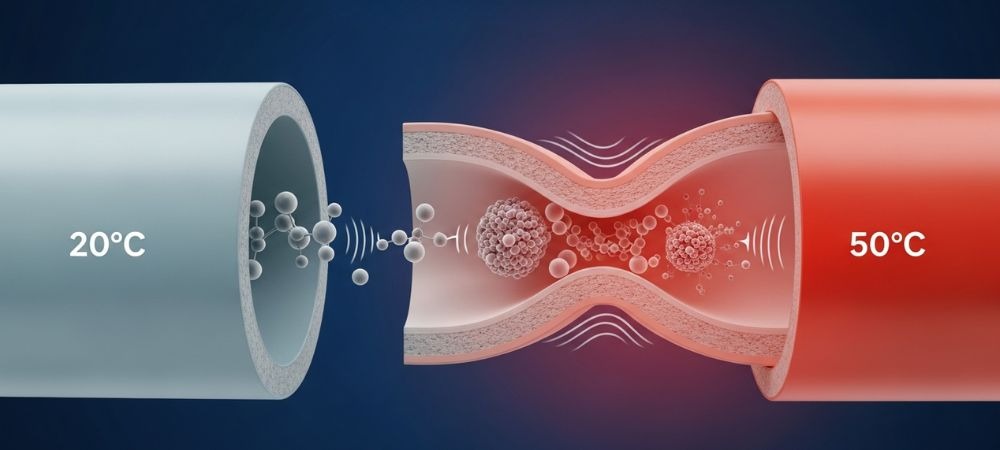
Have you ever seen a rooftop PVC cable trunking run that looks like a snake?
That isn't a design choice; it’s a failure.
The reason is simple: The Physics of Heat.
In the GCC, ambient temperatures of 50°C are common. However, the surface temperature on a dark rooftop or near industrial machinery can soar to 70°C or higher. This is where PVC cable management begins to fail.
The Expansion Coefficient Math
PVC has a high Coefficient of Linear Thermal Expansion, typically between $0.06$ and $0.08\ mm/m/°C$. Compare that to steel (used in GI trunking), which sits at approximately $0.012\ mm/m/°C$.
What does this look like in the real world?
Imagine a 10-meter run of trunking. Between the cool of a 25°C night and the 75°C heat of a midday sun (a 50°C delta), PVC will expand by nearly 4 centimeters. Steel, however, only moves about 6 millimeters.
When PVC expands that much with nowhere to go, it buckles. Lids pop off. Seals break. Once the lid pops, your electrical cable is exposed to direct sunlight and moisture. This is why GI trunking benefits far outweigh the initial cost savings of plastic in high-temperature cable protection.
UV Degradation: The "Brittleness" Factor
The sun in the Gulf is a relentless engine of destruction.
With a UV index often exceeding 11+, the radiation levels are among the highest globally.
PVC is a polymer, and UV radiation is its natural enemy.
Through a process called photo-oxidation, UV rays break down the molecular bonds of the pvc. You might notice "chalking, where the trunking turns a powdery white. This is the first sign of death. Within two years, that once-flexible plastic becomes as brittle as an eggshell.
The Zinc-Carbonate Defense
Contrast this with gi cable trunking. Steel is inherently immune to UV. Furthermore, the zinc coating on Hot Dip Galvanized steel reacts with the atmosphere to form a zinc-carbonate patina. This layer actually hardens and becomes more protective over time when exposed to the elements.
When it comes to outdoor cable management, you want a material that gets tougher with age, not one that shatters at the first touch of a maintenance technician's ladder. For any outdoor electrical installation GCC firms undertake, the high temp cable inside must be shielded by a material that won't crumble.
Mechanical Strength & Sandstorms
In the UAE and Saudi Arabia, wind isn't just air; it’s an abrasive.
Sandstorms act like high-velocity sandpaper.
Outdoor cable management GCC projects must withstand constant abrasion.
GI trunking offers a superior IK Rating (Impact Protection) compared to plastic. During a heavy sandstorm, flying debris or even high-wind pressure can crack a UV-weakened PVC duct.
Durable Cable Management Systems
An electrical trunking system made of steel provides a rigid cage for your wiring. It resists the "sandblasting" effect of the desert. If you are sourcing from electrical cable suppliers in Dubai, ensure your cable trunking can withstand the physical rigors of an industrial site.
"In coastal industrial zones like Dammam or Jebel Ali, the combination of salt air and sand makes high-temperature cable protection a mechanical challenge as much as a thermal one."
Selecting the Right GI Grade: Pre-Galv vs. Hot Dip
Not all GI trunking is created equal.
This is a common mistake made by junior procurement officers.
They see "GI" and assume it is outdoor-ready.
Wait! There is a massive difference.
- Pre-Galvanized (Class 3): This is steel that is galvanized before it is cut and formed. The edges are often left raw and vulnerable. This is strictly for cable management in Dubai interiors, think malls or AC warehouses.
- Hot Dip Galvanized (Class 4): This is the gold standard for GCC infrastructure projects cable solutions. The entire finished trunking is dipped into molten zinc. Every corner, edge, and weld is sealed.
For outdoor cable management, Class 4 HDG is non-negotiable. It provides the corrosion resistance needed for the humidity of the coast and the heat of the desert. If you are looking for industrial cable protection solutions, always specify BS 4678 Part 1 Class 4 standards.
Installation Tips for GCC Contractors
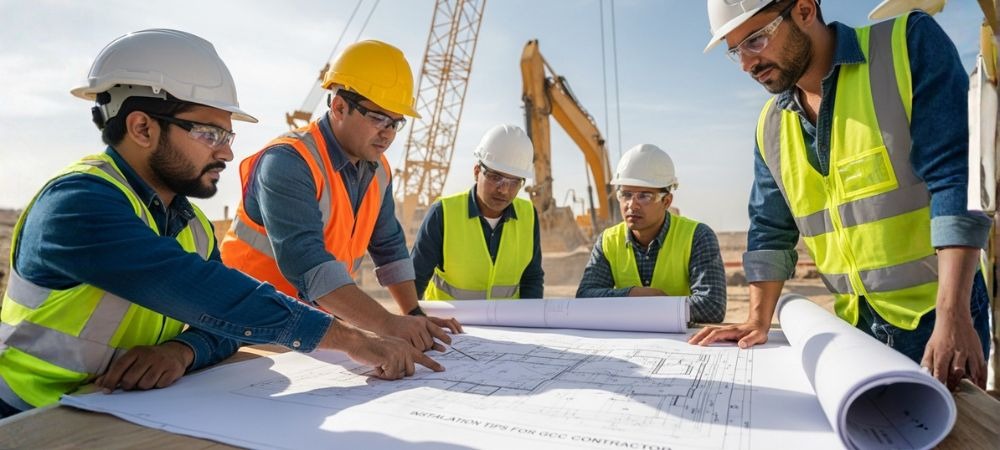
So, you’ve chosen the right durable cable management systems.
Now, how do you install them to last 20 years?
Proper installation is just as vital as the material itself.
1. Earthing Continuity
Safety first. Unlike PVC cable management, steel is conductive. You must use copper braids at every joint to ensure a continuous earth path. This is a critical requirement for DEWA and ADDC compliance.
2. Manage the Dust
The desert is fine-grained. Use IP65-rated gaskets at all trunking joints. This prevents the "dust trap" effect, where sand builds up inside the electrical trunking and creates a fire hazard by insulating the cables and trapping heat.
3. Support Spacing
Because high-temperature cable protection involves heavy steel, your support brackets must be spaced correctly. Follow the manufacturer's guidelines to prevent sagging, which can lead to water pooling during the rare but intense winter rains.
Compliance and Standards (The Expert Edge)
Engineers don't just buy products; they buy compliance.
While PVC ducts often fall under IEC 61084 (General Purpose),GI trunking for industrial use follows BS 4678. This British Standard specifically addresses the mechanical impact and corrosion resistance required for harsh environments.
In GCC infrastructure projects cable solutions, adhering to these standards is the difference between a project that passes inspection and one that requires a total "rip and replace." Always verify that your infrastructure cabling companies are using certified gi cable trunking that meets local utility (DEWA/ADDC/Aramco) regulations.
The Cost-Benefit Reality
Is GI trunking more expensive than PVC upfront?
Yes. Usually by a significant margin.
But let's look at the Lifecycle Cost (LCC).
- PVC Scenario: Low initial cost + replacement labor in year 4 + new material in year 4 + potential fire risk from exposed wires.
- GI Scenario: Higher initial cost + zero maintenance for 15+ years.
For cable management in high-temperature zones, the "cheap" option is a ticking time bomb. High-quality heat-resistant cable channels made of steel are an investment in the building's uptime.
Conclusion
Don't let your project fall victim to the sun.
Choosing GI Trunking vs PVC Cable Management is a decision that defines the reliability of your electrical system. In the harsh GCC climate, PVC is a temporary fix. GI trunking is a permanent solution.
By prioritizing high-temperature cable protection, you ensure safety, compliance, and long-term savings. Whether you're an engineer or a contractor, the choice is clear: Metal beats plastic when the heat is on.
Visit GoSwitchgear today to explore our durable, DEWA-approved GI trunking and cable management systems for your next outdoor project."
FAQs
Q: Can I use PVC trunking outdoors if it is UV-stabilized?
A: While UV-stabilized PVC lasts longer than standard plastic, it still suffers from the high thermal expansion coefficient of polymers. In the GCC, even stabilized PVC will eventually warp and lose its seal in 50°C+ heat.
Q: Is Pre-Galvanized (GI) okay for outdoor use in dry desert areas?
A: It is risky. At the same time, it may not rust as fast as in coastal areas, but the humidity at night in the desert can still cause "white rust" on the unprotected edges of Pre-Galv trunking. Hot-dip galvanized is always recommended for outdoor cable management.
Q: What is the main benefit of GI over PVC for industrial sites?
A: Beyond heat resistance, it is mechanical strength. In industrial zones, trunking is often subjected to accidental impacts. GI trunking protects the electrical cable inside from being crushed, whereas PVC would simply shatter.
Q: Where can I find ADDC/DEWA-approved GI trunking?
A: You should look for reputable cable trunking manufacturers in the UAE who provide mill test certificates and compliance documents for BS 4678.
Share this post

Related
Posts
A Guide to Choosing AC to DC Converters for UAE & GCC Electrical Systems
Master AC to DC converters with this comprehensive guide for engineers in the UAE & GCC. Learn selection, installation, and...
A Guide to Drill Machine Prices in the UAE for Technical Professionals
Find the best drill machine price in UAE. Our 2026 guide helps contractors and engineers choose the right corded, cordless,...
A Professional’s Guide to Choosing AGM VRLA Batteries in the UAE Climate
Discover why AGM VRLA batteries are the superior power solution for UPS, solar, and industrial systems in the UAE. Get...
How to Choose the Right Lithium Ion Battery Charger for UAE & GCC Projects
Discover how to select the right lithium ion battery charger for UAE projects. This guide covers specs, BMS integration, and...
.jpg)