.jpg)


Posted by:
Category:
Comments:
Post Date:
Why Your Circuit Breaker Keeps Tripping and How to Fix It
30 Second Summary
- A breaker usually trips to stop overloads, short circuits, ground faults, overheating, or equipment failure before damage or fire can happen. NFPA reports that U.S. fire departments responded to an estimated 32,620 home fires per year involving electrical distribution and lighting equipment in 2015–2019.
- Common warning signs include flickering lights, warm outlets, buzzing sounds, burning smells, and a repeatedly tripped circuit breaker. ESFI identifies these as signs of overloaded or unsafe electrical systems.
- Some fixes are simple, like unplugging devices, redistributing loads, and isolating one faulty appliance. But a hot circuit breaker, a burning odor, or a main circuit breaker tripped event should be treated as a serious warning.
- If the breaker trips again after basic troubleshooting, do not keep resetting it. Find the cause first, then repair the load, wiring, or breaker before restoring power. Schneider Electric warns that equipment should be inspected after a fault before re-closing the device.
When people search why circuit breaker trip, they usually want one answer. But the truth is a little bigger. A breaker trips because it detects a condition that could damage wiring, overheat equipment, or start a fire. In many cases, the trip is a warning you should take seriously, not something to bypass or ignore. NFPA and ESFI both emphasize that repeated tripping, warm devices, buzzing, and overload symptoms can point to dangerous electrical conditions.
What Your Breaker Is Really Trying to Tell You
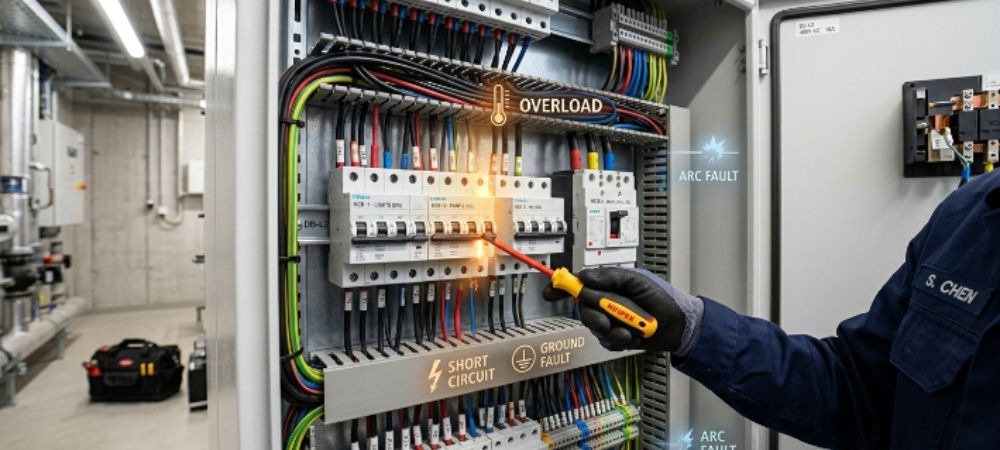
A circuit breaker is designed to open the circuit when current rises beyond a safe limit or when it senses a dangerous fault. In simple terms, it sacrifices convenience to protect wiring, outlets, appliances, and people. That is why when does a circuit breaker trip is such an important question. It trips during overloads, short circuits, ground faults, arc faults, and sometimes because of internal breaker failure or poor connections. Adjustable industrial breakers may also trip based on configured protection thresholds, which is where circuit breaker trip settings come into play. Schneider Electric notes that electronic trip units can be adjusted for specific protection values, but these settings are intended for trained personnel and proper system coordination. For anyone comparing breaker types in larger systems, understanding MCB vs MCCB is essential because each serves a different protection role depending on current rating, interruption capacity, and application.
The Frustrating Truth: Most Trips Come Down to a Few Core Causes
If your circuit breaker keeps tripping, start by thinking about what changed recently. Did you add a portable AC unit? A microwave? A heater? A new espresso machine? Did the trip begin after rain, renovation work, or moving an appliance? These details matter because overloads and equipment faults usually show a pattern.
ESFI warns that overloaded circuits often show early signs before a full failure, including dimming lights, buzzing outlets, discoloration, and repeated breaker trips. NFPA research also shows that electrical distribution and lighting equipment accounts for a large share of electrical fire losses in homes.
Overload: The Most Common Cause Nobody Notices at First
Overload happens when a circuit is asked to deliver more current than it is designed to carry. The breaker trips before the wires overheat. That is exactly what it is supposed to do.
This is especially common in kitchens, laundry areas, garages, and home offices. Plug enough high-demand devices into the same branch circuit and the breaker may trip every time they run together. A classic example is space heater plus hair dryer. Another is toaster oven plus kettle plus microwave. It adds up fast.
If you are asking why does my circuit breaker keep tripping, overload should be your first suspect. ESFI specifically warns against plugging major appliances into extension cords or multi-outlet converters and recommends using dedicated wall receptacles for high-demand equipment.
The Sneaky Appliance Problem Most People Miss
Sometimes the panel is fine. The wiring is fine. The real issue is one bad appliance.
That is why how to find what is tripping my circuit breaker is such a common search. The fastest practical method is isolation:
If the breaker trips only when one item operates, that item is the lead suspect. Common offenders include space heaters, refrigerators with failing compressors, vacuum cleaners, microwaves, older window AC units, and anything with a damaged cord or heating element.
A breaker that trips only when one appliance starts often points to a motor or compressor issue. A breaker that trips after several minutes may signal overheating, excessive draw, or internal failure in the equipment.
Fluke’s maintenance material flags breakers tripping without clear overload signs as a potential warning sign of a hidden electrical problem. Schneider Electric also notes that loose hardware and wiring are common causes when equipment shows unusual noise or related performance issues.
So if circuit breaker tripping without load seems to describe your situation, do not assume the breaker is “just sensitive.” It may be responding to a hidden wiring defect, a shared neutral issue, insulation damage, or a deteriorating breaker mechanism.
The Bigger Scare: When the Main Breaker Trips
A main circuit breaker tripped event is more serious than a single branch circuit trip because it takes down the whole panel. When the main circuit breaker keeps tripping, the cause can be high total load, panel overheating, utility-side issues, internal panel faults, or a major downstream problem.
This is where caution matters most.
The causes of main circuit breaker tripping can include:
- too many large loads running at the same time
- loose or corroded terminations
- a failing main breaker
- service conductor issues
- panel damage
- a major short or ground fault downstream
If the entire house goes dark and the main trips again after reset, stop troubleshooting at the DIY level. That is a licensed electrician job. A main breaker protects the entire service, so repeated trips should never be brushed off as “one of those things.” In larger distribution setups, a properly selected MCCB circuit breaker is often used as the main protective device because it offers higher breaking capacity and adjustable protection features.
Why HVAC and AC Loads Trip Breakers So Often
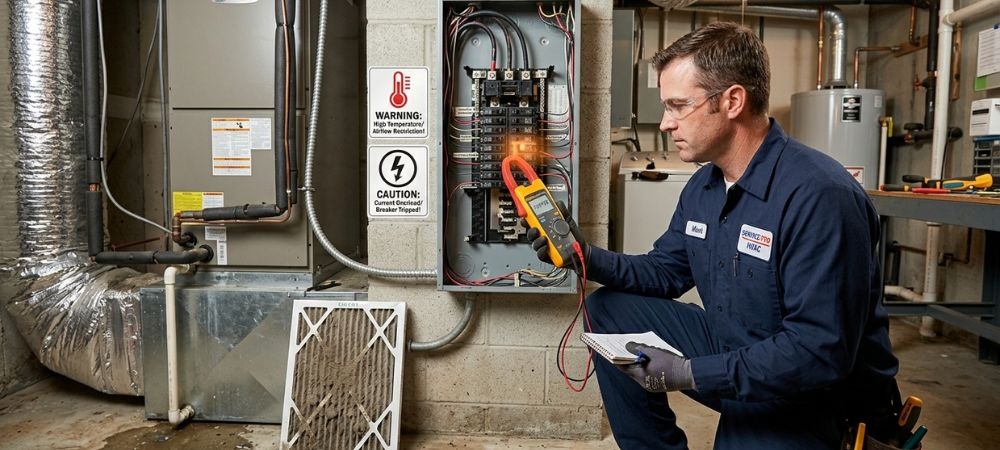
Summer creates a perfect storm for nuisance trips. Heat increases electrical demand. Compressors draw hard at startup. Dirty filters and struggling motors run hotter and longer. That is why ac circuit breaker tripping is one of the most common seasonal complaints.
If your AC breaker trips:
Check the filter,
Inspect for obvious damage,
look for water near the air handler,
and note whether the trip happens at startup or after the system runs.
Startup trips may point to compressor or capacitor problems. Trips after extended runtime can suggest overheating, airflow restriction, failing motors, or excessive current draw. HVAC equipment should be diagnosed carefully because repeated resets can stress components and hide a serious fault.
Conclusion
A breaker trip is not random bad luck. It is a protective response. If your circuit breaker keeps tripping, the safest path is to identify whether the cause is overload, appliance failure, moisture, damaged wiring, overheating, or a failing breaker. A one-time trip may be minor. Repeated trips are not. Take the warning seriously and troubleshoot safely. And fix the cause, not just the symptom. Whether you are dealing with residential protection or industrial low-voltage switchgear applications, the right breaker choice and proper coordination make all the difference.
To explore high-quality Circuit breakers, visit Goswitchgear.
FAQs
1. Why does my circuit breaker keep tripping with nothing plugged in?
If you are seeing circuit breaker tripping without load, the issue may be in the wiring, a hardwired device, a loose connection, moisture intrusion, or the breaker itself. It can also point to insulation damage or an intermittent fault that only appears under certain conditions.
2. Why is my breaker hot but still working?
A breaker can feel warm under load, especially if nearby breakers are heavily loaded too. But if you are asking what causes a breaker to get hot, the common causes are overload, loose connections, internal wear, or a defective breaker. A truly hot circuit breaker is a warning sign and should be inspected.
3. When does a circuit breaker trip?
When does a circuit breaker trip? It trips when current or fault conditions exceed safe limits. That includes overloads, short circuits, ground faults, arc faults, and some equipment failures. Adjustable breakers in commercial systems may also trip according to engineered circuit breaker trip settings.
4. What should I do after a tripped circuit breaker?
Turn the breaker fully OFF, then back ON after unplugging devices on the affected circuit. Reconnect loads one at a time. If the tripped circuit breaker trips again, stop and identify the cause before resetting it again. Schneider Electric advises inspecting the downstream fault before re-closing equipment after an electrical trip.
5. Why is my AC circuit breaker tripping?
Ac circuit breaker tripping often points to compressor startup issues, a failing capacitor, poor airflow, dirty filters, water intrusion, or an overloaded circuit. If it trips repeatedly, have the HVAC equipment and circuit checked together because the fault may be electrical, mechanical, or both.
6. What does it mean when the main breaker trips?
A main circuit breaker tripped event means the protection for the whole panel opened. If the main circuit breaker keeps tripping, possible causes include excessive total demand, a major downstream fault, loose service connections, internal panel issues, or breaker failure. This usually requires professional diagnosis.
7. Can I just replace the breaker with a bigger one?
No. Installing a larger breaker without redesigning the circuit can allow wires to overheat before protection operates. The breaker size must match the conductor size, equipment rating, and system design.
8. Is it normal if my circuit breaker trips randomly?
What seems like circuit breaker trips randomly is usually an intermittent fault. Temperature changes, vibration, moisture, loose wiring, and aging devices can all create irregular trips. The pattern may be hard to see, but there is usually a real cause.
9. How do I know if an appliance is the problem?
That is where how to find what is tripping my circuit breaker becomes practical. Unplug everything, reset the breaker, then reconnect and run each appliance one by one. If the breaker trips only when one device operates, that appliance is likely faulty.
10. Are breakers and fuses the same thing?
They serve the same protective purpose, but they do it differently. Breakers trip and can be reset. Fuses melt and must be replaced. That is why educational pages about fuses and circuit breakers are useful for homeowners and maintenance teams comparing protection options.
Share this post

Related
Posts
Wire Ferrules Guide: Sizes, Color Codes, and Their Importance in Electrical Systems
30 Second SummaryWire ferrules protect stranded conductors, improve insertion into terminals, and support cleaner, safer, and more consistent terminations. Choosing the...
A Guide to Choosing AC to DC Converters for UAE & GCC Electrical Systems
Master AC to DC converters with this comprehensive guide for engineers in the UAE & GCC. Learn selection, installation, and...
A Guide to Drill Machine Prices in the UAE for Technical Professionals
Find the best drill machine price in UAE. Our 2026 guide helps contractors and engineers choose the right corded, cordless,...
A Professional’s Guide to Choosing AGM VRLA Batteries in the UAE Climate
Discover why AGM VRLA batteries are the superior power solution for UPS, solar, and industrial systems in the UAE. Get...
.jpg)