.jpg)


Posted by:
Category:
Comments:
Post Date:
Selecting the Right Cable Tray Widths for Your UAE & GCC Projects
Choosing the correct cable tray width is a foundational decision for any electrical installation in the UAE and wider GCC. A miscalculation here can compromise safety, budget, and future scalability. This guide offers practical, locally relevant insights for engineers, electricians, and procurement teams to make informed decisions.
Standard widths, ranging from a lean 50 mm for control circuits to a robust 900 mm for industrial power distribution, are critical for efficiency. Adhering to these standards simplifies everything from design and procurement to installation, ensuring your project in Dubai, Abu Dhabi, or across the region starts on a solid footing.
Matching Cable Tray Widths to Your Project
Choosing a cable tray width goes far beyond just making sure your cables fit. It's a strategic call that directly affects your budget, on-site safety, and how easily you can expand the system later. In the fast-moving construction scenes of Dubai and Abu Dhabi, nailing this detail early on saves a world of headaches and costly rework down the line.
The width is the primary factor that dictates how many cables a tray can hold and where it can be used. It's a core component of well-organized structured cabling systems, providing a solid pathway that supports cables without cramming them together. Overcrowding is a major red flag, especially given the high ambient temperatures we deal with in the GCC—it can lead to overheating, cable de-rating, and performance issues.
Standardized Widths for Regional Efficiency
In the UAE and across the GCC, cable tray widths are standardized for a good reason: efficiency. This uniformity simplifies everything from procurement to installation. You’ll commonly find widths starting at 50 mm for small-scale runs, like inside control panels, and scaling up to 900 mm or even 1200 mm for huge industrial sites that need to manage massive cable bundles.
This standardization means you can easily find all the matching accessories you need—bends, tees, reducers—from local suppliers like GoSwitchgear. That availability is a lifesaver for keeping projects on schedule and within budget, a critical factor for project managers in the UAE.
Common Applications for Different Width Ranges
Different jobs call for different tools, and the same goes for cable trays. Your choice of cable tray width really boils down to the number of cables, their size, and how much heat they'll generate. The harsh climate in the UAE and KSA makes proper heat dissipation a top priority.
50 mm – 150 mm: These smaller trays are perfect for low-voltage work. Think data cables, fire alarm systems, or control wiring inside a single machine. Their slim profile is great for navigating tight corners and confined spaces where IP ratings for dust protection are essential.
200 mm – 300 mm: These are the real workhorses on commercial projects. You’ll see them everywhere in shopping malls, office buildings, and light industrial facilities across the UAE. They hit that sweet spot of offering enough capacity for a mix of power and control cables without being overly bulky.
450 mm – 900 mm+: Now we’re talking heavy-duty. These larger trays are reserved for demanding environments like data centers, electrical substations, and major infrastructure projects. They are essential for handling thick power distribution cables, maintaining proper separation, and allowing heat to dissipate effectively, in line with IEC and local utility regulations.
A 2023 product catalog from a major UAE manufacturer confirms that standard widths of 50, 100, 150, 300, 450, 600, and 900 mm are widely available. Having these common sizes readily accessible helps keep pricing competitive and makes sourcing fittings much simpler—a huge advantage in our region's dynamic construction sector.
Here’s a quick-reference table to connect these standard sizes with their typical applications here in the GCC.
Common Cable Tray Widths and Their Applications in the GCC
| Standard Width (mm) | Equivalent Width (inches) | Primary Application in UAE/GCC Projects |
|---|---|---|
| 50 - 150 mm | ~2" - 6" | Low-voltage data, control circuits, fire alarm systems, CCTV networks. |
| 200 - 300 mm | ~8" - 12" | General commercial buildings, retail spaces, lighting and small power. |
| 450 - 600 mm | ~18" - 24" | Industrial facilities, data centers, main power distribution runs. |
| 750 - 900 mm+ | ~30" - 36"+ | Major infrastructure, substations, heavy-duty power cable management. |
This table should give you a solid starting point for most projects. The key takeaway is to balance your immediate needs with an eye toward the future. A well-sized tray doesn't just support today's installation; it gives you the breathing room for future upgrades, making it a truly smart investment in your electrical system's longevity.
Figuring Out the Right Cable Tray Width
Picking the right cable tray width for your project isn't about guesswork; it's a careful calculation that impacts safety, efficiency, and whether your system is ready for the future. Go too small, and you’re looking at overcrowded cables, a serious heat build-up, and poor performance—all major red flags, especially in the high ambient temperatures we see in the UAE. On the flip side, a tray that's way too big is just a waste of space and money.
The goal is to hit that sweet spot, and you get there by following a clear, methodical process.
The infographic below maps out this entire journey, from the first look at your needs to locking in the final specs.
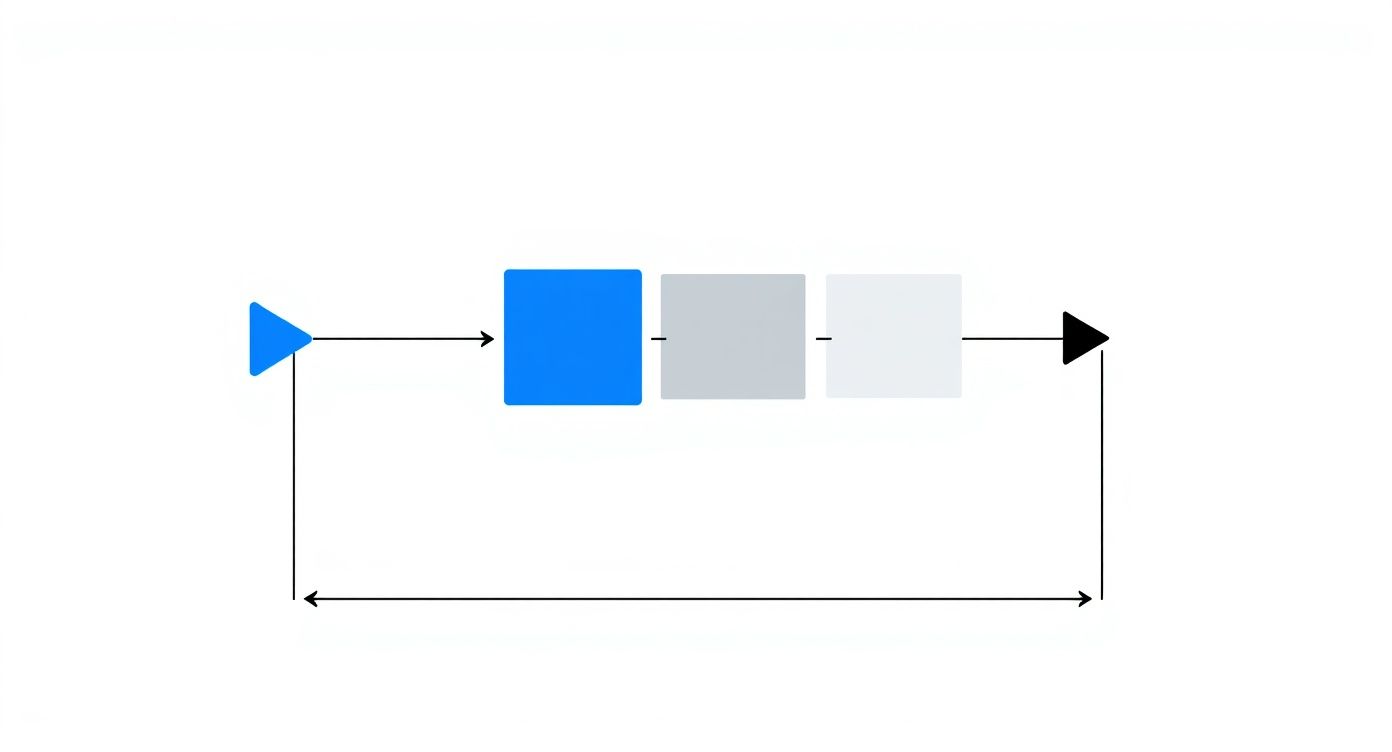
As you can see, the core idea is the same whether you're wiring a small control panel or a massive substation: calculate what you need now, then make room for what you'll need later.
Getting a Grip on Cable Fill Factor
The most important piece of this puzzle is the cable fill factor. Think of it as the percentage of the tray's internal space that you can safely fill with cables. It’s not about cramming in as many as you can—it's about leaving enough room for air to circulate and keep things cool.
Standards like the National Electrical Code (NEC) and IEC guidelines provide clear rules on this. The maximum fill factor changes depending on what kind of cables you're running:
- Power Cables: For trays loaded with multiple power or lighting cables, the total area of all the cables shouldn't take up more than 40% of the tray's internal cross-sectional area.
- Control & Signal Cables: When you're dealing with instrumentation and control circuits, you can often go up to a 50% fill factor. These cables generate significantly less heat.
- Mixed Cables: If you're running both power and control cables in the same tray (separated by a divider, of course), you must calculate the area for each type and ensure they adhere to their individual limits.
A Step-by-Step Guide to Calculation
Working out the width you need is a straightforward process. If you follow these steps, you'll be making a decision based on hard numbers, not just a hunch.
- List Every Cable: Start with a detailed schedule of every single cable that will pass through that section of the tray.
- Find the Diameters: Grab the manufacturer's datasheets (a credible source) and find the outer diameter (OD) for each cable on your list.
- Calculate the Area: For every cable, calculate its cross-sectional area. The formula is Area = π × (Diameter / 2)². Add all these areas together to get the total space your cables will occupy.
- Apply the Fill Factor: Now, take that total cable area and divide it by the correct fill factor (e.g., use 0.40 for power cables). This gives you the minimum internal area your cable tray needs.
- Choose Your Tray: With that minimum area calculated, you can now pick a standard cable tray width and depth from a supplier like GoSwitchgear that meets or exceeds your requirement.
Crucial Tip: The biggest mistake you can make is only planning for today. Never choose a tray that just barely fits your current needs. A system with zero spare capacity is a recipe for expensive and disruptive upgrades down the road, a common issue in fast-developing areas like Dubai.
Don't Forget to Plan for Future Reserve Capacity
To ensure your installation is future-proof, you must add a reserve capacity to your calculation. This is a non-negotiable best practice, especially for projects in a constantly growing commercial hub like Dubai or Riyadh.
- Standard Reserve: A 25% reserve capacity is the bare minimum we’d recommend for most commercial and industrial jobs.
- Strategic Reserve: For critical facilities like data centers or plants you know are going to expand, bumping that up to a 50% reserve is a smart, long-term investment.
This extra space is your ticket to easily adding new circuits, accommodating technology upgrades, or handling system expansions without the headache of installing brand-new cable trays. By building in this buffer from the get-go, you're creating a solid, adaptable electrical system that will pay for itself over the long haul.
Critical Factors That Influence Width Selection
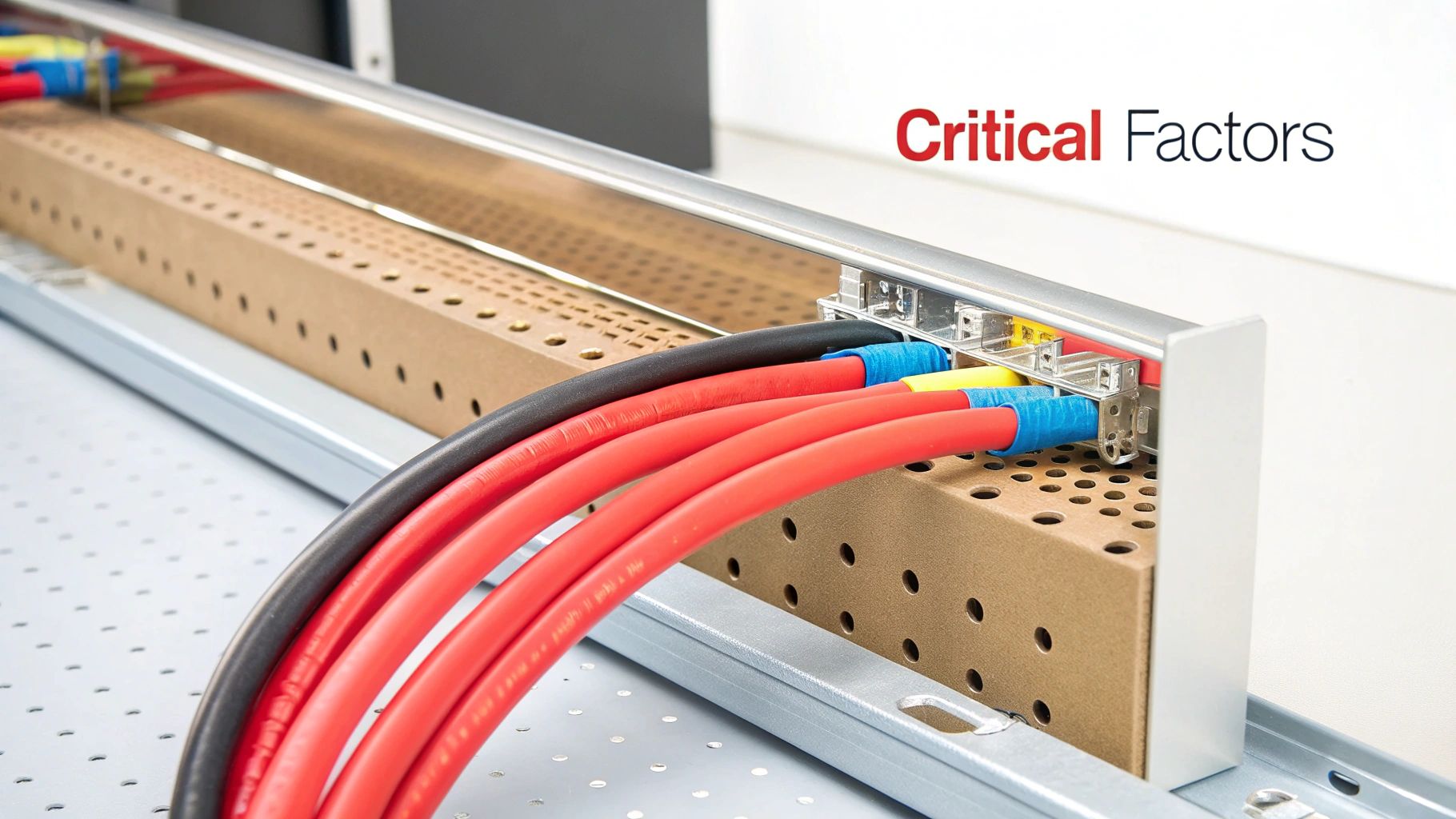
Figuring out your cable fill is a great starting point, but it's really only half the battle. To pull off a truly robust and compliant installation here in the UAE, engineers need to look at several other critical factors that will shape the final choice of cable tray widths. These elements are what separate a system that simply works today from one that is safe, reliable, and ready for whatever comes next.
Thinking beyond just the basic numbers is how you protect your project from all-too-common headaches like signal interference, performance issues from excessive heat, and even outright structural failures. Think of it as a practical checklist that elevates a design from "good enough" to genuinely optimized for demanding environments like Dubai and the wider GCC.
Cable Segregation and Interference
A classic scenario in any modern building is running hefty power cables right next to sensitive data or communication lines. Tossing these different cable types into the same tray without any separation is just asking for trouble. High-voltage power cables create an electromagnetic field (EMI) that can wreak havoc on data signals, leading to corrupted files, poor network performance, and general unreliability.
You have two solid options to prevent this mess:
- Use Separate Trays: This is the gold standard. Install completely separate trays for power and data cables, making sure to maintain the required distance between them as per local regulations.
- Use Dividers in a Wider Tray: When space is tight, a wider cable tray equipped with a solid metal divider is a fantastic solution. This barrier creates a physical and electrical separation for the different cable groups, all within a single tray system.
Opting for a wider tray from the get-go gives you the flexibility to add these dividers later, ensuring your structured cabling system performs exactly as it should.
Heat Dissipation in High-Temperature Environments
In the UAE's climate, managing heat isn't just a good idea—it's an absolute must for any electrical design. Cables naturally generate heat when they're under load. If that heat has nowhere to go, it will start to degrade the cable's insulation and increase the conductor's resistance, which means less efficiency and a much shorter lifespan for your cables.
This is where your cable tray width becomes a game-changer. A wider tray that isn't jam-packed with cables provides more surface area and allows for much better airflow around each individual cable. This natural ventilation is absolutely critical for getting that heat out effectively.
One of the most common installation mistakes we see is overfilling a narrow tray. It essentially traps all the heat, which can force you to de-rate your cables. This means they can no longer safely carry their full intended current, completely undermining the integrity of your electrical design.
By choosing a width that allows for some breathing room between cables, you are actively boosting the performance and longevity of the entire installation. That's a vital consideration for any project in the GCC.
Structural Load and Support Spacing
The width of a cable tray has a direct impact on its structural needs. It makes sense: a wider tray is built to carry a heavier load of cables, but all that extra weight has to be safely transferred to the building's structure. This means your support system needs to be up to the task. The relationship between width, load, and support spacing is well-defined by standards from organizations like NEMA (National Electrical Manufacturer’s Association) and IEC.
Here’s the breakdown of what you need to keep in mind:
- Increased Load: A 600 mm tray is going to carry a whole lot more weight per meter than a 300 mm tray. Your support system—the hangers, channels, and fixings—must be properly rated for this heavier load.
- Support Span: As the tray width and its load go up, you might need to reduce the distance (the span) between your supports. This prevents the tray from sagging or deflecting under the weight. Manufacturers provide detailed load tables that specify the maximum recommended support span for each tray, based on its width and load class.
Ignoring these structural details can lead to system failure, which is a serious safety risk. So, when you select a wider tray, you have to plan for a beefier support structure to go with it. Working with a knowledgeable supplier like GoSwitchgear ensures you get the right tray and the right support components for a safe, fully integrated system.
Navigating Local Standards and UAE Compliance
While international standards give you a great blueprint for cable management, getting a project across the finish line in the UAE means playing by the local rules. For any engineer or contractor here, understanding how global guidelines are adapted and enforced by regional authorities isn’t just a good idea—it’s mandatory for getting project approval and ensuring long-term safety.
In the UAE, choosing your cable tray widths is as much about regulatory compliance as it is about technical design. Local standards and the UAE Fire and Life Safety Code are the guiding forces. Sure, international frameworks like IEC 61537 provide a solid starting point, but authorities like DEWA (Dubai Electricity and Water Authority) and ADDC (Abu Dhabi Distribution Company) often have their own specific requirements, especially concerning fire safety, cable separation, and load capacity.
For instance, you'll typically see trays narrower than 150 mm used for low-voltage or communication cables in commercial buildings where you don't have a massive number of cables. On the other hand, wider trays—especially 450 mm and up—are often a requirement in critical facilities like hospitals, airports, and data centers. This ensures that heavy-duty power cables are kept safely apart from sensitive control circuits. The fact that local suppliers readily stock trays up to 900 mm tells you everything you need to know about the market's demand for serious cable management solutions in high-stakes environments. You can discover more insights about these global and regional standards on apextray.com.
The Role of International and Local Codes
The big international standard everyone starts with is IEC 61537. It covers all the basics of construction, testing, and performance for cable tray systems. But think of that as just the first layer. Local civil defense authorities and utility providers add their own rules on top.
The UAE Fire and Life Safety Code of Practice, for example, has very specific rules that can directly impact your choice of cable tray widths. These codes are all about making sure that if a fire breaks out, the electrical systems don't help spread smoke or flames. They also ensure critical circuits stay up and running for as long as possible.
Mandates for Critical Infrastructure
When you're working on a project classified as critical infrastructure—think hospitals, data centers, airports, or major industrial plants—the compliance requirements get even tougher. In these places, reliability and safety are everything.
- Mandatory Cable Segregation: To stop electromagnetic interference (EMI) and cut down on fire risk, regulations often require a physical separation between power, control, and data cables. This usually means you'll need wider trays with dividers or even completely separate, parallel tray runs.
- Enhanced Fire Resilience: These projects might specify fire-resistant cables, which tend to be bigger and heavier. This, in turn, demands wider and stronger cable trays to handle the extra weight and provide enough ventilation to keep things from overheating.
- Future Capacity Planning: It’s standard practice for local authorities and top engineering consultants in Dubai and Abu Dhabi to require significant spare capacity in cable trays—often up to 50%. This is to make sure that future upgrades or expansions don't mess with the integrity of the original installation.
Adherence to these local codes is non-negotiable. Partnering with a supplier like GoSwitchgear, who has deep knowledge of the UAE's regulatory landscape, is crucial. This ensures that the specified cable tray widths and materials meet all compliance requirements from DEWA, ADDC, and local civil defence authorities.
Ultimately, you have to be proactive to get through this complex regulatory maze. Consulting with local authorities early in the process and working with experienced local suppliers will make sure your project is not only compliant and safe but also built for reliability and future growth.
Getting it Right On-Site: Installation Best Practices for Different Tray Widths
A great cable tray design is one thing, but making it work on-site is where the real skill comes in. The installation techniques you'll need will shift depending on the cable tray widths you're working with. Each size brings its own set of challenges, and handling them correctly is what ensures safety, structural strength, and a system that lasts.
In demanding environments like Dubai and across the UAE, getting these on-site details perfect isn't just a goal—it's a necessity.
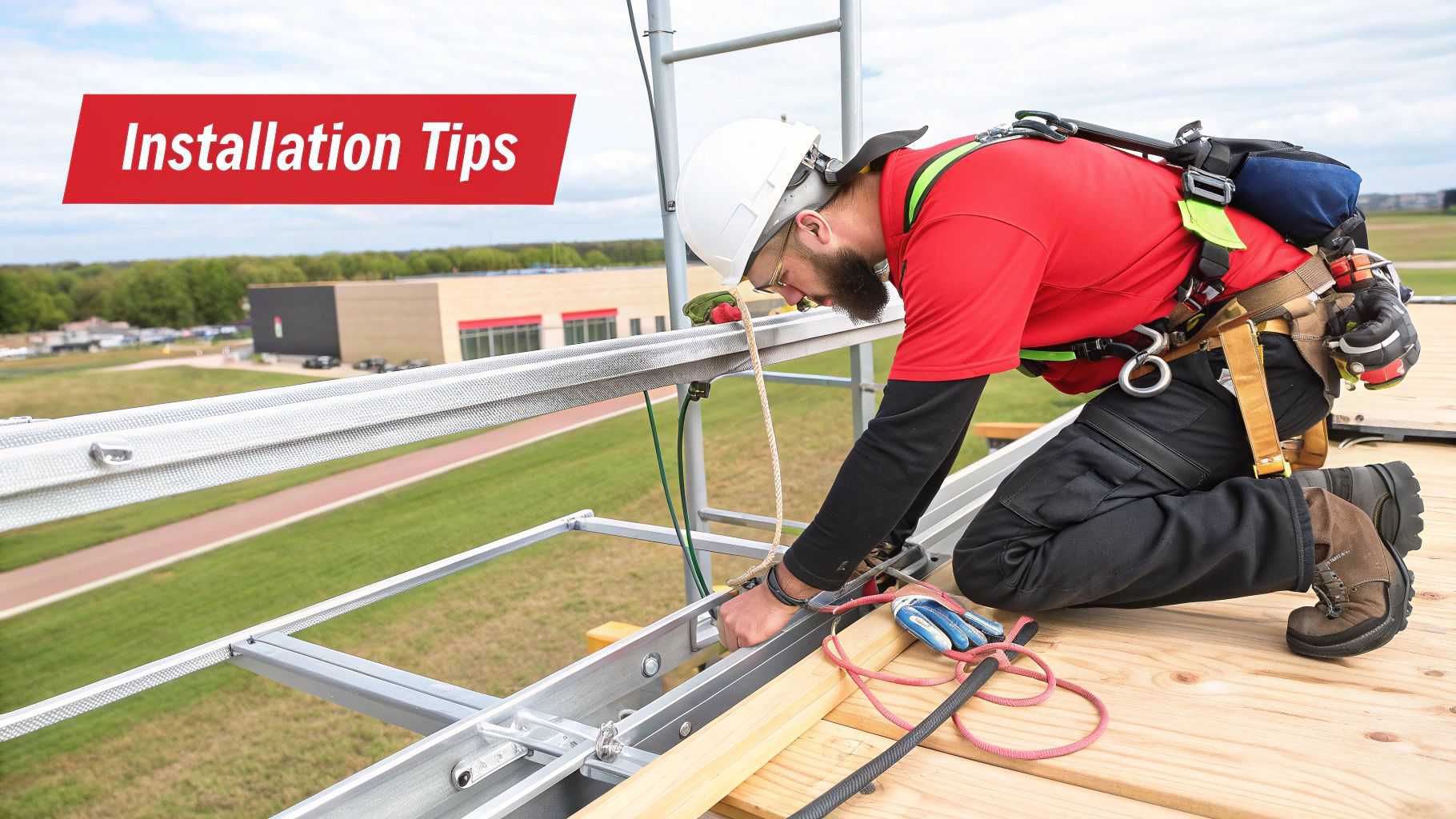
From carefully snaking narrow trays through tight ceiling voids to managing the massive weight of wider ones, sticking to best practices is the only way to avoid costly rework and guarantee the system meets local standards in the UAE and KSA.
Handling Narrow Trays (50-150 mm)
Think of narrow trays as the specialists for low-voltage wiring—data, security systems, or control cables. Their small size is a huge advantage, but it demands precision.
- Navigating Tight Corners: Their slim profile makes them nimble, but don't be tempted to force sharp, unsupported bends. You absolutely must use manufacturer-supplied fittings like elbows and tees. This maintains the proper bending radius for those sensitive cables inside, preventing signal loss or physical damage.
- Supporting Low-Voltage Cables: The load might be light, but that doesn't mean you can skip on proper support. Always space your supports according to the manufacturer's spec sheet to stop the tray from sagging, which puts a slow but steady strain on the cables. For vertical runs, use good-quality cable ties or clamps to hold the bundles securely, so their weight isn't pulling on the termination points.
Installing Mid-Range Trays (200-450 mm)
These are the workhorses you see on most commercial projects across the GCC. They're versatile enough to carry a mix of power and control cables, but that mix requires careful installation.
- Efficient Mounting: Trapeze hangers are the go-to support method for a reason—they work. But they have to be installed correctly. Make sure the threaded rods are perfectly plumb and the strut channel is level. This simple step creates a stable base and prevents the tray from twisting, which can stress both the tray sections and the cables.
- Correct Use of Fittings: If you have mixed cable types, using dividers is non-negotiable to prevent electromagnetic interference (EMI). When you need to transition between different cable tray widths, always use the proper reducer fittings. They create a smooth, safe pathway for cables and get rid of any sharp edges or awkward changes.
Managing Wide Trays (600 mm+)
When you step up to wide trays, you're in heavy-duty territory. These are built for serious power distribution, and the installation strategy has to be just as robust. The sheer weight of a fully loaded tray means structural integrity is everything.
The number one cause of cable tray system failure? It's almost always improper handling of expansion joints or, more commonly, inadequate structural support—especially for wide trays. A 600 mm or 900 mm tray under full load exerts immense force. Any weak link in the support system is a recipe for catastrophic failure.
Here’s what you need to focus on:
- Robust Structural Supports: The standard supports you used for smaller trays just won't cut it. You'll need heavy-duty trapeze hangers, cantilever arms bolted directly to structural steel, or even floor-mounted stanchions. Critically, always verify that the building's structure can actually handle the specified point loads you're about to add.
- Proper Load Distribution: Don't just dump heavy power cables in. Distribute them evenly across the full width of the tray. Piling all the weight on one side will cause the tray to twist or tilt, putting a dangerous amount of strain on your supports and splice joints.
- Safe Handling During Installation: These trays are heavy and incredibly awkward to manoeuvre. You must use appropriate lifting equipment and ensure every crew member is trained in safe handling. Preventing injuries and damage to the tray sections before they're even in the air is just common sense.
To help with planning, here's a quick guide on how tray width and load class affect your support spacing. This table offers a solid starting point based on NEMA standards.
Support Span Recommendations by Tray Width and Load Class
| Cable Tray Width (mm) | NEMA Load Class | Recommended Maximum Support Span (metres) |
|---|---|---|
| 150 | NEMA 8A | 1.5 |
| 300 | NEMA 12B | 3.0 |
| 450 | NEMA 12C | 3.5 |
| 600 | NEMA 20B | 4.5 |
| 750 | NEMA 20C | 6.0 |
| 900 | NEMA 20C | 6.0 |
Always cross-reference these recommendations with your specific project's engineering documents and the tray manufacturer's guidelines, as they are the final authority.
Common Installation Mistakes to Avoid
Even seasoned pros can overlook small details that turn into massive headaches later. On your projects in the UAE, keep a sharp eye out for these common slip-ups:
- Incorrect Support Spacing: This is a classic mistake. Failing to follow the manufacturer's guidelines for support spans is asking for trouble. A simple rule of thumb: the support span should never be longer than a straight section of the tray. This ensures that only one splice joint is ever located between any two supports.
- Improper Earthing (Bonding): It’s a basic requirement, but it’s sometimes missed. Metal cable trays must be bonded to the building's earthing system to give fault currents a safe path to ground. Forgetting to install bonding jumpers across splice plates and expansion joints breaks this continuous earth path, creating a serious safety hazard.
- Ignoring Expansion Joints: The temperature swings in the GCC are no joke, and thermal expansion is a real force. If you don't install expansion splice plates or you set the gap incorrectly, the tray system will buckle and warp under the stress. It’s a slow-motion failure that is entirely preventable.
Sourcing Cable Trays for Your UAE Project
Getting the right cable trays for your project in Dubai or Abu Dhabi is about more than just matching specs on a datasheet. When you partner with a knowledgeable local supplier like GoSwitchgear, you gain a real strategic advantage. It makes the whole procurement process smoother, more efficient, and perfectly aligned with regional demands. A local partner just gets it—they understand the tight construction timelines and the specific compliance hoops you need to jump through in the UAE.
One of the biggest perks is immediate access to a full stock of standard cable tray widths. This simple fact can save you from the costly project delays that always seem to pop up with international shipping and customs clearance. If you are looking at international procurement, you'll need to get bogged down in logistics, like the dimensions of standard shipping containers, just to keep costs in check. A local supplier simply makes all that complexity disappear for standard items.
Your Supplier Checklist
As you're sizing up suppliers in the UAE, make sure they tick these essential boxes:
- Material Certifications: They must be able to hand over documentation proving their trays meet IEC standards and can withstand the GCC's demanding climate (heat, humidity, dust). No excuses.
- Complete Accessory Range: The supplier should have a full inventory of all the compatible bits and pieces—fittings, fasteners, and supports—for every tray width they sell.
- Deep Regional Knowledge: Your partner absolutely has to understand the specific requirements of authorities like DEWA and ADDC. This is non-negotiable.
- Responsive Technical Support: Having access to local engineers who can help you out with selection, load calculations, or installation questions is worth its weight in gold.
Choosing a supplier isn't just about finding the best price. It's about building a relationship with a partner who becomes an extension of your project team, bringing the expertise you need to navigate the local landscape without a hitch.
Here at GoSwitchgear, we deliver both the certified products and the deep-seated regional expertise that successful UAE projects demand. Our teams in Dubai and Abu Dhabi are on standby, ready to back your next installation with solid technical guidance and a reliable supply of top-tier cable management solutions.
Common Questions About Cable Tray Widths
Even the best-laid plans can hit a snag. When you're on-site, questions about cable tray widths are bound to come up. Let's tackle some of the most common queries that engineers and installers face on projects across the UAE, with clear, practical answers to keep things moving.
What Is the Most Common Mistake When Choosing a Cable Tray Width?
Hands down, the biggest misstep is underestimating future needs. It’s easy to calculate the perfect width for the initial cable schedule, but that leaves zero room for growth. A critical rule of thumb is to build in a 25-50% reserve capacity. This simple bit of foresight can save you from the massive headache and cost of adding or replacing trays down the line.
Another classic mistake, particularly in the UAE's demanding climate, is packing trays too tightly and forgetting about ventilation. Overfilling a cable tray is like putting a lid on a boiling pot; it traps heat. This can lead to cable de-rating, a drop in efficiency, and even premature insulation failure. Always leave enough space for air to do its job and circulate freely.
Can I Mix Power and Data Cables in the Same Wide Cable Tray?
Technically, yes, you can run different cable types in one tray, but it's rarely a good idea without proper separation. The main villain here is electromagnetic interference (EMI). High-voltage power cables can easily disrupt sensitive data and communication lines running alongside them.
In the UAE, critical facilities like data centres and hospitals often have strict regulations that make physical separation non-negotiable for safety and performance. Always double-check your project specs and local codes before proceeding.
You have two solid options for keeping them separated:
- Install a solid metal divider fitting inside a single, wide tray.
- Run separate, parallel trays—one for power, one for data.
How Does Tray Width Affect Required Support Spacing?
Think of it this way: the wider the tray, the heavier the potential load. While a wider tray can hold more, it also puts a lot more strain on its supports. A wider tray filled with heavy cables creates a significant downward force that can't be ignored.
This means you’ll likely need to decrease the span (the distance between supports) or beef up the support system itself. This could involve using heavy-duty trapeze hangers or more robust cantilever arms to prevent the tray from sagging or, worse, failing. Always consult the manufacturer's load data and NEMA load class ratings. This documentation is your best friend, providing clear guidance on maximum support spans for specific cable tray widths and loads to ensure a safe, structurally sound installation.
For expert guidance on your Abu Dhabi projects or to request a quote for an upcoming installation in Dubai, reach out to our local team. Explore the extensive product catalogues available from GoSwitchgear and find the right components for your next installation at https://goswitchgear.ae.
Share this post

Related
Posts
A Comprehensive Guide to GI Cable Tray Systems for UAE & GCC Projects
Discover how to select, size, and install the right GI cable tray for your projects in the UAE and GCC....
Mastering Electrical Safety and Reliability in the UAE: Your Guide to Choosing an Infrared Thermography Camera
Discover how to choose an infrared thermography camera for UAE electrical inspections and predictive maintenance across the GCC.
Your Essential Guide to GI Flexible Conduit for UAE & GCC Projects
Discover how to select, install, and specify GI flexible conduit for projects in the UAE and GCC. This guide is...
A Complete Guide to PVC Pipe for Electrical Conduit in the UAE
Discover the right PVC pipe for electrical conduit for your UAE & GCC projects. Our guide covers types, standards, and...
.jpg)