.jpg)


Posted by:
Category:
Comments:
Post Date:
A UAE Engineer’s Guide to EV Charger Installation
A successful EV charger installation doesn’t start with a drill; it begins with a meticulous site assessment to ensure a building's electrical system can safely handle the new, continuous load. For engineers and electricians in the UAE, this initial phase is critical for guaranteeing compliance with local utility regulations and designing a system resilient enough for the demanding GCC climate.
Mastering the Pre-Installation Site Assessment
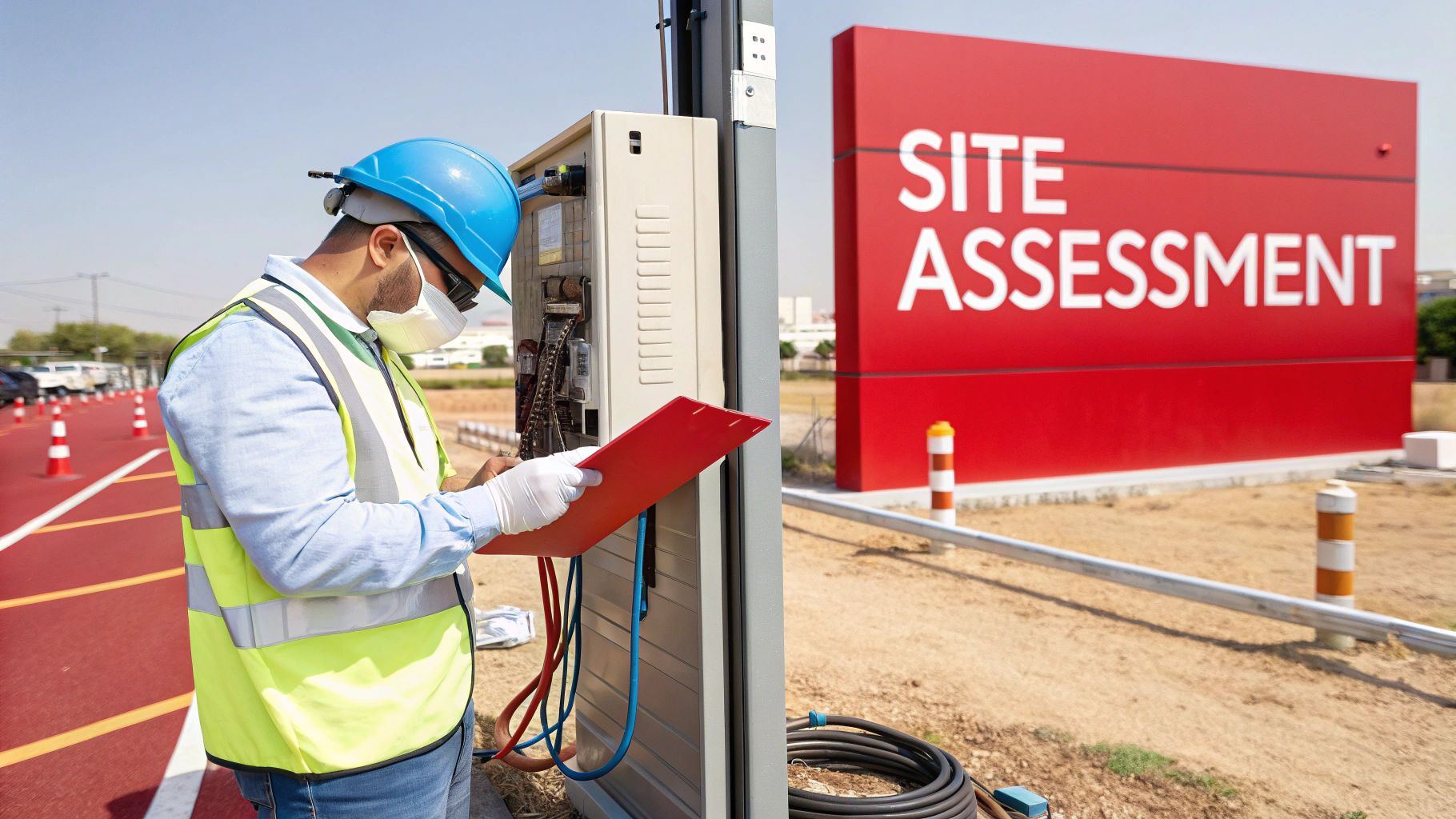
For engineers and electricians in the UAE, the site assessment is the bedrock of a reliable EV charger installation. It is a technical deep dive to guarantee safety, compliance, and long-term performance in the challenging local environment. Rushing this phase can lead to expensive rework, project delays, and hazardous electrical situations. An EV charger adds a significant load, comparable to a large air conditioner, and the existing infrastructure must be prepared to handle it.
Evaluating Existing Electrical Infrastructure
The first step is a detailed electrical load calculation, a mandatory requirement for compliance with local authorities like DEWA and ADDC. This calculation determines the property's total existing electrical demand against its main service capacity.
The process involves:
- Listing all major appliances and systems: Document all significant power-drawing equipment, including AC units, water heaters, and industrial machinery.
- Calculating the total connected load: Sum the power ratings (in watts or kilowatts) of all equipment.
- Applying demand factors: Use locally accepted demand factors to estimate the maximum simultaneous load.
- Adding the EV charger load: Incorporate the continuous load of the new charger (e.g., 32A for a 7.4kW unit) into the total. This determines if the load exceeds the main breaker's rating.
If calculations indicate the existing service is at or near its capacity, a service upgrade is non-negotiable before proceeding with the EV charger installation.
Inspecting the Main Panel and Breaker Slots
A physical inspection of the main distribution board (DB) is as critical as the load calculation. You must confirm the panel's condition and true capacity, looking for signs of overheating, corrosion, or outdated components—common issues in older buildings across Dubai and Abu Dhabi.
Key inspection points:
- Available Breaker Slots: Is there a correctly sized physical space for a new double-pole circuit breaker?
- Busbar Condition: Check the main busbar for signs of heat damage or corrosion, which indicate existing strain.
- Existing Wiring: Assess the condition of existing wiring; frayed or brittle insulation is a major safety hazard.
A common installation mistake is assuming an empty slot in a panel equates to available capacity. Only a thorough load calculation can confirm this. Proceeding without one risks overloading the entire system.
Planning Cable Routes and Environmental Considerations
Once the panel's capacity is confirmed, plan the wiring route from the panel to the charger's location. In the GCC's harsh environment—characterized by extreme heat, humidity, and dust—standard installation practices are insufficient.
Key planning considerations:
- Distance and Voltage Drop: Measure the total cable run length. Longer runs may require a larger gauge single-core copper cable to mitigate voltage drop, which can impair charging performance.
- Conduit and Protection: All exposed cabling must be enclosed in a protective conduit (PVC or metal) to shield it from physical damage and UV exposure.
- Component IP Ratings: Ensure all enclosures, isolators, and the charger itself possess a high Ingress Protection (IP) rating. An IP65 rating is ideal for protection against dust and water ingress, ensuring longevity in outdoor or dusty basement parking locations.
This structured approach results in an EV charger installation that is not only functional but also safe, compliant, and durable enough to withstand the local climate.
Navigating UAE Regulatory and Permitting Frameworks
In the UAE, a professional EV charger installation is built on a foundation of strict regulatory compliance. Securing approval from local utility authorities—such as the Dubai Electricity & Water Authority (DEWA) or Abu Dhabi Distribution Company (ADDC)—is a critical part of the initial planning phase. Bypassing this step can result in significant fines, project shutdowns, and orders to remove unapproved equipment.
Understanding the Application and Documentation Process
The permit application process is detailed and requires precision to ensure the proposed installation is safe and will not strain the power grid. A complete and accurate application is essential to avoid delays.
Your application package must include:
- Site and Location Plans: Detailed drawings showing the charger's location, the electrical panel, and the full cable route.
- Electrical Load Schedule: An updated schedule, signed by an approved contractor, reflecting the building's total electrical load including the new charger.
- Single Line Diagram (SLD): A clear schematic of the electrical circuit, showing all components from the main DB to the charger.
- Component Specification Sheets: Manufacturer datasheets for key electrical components, including the charger, circuit breakers, RCDs, and cables.
- Contractor and Property Owner Details: Official trade licenses, No-Objection Certificates (NOCs) from the property owner, and relevant DEWA/ADDC account information.
For procurement teams and panel builders, creating a standardized documentation kit with pre-approved component datasheets—like those from GoSwitchgear—can significantly reduce submission preparation time.
Adherence to Mandatory Technical Standards
The physical installation must adhere to a stringent set of technical standards defined by UAE authorities. These regulations cover everything from circuit protection to earthing and are designed for safety in the region's climate. Inspectors will meticulously review the work before issuing a completion certificate.
This commitment to EV infrastructure is clear. A 2023 mandate requiring all new residential buildings to include EV charging stations has significantly increased installation rates. This aligns with the Dubai Clean Energy Strategy 2050 and fuels the demand for compliant electrical components UAE suppliers provide. As of August 2025, Dubai hosts over 1,270 public charging points. You can explore these trends in expert analyses on the GCC market.
Your Pre-Submission Compliance Checklist
To avoid common pitfalls that lead to rejected applications or failed inspections, use this checklist before submission:
- Certified Components: Are the circuit breakers, RCDs, and cables IEC and GCC certified? Non-compliant hardware will be rejected.
- Dedicated Circuit: Is the EV charger wired on a dedicated, non-shared circuit from the main distribution board? This is a non-negotiable safety requirement.
- Correct RCD Type: Have you specified a Type A or Type B RCD with a 30mA sensitivity rating for ground fault protection?
- Proper Earthing: Is the earthing system designed and verified to meet DEWA or ADDC regulations?
- Approved Contractor: Is the installation being performed by a DEWA/ADDC-approved electrical contractor?
Treating the regulatory stage with this level of diligence transforms it into a smooth, predictable project milestone.
Selecting Resilient Electrical Components for the GCC Climate
In the demanding environment of the UAE and GCC, the success of an EV charger installation depends on the quality of its hardware. Punishing ambient temperatures, high humidity, and pervasive dust require components specified for these conditions to ensure safety, compliance, and long-term reliability. Specifying robust, climate-appropriate hardware from the outset is the most effective way to prevent premature failures and costly service calls.
Circuit Protection: Your First Line of Defense with MCBs and RCDs
The core of a safe EV charging circuit is its protection system, consisting of Miniature Circuit Breakers (MCBs) and Residual Current Devices (RCDs). These components serve distinct but equally vital safety functions.
An MCB protects the circuit from overcurrents and short circuits. For a typical Level 2 charger, a double-pole MCB with a C-curve characteristic is recommended to handle the initial inrush current. Per local regulations, the amperage rating must be sized at 125% of the charger's continuous load.
The RCD protects personnel from electric shock by detecting ground faults. While a Type A RCD is the minimum requirement, a Type B RCD is strongly recommended. Type B offers superior protection against the smooth DC leakage currents that modern EV inverters can produce, which a standard Type A RCD may not detect.
The choice of RCD is a critical safety decision. A Type B RCD, while a higher initial investment, provides comprehensive protection aligned with the sophisticated electronics in modern electric vehicles, ensuring a fail-safe system.
Cable Sizing and Nailing the Voltage Drop Calculations
The cable from the panel to the charger is the system's artery. Undersized cables are a common and dangerous mistake. In the GCC, high ambient temperatures necessitate proper derating of cables to ensure they perform safely under continuous load without overheating. Single-core copper cables are the industry standard for their durability and conductivity.
Voltage drop is another critical factor, especially over long runs. Excessive voltage drop reduces charging efficiency and can cause the charger to malfunction.
Cable sizing process:
- Identify the load current in Amps.
- Measure the total cable run length in meters.
- Consult voltage drop tables for copper conductors, factoring in high local ambient temperatures for derating.
A best practice is to keep the voltage drop below 3-5% of the nominal system voltage. This often requires selecting a cable one or two sizes larger than the current load alone would suggest—a small investment for optimal performance.
Essential Electrical Components for EV Charger Installation Levels
Selecting the right components is crucial for a safe and efficient installation. The table below details essential parts for Level 2 and DC Fast Charger setups, with considerations for the GCC climate.
| Component | Level 2 (7-22kW) Specification | DC Fast Charger (50kW+) Specification | Key Considerations for GCC Climate |
|---|---|---|---|
| Circuit Breaker (MCB/MCCB) | MCB, Double Pole, C-Curve, rated at 125% of continuous load (e.g., 40A for a 7.4kW charger). | MCCB, 3-Pole, with adjustable thermal/magnetic trip settings sized for high power demand. | Must be temperature derated. Select breakers rated for operation up to 50°C or higher. |
| Residual Current Device (RCD/RCBO) | Type B RCD or RCBO highly recommended for DC fault current protection. Type A is the minimum. | Often integrated into the charger. If external, a 3-Pole Type B RCD is required. | Ensure the device has conformal coating or is housed in a high IP-rated enclosure to resist humidity. |
| Cabling | Single-core copper, XLPE insulated. Sized to handle current after derating for ambient heat. | Larger gauge single-core copper cables, often armored (SWA) for mechanical protection. | UV-resistant outer sheath for outdoor runs is non-negotiable. Proper heat derating is critical. |
| Enclosure | IP54 for indoor (garages), IP65 for outdoor installations. | IP65 or higher, often with ventilation or active cooling systems. | Polycarbonate or GRP enclosures resist corrosion and UV degradation better than standard metal. |
| Surge Protection Device (SPD) | Type 2 SPD installed in the distribution board feeding the charger circuit. | Type 1 or Type 2 SPD at the main incomer and potentially another Type 2 at the charger. | Essential for protecting sensitive electronics from grid fluctuations and lightning. |
| Isolator/Switch Disconnector | Lockable DIN rail isolator rated for the circuit current, installed near the charger. | A heavy-duty, panel-mounted switch disconnector is required for safe maintenance. | Must have a high amperage rating and operate reliably in high temperatures. |
| Energy Meter | Optional for residential. MID-certified meter for commercial/billing applications. | Always required. MID-certified, multifunction meter for billing and data tracking. | Select energy meters with displays readable in bright sunlight and tolerant of high temperatures. |
Carefully matching each component to the charger level and environmental challenges ensures a compliant and durable system.
Enclosures and Surge Protection
Auxiliary components like isolators and terminal blocks must be housed in enclosures suited to the local climate. The Ingress Protection (IP) rating is the key metric.
- Indoor locations (e.g., private garages) generally require an IP54 rated enclosure for protection against dust and splashes.
- Outdoor or exposed installations demand a robust IP65 enclosure, guaranteeing protection from dust and low-pressure water jets.
Surge Protection Devices (SPDs) are another vital, often overlooked, component. An SPD installed at the circuit's origin protects the charger's sensitive electronics from damaging voltage spikes, a crucial part of any comprehensive energy management solution Dubai projects require.
Termination and Auxiliary Components
Poor connections are a common point of failure. Using high-quality, properly torqued terminal blocks is essential to prevent loose connections, which can overheat and pose a fire hazard.
Other critical components include:
- DIN rail isolator: A lockable isolator or switch disconnector installed near the charger allows for safe maintenance and emergency shutdown. A reliable DIN rail isolator is a must.
- Energy Meters: For commercial or multi-tenant properties requiring billing, a MID-certified energy meter GCC authorities approve is necessary for accurate usage data.
- SMPS Power Supply: Smart chargers or control systems may require a low-voltage DC source. A dependable SMPS power supply ensures clean, stable power for these critical systems.
Procuring high-quality electrical components UAE suppliers like GoSwitchgear offer is fundamental. Selecting parts based on technical specifications and suitability for the GCC climate builds a charging system that is not just compliant—it is built to last.
The Core Installation Process: From Conduit to Connections
With planning and permits complete, the physical EV charger installation begins. This phase transforms blueprints into reality, demanding meticulous attention to detail to ensure a mechanically sound and electrically safe system.
The first task is creating a pathway for power by running the appropriate conduit and pulling properly sized single-core copper cables from the distribution board to the charger location.
Best Practices for Cable and Conduit Runs
Protecting cabling is non-negotiable, particularly in high-traffic areas like parking garages or on sun-exposed exterior walls. All wires must be housed in durable conduit (e.g., rigid PVC or galvanized steel) to shield them from physical impact and UV degradation.
When pulling cables, use a suitable lubricant to prevent insulation damage. Even minor nicks or scrapes can create hidden fault points that are difficult to locate and repair later.
Secure Mounting for Chargers and Enclosures
Whether installing a wall-box or pedestal charger, it must be securely anchored. An unstable charger poses a safety hazard and places undue stress on internal electrical connections.
- Wall-Mounted Units: Use manufacturer-recommended fixings and ensure the wall is flat and strong enough to support the charger's weight. Use a level to ensure a straight installation for proper weatherproofing.
- Pedestal-Mounted Units: Securely bolt the pedestal to a solid concrete base. All underground conduit entries must be perfectly sealed to prevent water and dust ingress.
The Critical Task of Electrical Terminations
This final and most critical step of the physical installation is where most failures occur. A loose connection in a high-power EV charger circuit will eventually overheat, creating a serious fire risk.
Precision is paramount. Strip wires to the correct length, ensuring the wire is fully seated in the terminal block with no exposed copper. Every screw—at the circuit breaker, isolator, and inside the charger—must be tightened to the manufacturer’s specified torque setting using a calibrated torque screwdriver. This eliminates guesswork and guarantees a solid, long-lasting connection.
This attention to detail is crucial as the region’s EV infrastructure expands. Saudi Arabia's Vision 2030 includes a $2 billion investment in EV charging, with a goal of 5,000 chargers by 2030. You can read more about the Middle East's evolving EV charging market.
An over-tightened terminal can damage the conductor, while an under-tightened one is a guaranteed failure point. Using a calibrated torque wrench is not a recommendation; it is a professional requirement for a safe and durable EV charger installation.
To master the installation, explore guides on top electric vehicle charging solutions. Adhering to these best practices for wiring, mounting, and terminations sets a benchmark for quality and safety.
Final Commissioning Testing and Client Handover
An EV charger installation is not complete until it has undergone a detailed commissioning process. This final step is non-negotiable for professional electricians in the UAE, as it guarantees the installation is safe, compliant, and ready for long-term operation. Rushing these final checks can lead to performance issues, safety hazards, and callbacks.
Comprehensive Electrical Safety Testing
Before energizing the circuit, a series of "dead tests" are essential to verify the integrity of the wiring and ensure there are no hidden faults.
The pre-energization checklist must include:
- Continuity Testing: Verifies that all protective conductors have an unbroken path to the main earthing terminal.
- Insulation Resistance Testing: Checks for damage to cable insulation between conductors and to earth, a critical test in the GCC's high-heat environment.
- Polarity Checks: Confirms that all connections are correctly wired, with live, neutral, and earth conductors in their proper positions.
This diagram shows the core physical work that sets the stage for these vital final tests.
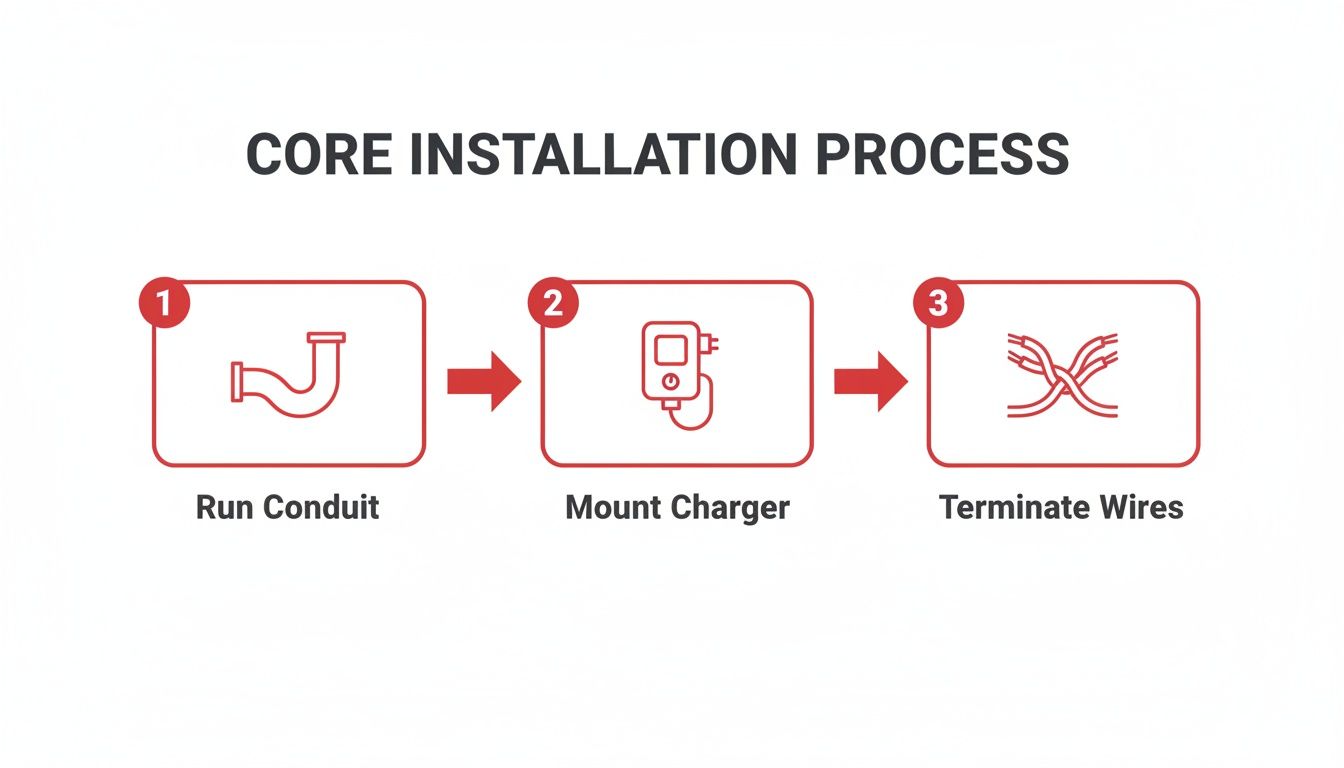
Correct installation practices ensure that commissioning tests proceed smoothly, confirming the system is both electrically and mechanically sound.
Functional Verification and System Energisation
Once dead tests are successfully completed, the circuit can be energized for "live tests" to confirm the charger and its safety features are operating correctly.
First, use a multifunction tester to confirm correct voltage and check the prospective fault current. The most critical live test is verifying the RCD. Use the tester’s RCD trip function to ensure it disconnects power within the required time and current limits. A key part of ensuring safety is correctly performing a ground fault test.
Next, use a specialized EV charger tester to simulate a vehicle connection. This device communicates with the charger, allowing you to test its full operational cycle—from authorizing a session and delivering power to shutting down safely.
Commissioning is a meticulous process, not a race. Each test, from insulation resistance to the final functional check, is a deliberate step to prove the system's safety. Documenting every result provides a traceable record of a professional installation.
Professional Client Handover and Documentation
The final step is a professional handover, empowering the client to use their new charger confidently and providing all necessary documentation.
A proper handover includes:
- User Demonstration: Walk the client through the charging process, explaining how to start and stop a session and what the status indicators mean.
- Safety Briefing: Point out key safety features, including the emergency stop and local isolator.
- Documentation Pack: Provide a folder containing the manufacturer's manual, warranty information, and the signed electrical completion certificate required by DEWA or ADDC.
This certificate is the official declaration that the EV charger installation complies with all UAE regulations, providing the client with ultimate peace of mind.
Answering Your EV Charger Installation Questions
Even a detailed plan for an ev charger installation can leave specific questions. Addressing these early helps engineers, electricians, and procurement managers across the UAE and GCC avoid project delays. Here are answers to common questions from professionals in the field, based on hands-on experience in the region.
Level 2 vs. DC Fast Charger Installations: What's the Real Difference?
The primary differences between installing a Level 2 AC charger and a DC fast charger are electrical requirements, project complexity, and cost.
A Level 2 unit (7kW to 22kW) typically requires a dedicated 240V single-phase circuit with a 40 to 100 Amp breaker. The installation is comparable to adding another heavy-duty appliance.
DC fast chargers (50kW and up) are far more complex. They require a three-phase 480V+ power supply, often necessitating a dedicated transformer, complex switchgear, and a more rigorous permitting process with authorities like DEWA. The electrical components UAE projects need for DC systems are significantly more substantial.
How Do I Calculate the Electrical Load for a New Charger?
Accurate load calculation is the first critical step. You need the charger's maximum power output (kW) and the site's voltage.
For a single-phase system, the formula is: Amps = (Watts / Volts).
A 7.4kW charger on a 230V system will draw approximately 32 Amps (7400W / 230V). Local electrical codes mandate that the circuit be rated for 125% of this continuous load, requiring a minimum 40 Amp breaker. A full load calculation on the main electrical panel is essential to confirm there is sufficient spare capacity.
What are the Common Installation Mistakes to Avoid in the UAE?
The most common mistake is underestimating the GCC climate. Using components with inadequate IP ratings (below IP54 for outdoor use) will lead to failure from dust and humidity.
Another frequent error is using undersized cables, which causes significant voltage drop over long runs, slowing charging and creating a fire risk from overheating.
The single most critical mistake is beginning work without permits from DEWA or the relevant local authority. This can lead to substantial fines, project shutdowns, and the mandated removal of all installed equipment.
Is a Surge Protection Device Really Necessary?
Yes. A Surge Protection Device (SPD) is often required by local regulations in the UAE. An EV charger contains sensitive electronics that are vulnerable to voltage spikes from grid fluctuations or lightning.
An SPD, installed at the distribution board feeding the charger, acts as an insurance policy, protecting a major investment from damage. Considering the value of the charger and the vehicle, an SPD is a small cost for essential protection.
At GoSwitchgear, we provide the certified, high-quality components needed to execute a safe and durable EV charger installation. Explore our extensive catalogue of circuit breakers, enclosures, and surge protection devices on https://goswitchgear.ae.
Share this post

Related
Posts
A Guide to Choosing AC to DC Converters for UAE & GCC Electrical Systems
Master AC to DC converters with this comprehensive guide for engineers in the UAE & GCC. Learn selection, installation, and...
A Guide to Drill Machine Prices in the UAE for Technical Professionals
Find the best drill machine price in UAE. Our 2026 guide helps contractors and engineers choose the right corded, cordless,...
A Professional’s Guide to Choosing AGM VRLA Batteries in the UAE Climate
Discover why AGM VRLA batteries are the superior power solution for UPS, solar, and industrial systems in the UAE. Get...
How to Choose the Right Lithium Ion Battery Charger for UAE & GCC Projects
Discover how to select the right lithium ion battery charger for UAE projects. This guide covers specs, BMS integration, and...
.jpg)