.jpg)


Posted by:
Category:
Comments:
Post Date:
Choosing Flexible Electrical Tubing for UAE & GCC Projects: An Engineer’s Guide
For engineers, panel builders, and electricians in Dubai or Abu Dhabi, complex wiring paths are a daily challenge where rigid conduit often fails. This is where flexible electrical tubing becomes an indispensable asset—an adaptable backbone designed to protect critical wiring as it navigates the tight corners and demanding environments common in the GCC.
Why Flexible Tubing Is Essential for UAE Electrical Projects
In the demanding construction and industrial sectors across the UAE and the wider GCC, electrical systems face constant environmental and mechanical stress. While rigid conduits offer strength, they lack the adaptability required for modern, complex installations. Flexible electrical tubing provides a superior, practical solution that addresses the real-world needs for adaptability, robust protection, and rapid installation.
For engineers and procurement teams, the benefits are clear. The ability to route cables around obstacles, absorb vibrations from heavy machinery, and accommodate a building’s structural shifts is a significant advantage. This inherent flexibility reduces installation time and labour costs by eliminating the need for the complex bends and numerous fittings that rigid systems demand.
Responding to Regional Demands: Heat, Dust, and Humidity
The GCC climate—with its intense heat, high humidity, and pervasive airborne dust—places extreme strain on electrical components. Quality flexible electrical tubing serves as a critical line of defence.
- Environmental Protection: High-grade tubing with appropriate IP ratings shields wiring from moisture, corrosive salt air, and abrasive sand, preventing insulation degradation and short circuits.
- Mechanical Resilience: In high-traffic industrial zones or within vibrating equipment, it protects cables from crushing, abrasion, or tensile stress, ensuring operational continuity.
- Simplified Maintenance: Slit or re-openable designs facilitate easier inspection, retrofitting, or replacement of wires, offering significant long-term value for facility management.
Safety is the top priority on any electrical project. Effective cable management is fundamental to operational safety and system longevity. Adhering to best practices, like those detailed in our GoSwitchgear electrical safety guide, reinforces these non-negotiable standards for every technician in the UAE.
Ultimately, selecting the right flexible tubing is about more than convenience; it’s a strategic decision. To fully appreciate this, one must consider the wider benefits of effective cable management. By ensuring wires are properly protected and organised, the reliability and safety of the entire electrical infrastructure are directly enhanced. Whether for a smart building in Dubai or a large-scale industrial plant in Saudi Arabia, flexible electrical tubing is a core component of a modern, resilient installation.
Exploring the Main Types of Flexible Electrical Tubing
Selecting the right flexible electrical tubing is a critical decision that can define the success of an installation, particularly under the harsh conditions found in the UAE and GCC. This is not a one-size-fits-all scenario; each tubing type offers a unique combination of flexibility, durability, and protection. Understanding these distinctions is the first step toward building a lasting and compliant electrical system.
This visual guide provides a quick overview of what flexible electrical tubing does—showcasing how it adapts, protects, and endures across different applications.
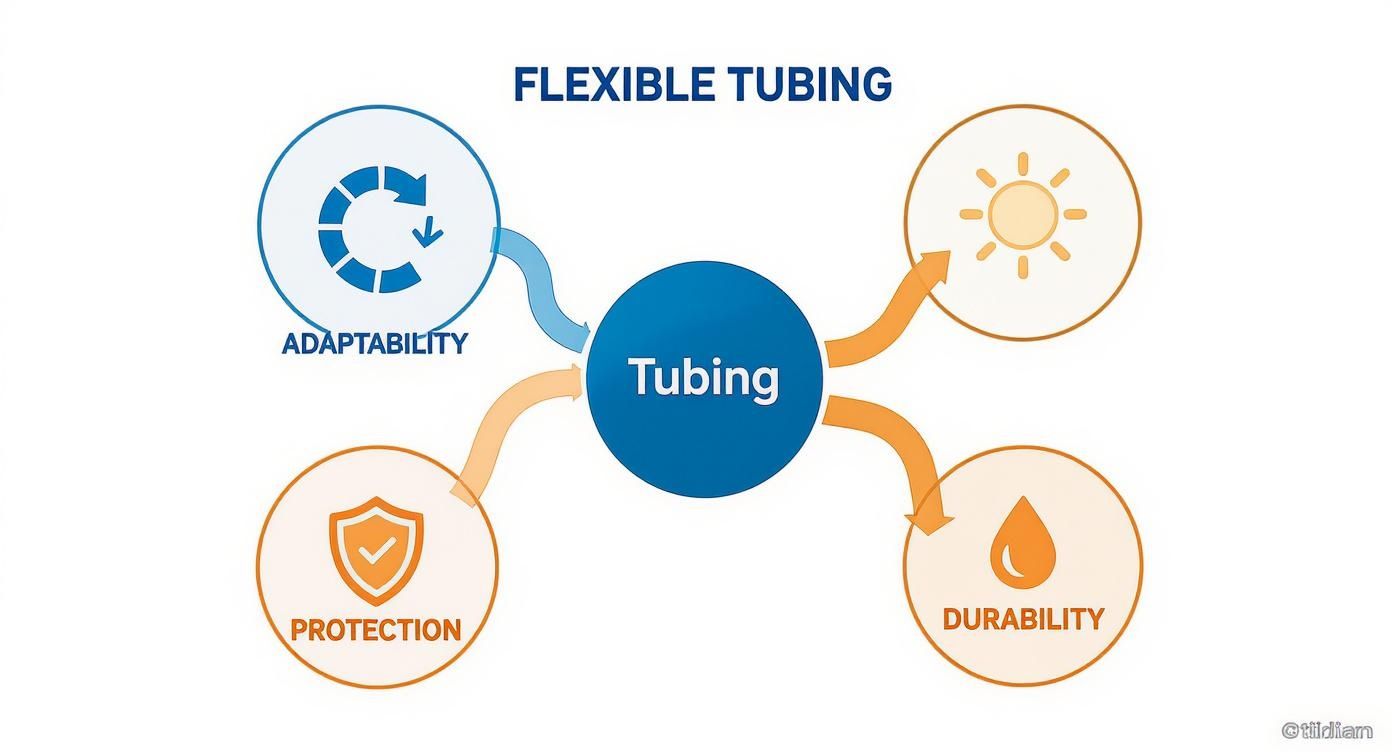
As illustrated, your choice directly impacts the system's ability to navigate tight spaces, shield wires from mechanical damage, and withstand environmental challenges like heat and moisture.
This market is expanding rapidly. The electrical conduit market in the Middle East and Africa reached USD 582.15 million and is projected to hit USD 868.54 million by 2032. Although rigid conduits currently hold a 72.2% market share, flexible options are gaining significant traction due to their superior corrosion resistance and ease of installation in complex projects.
Let’s examine the common types you will encounter on-site.
Corrugated Non-Metallic Conduits (PA and PP)
These are the versatile workhorses in the world of flexible tubing. Made from Polyamide (PA) or Polypropylene (PP), these non-metallic conduits are lightweight and extremely flexible, making them ideal for a wide array of applications. They are commonly found inside control panels, machinery, and general wiring applications where solid protection against abrasion is needed without the weight of metal.
- Polyamide (PA) Tubing: This is the go-to choice for toughness. It offers excellent resistance to oils, solvents, and chemicals, making it a staple in industrial automation and automotive applications. Its good UV resistance also makes it a suitable option for certain outdoor applications in the GCC climate.
- Polypropylene (PP) Tubing: A more cost-effective option that still provides great flexibility and withstands repeated bending. While not as chemically resistant as PA, it is sufficient for general-purpose wire bundling in less aggressive environments.
Flexible Metallic Conduit (FMC)
Often called "Greenfield," Flexible Metallic Conduit (FMC) is constructed from a helically wound strip of aluminium or galvanised steel. This design provides significant mechanical strength, protecting wires from crushing and impact. It is the preferred choice for connecting to motors or other equipment that produces vibrations.
However, since FMC lacks a protective outer jacket, its use is restricted to dry, indoor locations. It is extensively used in commercial buildings and industrial sites where rugged protection is necessary but moisture exposure is not a concern.
For panel builders in Dubai and Abu Dhabi, the choice between non-metallic and metallic conduits often hinges on the specific mechanical stresses anticipated. FMC offers superior crush resistance, which is vital for protecting critical wiring near heavy machinery or in high-traffic areas within a facility.
Liquid-Tight Flexible Metal Conduit (LFMC)
Take the mechanical strength of FMC and add a weatherproof jacket, and you have Liquid-Tight Flexible Metal Conduit (LFMC). It features the same flexible metal core but is encased in a durable, waterproof plastic coating, typically PVC.
This outer jacket makes LFMC completely resistant to liquids, dust, and corrosive agents, enabling it to achieve high IP ratings. It has become the standard for outdoor installations, industrial areas subject to washdowns, and any location where wiring is exposed to oils, coolants, or moisture. Its resilience is perfectly suited to the humid and dusty conditions across the UAE.
Choosing the correct type ensures your installation is compliant, safe, and reliable for years. At GoSwitchgear, we stock a wide variety of solutions to meet these diverse needs. Explore our range of flexible electrical conduit to find the ideal fit for your next project.
Understanding Key Technical Specifications and UAE Standards
For any engineer or panel builder operating in the UAE and GCC, project success lies in the details. When selecting flexible electrical tubing, a visual inspection is insufficient. The technical data sheet holds the key to ensuring compliance, safety, and long-term reliability. These specifications are not just numbers; they are performance guarantees.
Mastering these specs allows you to perfectly match a product to the severe environmental and mechanical challenges found across the region, from the coastal humidity of Dubai to the dusty industrial zones of Saudi Arabia.
Decoding Core Specifications
Every data sheet presents several critical metrics. Understanding these is the first step toward making an informed procurement decision.
- Nominal Diameter: This specifies the internal size of the tubing, determining how many wires can be safely routed through it. Always consult wire fill charts to prevent overcrowding, which can lead to heat buildup and insulation damage.
- Minimum Bend Radius: This indicates the tightest curve the tubing can handle without kinking or compromising its structural integrity. Exceeding this limit can damage both the tubing and the costly cables inside.
- Operating Temperature Range: This is a crucial specification for the GCC. The tubing must be rated to withstand both extreme ambient heat from the sun and the operational heat generated by the cables, which can easily exceed 50°C in exposed locations.
The Critical Role of IP Ratings in the GCC
Ingress Protection (IP) ratings are arguably the most important specification for any electrical component used in the UAE. This two-digit code defines how well an enclosure protects against solids (like dust) and liquids (like water).
For projects in the GCC, an IP rating is more than a recommendation; it's a direct measure of the tubing's ability to defend against the region's two biggest environmental threats: fine, pervasive dust and high humidity or direct moisture. A mismatched IP rating is a direct path to premature system failure.
Here is a practical guide for local conditions:
- First Digit (Solids): For most outdoor or industrial applications in the UAE, a rating of 5 (dust-protected) is the minimum acceptable level. A rating of 6 (dust-tight) is superior, offering complete protection against fine sand.
- Second Digit (Liquids): A rating of 4 (protection against splashing water) is suitable for general outdoor use. However, for areas subject to regular washdowns or heavy rain, a 6 (protection against powerful water jets) or higher is necessary.
Selecting tubing with an IP67 rating, for example, guarantees it is completely sealed against dust and can withstand temporary water immersion, making it a robust choice for critical infrastructure. This level of detail is vital, as the regional construction boom drives market growth. The Middle East and Africa (MEA) flexible electrical conduit market, valued at USD 142.50 million, is projected to grow at a CAGR of 7.7% from 2024, fueled by this demand for durable wiring solutions. You can explore regional growth impacts in this market report.
Aligning with IEC and Regional Standards
Compliance is non-negotiable. While local regulations may vary slightly, adherence to international standards from the International Electrotechnical Commission (IEC) provides a solid foundation for quality and safety. Look for these certifications:
- IEC 61386: The primary standard for conduit systems in cable management, covering mechanical strength, temperature resistance, and fire safety.
- IEC 60529: This standard defines IP ratings, providing a universal system for classifying enclosure protection.
When you choose products from GoSwitchgear that meet these standards, you are not just building for durability—you are ensuring full compliance with local utility and civil defence requirements. For simpler applications not requiring a high IP rating, see our guide on standard PVC electrical conduit options.
Your Practical Checklist for Selecting the Right Tubing
Knowing the theory is one thing, but selecting the right flexible electrical tubing on the ground is where it truly matters. A correct upfront decision prevents costly procurement errors and ensures the long-term reliability of the system you are building.
This checklist is specifically designed for engineers and procurement teams working on projects in the UAE and wider GCC, providing a clear framework for selecting the perfect GoSwitchgear solution every time.
Let's move beyond basic specifications and consider the complete lifecycle of your installation, from the harsh environment it will inhabit to the mechanical stresses it must withstand.
Step 1: Assess the Installation Environment
First, thoroughly evaluate the installation location. The unique challenges of the UAE and GCC climate directly influence your material choice.
- Indoor vs. Outdoor: Will the tubing be exposed to direct sunlight? If so, a UV-resistant material like Polyamide (PA) is essential to prevent it from becoming brittle and failing.
- Temperature Extremes: Consider both the ambient heat, which can exceed 50°C, and the heat generated by the cables. Ensure the tubing's operating temperature range can handle the combined thermal load.
- Chemical and Moisture Exposure: Will the tubing be near oils, solvents, or cleaning agents in a factory? Or is it for a coastal project with high humidity and salt spray? In such cases, liquid-tight conduits with high IP ratings are non-negotiable.
Step 2: Determine Mechanical Protection Needs
Next, evaluate the physical demands the tubing will face. This will determine the required level of toughness and flexibility.
- Vibration and Movement: For connections to motors, generators, or other moving machinery, a robust solution is needed. Flexible Metallic Conduit (FMC) or Liquid-Tight Flexible Metal Conduit (LFMC) are designed to absorb constant movement without fatigue.
- Impact and Crush Risk: Is the installation in a high-traffic area or on a factory floor? The tubing must withstand potential impacts. Steel-core conduits offer superior crush resistance compared to non-metallic alternatives.
- Bend Radius Requirements: Map out the cable path. For complex installations with tight corners, tubing with a smaller minimum bend radius provides greater flexibility and prevents accidental damage to the wires.
A common mistake is mismatching the tubing's mechanical specs with the application's reality. Using a light-duty conduit in a high-vibration environment is a shortcut to premature failure, compromising both safety and operations.
Step 3: Calculate Sizing and Certifications
Finally, confirm the technical and regulatory details. This step ensures your installation is not only functional but also fully compliant with local and international standards.
The demand for high-performance conduits is rising, driven by large-scale infrastructure and renewable energy projects. Globally, the flexible electrical conduit market is projected to grow from USD 2.3 billion in 2025 to USD 4.7 billion by 2035. This trend mirrors developments in the MEA region, where modernization and safety upgrades are driving adoption across all sectors. You can find more on these market trends in this detailed industry forecast.
- Calculate Wire Fill Capacity: Use the nominal diameter to determine the number of cables that can be safely routed. Always adhere to local utility regulations on conduit fill ratios to prevent overheating.
- Verify IP Ratings: Select an IP rating that aligns with your environmental assessment. For most outdoor or washdown areas in the GCC, an IP67 rating is the recommended benchmark.
- Confirm Compliance: Ensure the product is certified to relevant standards, such as IEC 61386. This is crucial for meeting local civil defence approvals and project-specific requirements.
Nailing the Installation: Best Practices and Common Mistakes to Avoid
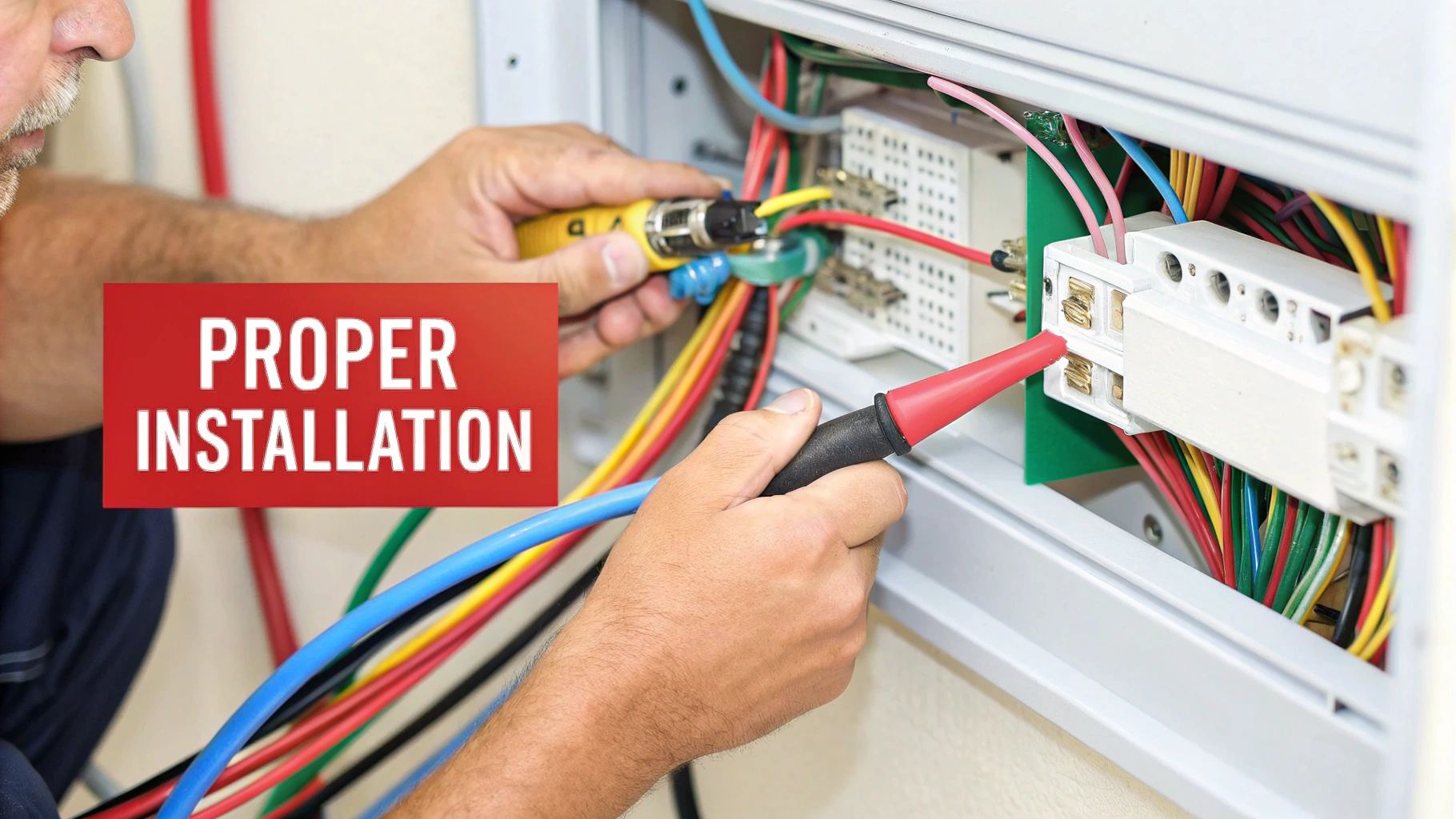
Selecting the perfect flexible electrical tubing is only half the job. Its real-world performance depends entirely on proper installation. A flawless installation ensures the specified protection levels, guarantees safety, and extends the lifespan of the critical wiring within. For technicians in the UAE, this means mastering standard procedures while accounting for our unique regional challenges.
This section outlines field-tested best practices and common errors to avoid, ensuring your installation is safe, compliant, and built to last.
Essential Installation Techniques
A professional, durable installation hinges on attention to detail. Following these core principles sets you up for success.
Make a Clean Cut, Every Time: Use a proper conduit cutter designed for the specific material. A clean, square cut is non-negotiable for a secure, flush connection with fittings, which is vital for maintaining the system's IP rating against dust and moisture. Jagged cuts invite leaks.
Stick with Matched Fittings and Connectors: Never mix and match components from different manufacturers. Fittings are engineered for a perfect seal with their corresponding tubing. Using the wrong connector compromises the entire run, often leading to water ingress or poor grounding.
Respect the Minimum Bend Radius: This is a hard limit, not a suggestion. Forcing a tighter bend can kink the tubing, damage its internal structure, and stress the cables inside. Plan your route to allow for smooth, gradual curves that adhere to this specification.
Proper Support and Termination
How you support and terminate the tubing is as critical as the run itself. Poor support leads to sagging and mechanical stress over time.
- Secure Runs Adequately: Support the tubing at regular intervals using the correct clamps. In the high ambient temperatures of the GCC, unsupported horizontal runs are prone to sagging, which strains termination points. Follow local regulations for support spacing, typically every 1 to 1.5 metres.
- Ensure Correct Termination: When terminating into an enclosure, tighten the connector correctly to form a secure seal. The fitting should be snug, but over-tightening can strip threads or crack non-metallic components.
- Protect Wires During the Pull: Use a suitable pulling lubricant to reduce friction when feeding cables. This simple step prevents insulation damage and simplifies the process, especially on long runs with multiple bends.
The most common point of failure in any conduit system is the connection. A perfectly rated IP67 tube is useless if the fitting isn't installed correctly. This is where technicians must be meticulous, as a single compromised connection can undermine the entire system's protection.
Common Installation Mistakes to Avoid
Avoid these frequent errors to save time, money, and rework.
- Ignoring Environmental Factors: Failing to account for UV exposure on outdoor runs or chemical exposure in industrial plants leads to premature failure. Always verify that the material is rated for its intended environment.
- Over-Tightening Connectors: A surprisingly common mistake. Excessive torque can damage threads or crush the tubing, creating a weak point. Use the right tools and tighten until snug—not to maximum force.
- Incorrect Sizing: Exceeding the wire fill capacity is a recipe for disaster. It can cause dangerous heat buildup and makes future maintenance nearly impossible. Conversely, using oversized tubing is inefficient and costly. Always perform proper wire fill calculations before ordering.
Partnering with GoSwitchgear for Your UAE Projects
We have covered the critical aspects of flexible electrical tubing. The key takeaway is this: matching the right product to the specific demands of your UAE project is essential for safety, reliability, and long-term performance.
At GoSwitchgear, we are more than just a supplier; we are your technical partner on the ground. Our teams in Dubai and Abu Dhabi understand the unique challenges the GCC climate presents and are fluent in the stringent local standards you must meet. We provide hands-on support to ensure you select the ideal solution, whether for a high-temperature industrial plant or a complex commercial development.
Working with a local expert means you're not just buying a product; you're gaining access to a curated inventory of IEC-certified components that are proven to perform in this region. It takes the guesswork out of procurement and guarantees your installation is built to last from day one.
Let's find the perfect flexible electrical tubing for your next project. With our deep understanding of the UAE market and an extensive product range, we will provide a solution that performs flawlessly and meets all compliance requirements.
Reach our Dubai team for a project consultation, technical advice, or a quote tailored to your project in the UAE.
Frequently Asked Questions About Flexible Electrical Tubing
To help engineers and procurement teams in the UAE make informed and timely decisions, we have answered some of the most common questions about flexible electrical tubing.
What’s the Real Advantage of Flexible Tubing Over Rigid Conduit?
The primary advantages are adaptability and labour savings. Rigid conduit requires precise bends and numerous fittings for any non-linear path, increasing both installation time and potential points of failure.
Flexible electrical tubing simplifies this process significantly. It easily navigates around obstacles and through tight spaces, drastically reducing installation time and costs, particularly in retrofits or crowded control panels where space is limited.
How Do I Pick the Right IP Rating for Dubai’s Climate?
This is a critical consideration for any outdoor or exposed installation in the UAE. The combination of dust and humidity demands robust protection. As a general guideline, IP65 is the minimum starting point.
- An IP65 rating ensures the tubing is completely sealed against dust and can withstand low-pressure water jets. It is suitable for general outdoor applications.
- For areas subject to regular washdowns or heavy rain, upgrading to IP67 is recommended. This provides total dust protection and ensures the tubing can withstand temporary water immersion.
Which Tubing Can Handle High-Temperature Industrial Environments?
Industrial facilities across the GCC are hot, even before accounting for heat generated by heavy machinery. Your tubing must withstand both. For these demanding applications, Liquid-Tight Flexible Metal Conduit (LFMC) with a PVC jacket or specialised Polyamide (PA) tubing are excellent choices.
These materials are engineered to maintain their structural integrity and protective properties at high temperatures without cracking or becoming brittle. However, always verify the manufacturer’s data sheet to ensure its operating temperature range aligns with your specific project requirements.
At GoSwitchgear, our mission is to provide more than just components; we provide the expert guidance needed to select the perfect solution for your project's unique challenges.
See our complete lineup of certified electrical solutions at https://goswitchgear.ae.
Share this post

Related
Posts
A Guide to Selecting the Right Air Blower Machine for UAE and GCC Industries
Learn how to choose the right air blower machine for your industrial needs. This guide covers types, specs, sizing, and...
Selecting the Right MK Power Socket for UAE & GCC Projects
Choose the right MK power socket for any UAE project. This guide helps engineers and electricians select the best options...
What Is Switchgear? Types, Components & How It Works in Electrical Systems
30 Second Summary Switchgear protects, controls, and isolates electrical equipment in power systems. It includes breakers, relays, fuses, panels, and disconnect switches. Different...
What Is a Current Transformer and Why It Matters for UAE Energy Projects
30 Second Summary A current transformer steps down high electrical current to safe, measurable levels for protection and metering. It plays a...
.jpg)