.jpg)


Posted by:
Category:
Comments:
Post Date:
A Practical Guide to Selecting Flood LED Lights for UAE & GCC Projects
For engineers, electricians, and facility managers in the UAE and wider GCC, the challenge is constant: standard outdoor lighting fixtures often fail prematurely. The harsh combination of extreme heat, corrosive humidity, and abrasive dust common in Dubai and Abu Dhabi leads to high maintenance costs, operational downtime, and wasted energy. High-performance flood LED lights are engineered specifically to solve this problem.
Why Standard Outdoor Lighting Fails in the GCC Climate
The Gulf region presents an exceptionally demanding environment for outdoor electrical equipment. Traditional lighting technologies like halogen and high-pressure sodium (HPS) lamps were not designed to withstand the relentless conditions found in the UAE and KSA.
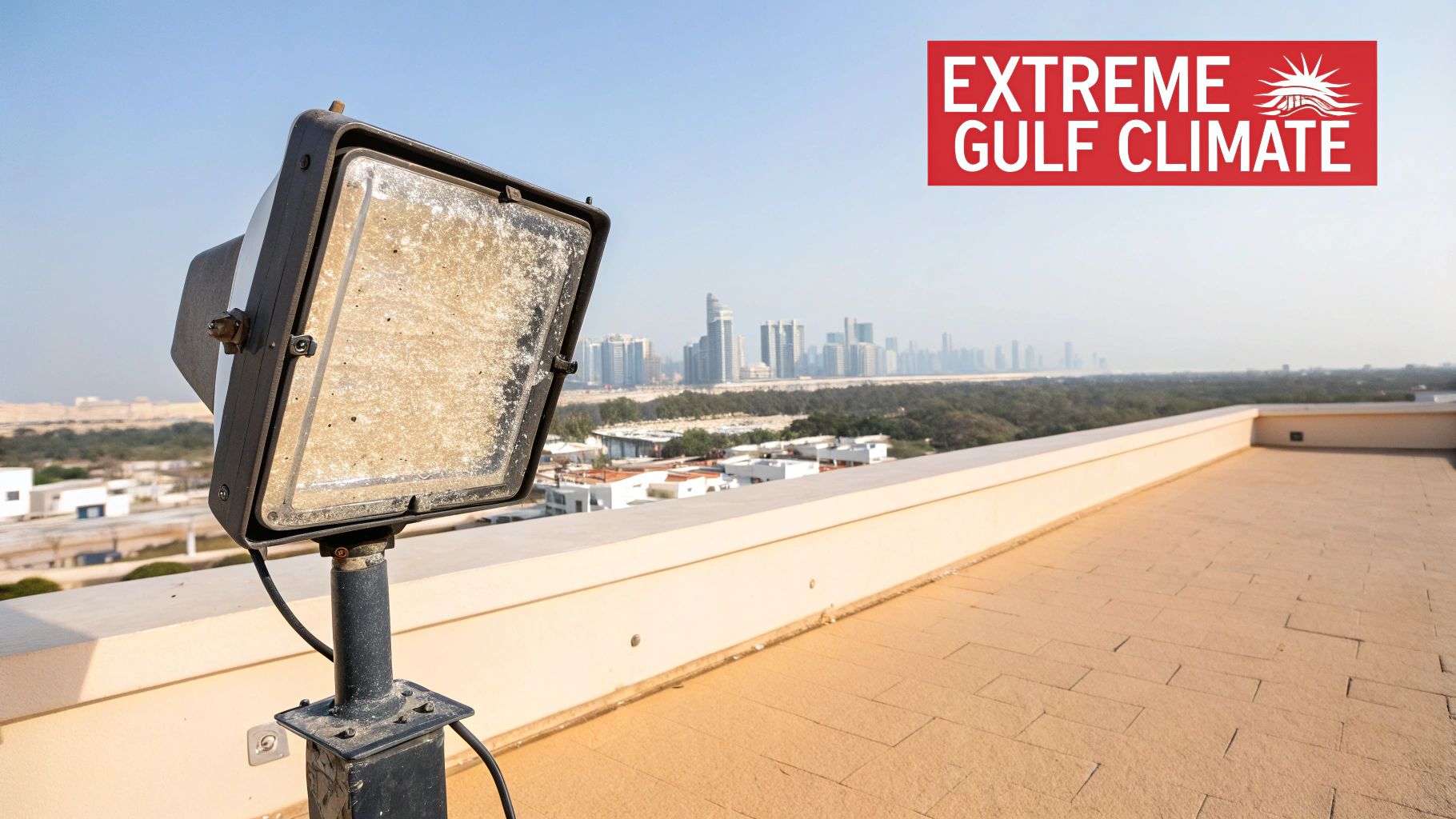
These legacy systems generate significant internal heat, which, when combined with high ambient temperatures, accelerates component degradation. Furthermore, fine dust infiltrates poorly sealed housings, and the salty coastal air corrodes electrical connections, creating a cycle of frequent breakdowns and unreliable performance. This makes a robust energy management solution essential for any large-scale project in Dubai.
The Superiority of Modern Flood LED Lights
Engineered for extreme durability, modern flood LED lights offer a superior alternative. They operate at lower temperatures and are constructed with higher-quality materials, making them ideal for the challenging climate of the GCC.
- Thermal Management: Advanced heat sink designs are critical for dissipating heat away from sensitive LED chips and drivers, ensuring reliable operation even during peak summer temperatures.
- Ingress Protection: A high IP rating, such as IP66, is non-negotiable. This certification guarantees the fixture is completely sealed against dust ingress and can withstand powerful water jets, which is essential for any outdoor electrical components in the UAE.
- Energy Efficiency: LEDs excel at converting electricity into light rather than wasted heat. This efficiency significantly reduces energy consumption and lowers long-term operational costs.
In the UAE, a hub for electrical innovation supported by suppliers like GoSwitchgear, flood LED lights have become the standard for modern outdoor infrastructure. Abu Dhabi’s smart city initiatives and Dubai's mandate for 100% LED use in new projects underscore this shift. These initiatives have demonstrated that transitioning to robust flood LED lights can reduce maintenance costs by up to 70% compared to legacy fixtures. For more data, you can explore the Middle East's growing LED lighting market.
This guide provides practical insights for professionals managing industrial and commercial projects, covering everything from core components to selection criteria and installation best practices relevant to the GCC region.
Breaking Down a High-Performance Flood LED Light
To select the right flood led lights for demanding projects across the GCC, it is crucial to understand the internal components that differentiate a high-performance fixture from a standard one. True reliability is engineered from the inside out.
Consider the fixture as a high-performance system: the LED chip is the engine generating light, the driver is its control system, the heat sink is the cooling radiator, and the housing is the protective chassis. In the extreme heat of Dubai or Riyadh, a single weak link can lead to premature failure, compromising safety and inflating operational costs.
The Light Engine: LED Chips
At the core of the floodlight are the LED chips, which convert electricity into photons. For professionals in the field, understanding LED technology is essential for discerning performance differences. The two primary types used in modern floodlights are SMD and COB.
- Surface Mounted Device (SMD) Chips: Comprising multiple small, individual LEDs mounted on a circuit board, this design produces a wide, even beam of light. It is the preferred choice for general area lighting, such as parking lots or large construction sites.
- Chip on Board (COB) Chips: This technology integrates a dense cluster of LED chips into a single module, creating an intense, focused light source. It is ideal for applications requiring a powerful, long-throw beam, like illuminating building façades or sports stadiums.
The choice between SMD and COB directly impacts the light's performance characteristics. COB provides high-intensity punch, whereas SMD delivers broader, more uniform coverage.
The Driver: The Unsung Hero
The LED driver is the electronic brain that controls the LED chip. This component is critical for durability, especially in regions with unstable power grids. Its primary function is to convert incoming AC power into the stable, low-voltage DC power required by the LEDs.
A high-quality, isolated driver provides essential layers of protection for any outdoor installation:
- Over-voltage and Under-voltage Protection: Defends against unpredictable power fluctuations.
- Short Circuit Protection: Prevents catastrophic failure in the event of a wiring fault.
- Over-temperature Protection: A vital feature in the GCC, this function dims or shuts down the light if it reaches a dangerously high temperature, preventing thermal damage.
For engineers in the UAE, specifying floodlights with robust, high-temperature-rated drivers is a fundamental requirement. It is the only way to achieve the advertised 50,000+ hour lifespan and avoid costly early replacements.
Thermal Management: The Heat Sink
Although LEDs are far more efficient than legacy lamps, they still generate heat. Effective thermal management is the most critical factor for ensuring long-term performance in high ambient temperatures. This is the sole purpose of the heat sink.
In a well-designed floodlight, the heat sink is an integral part of the die-cast aluminum body, often featuring deep fins to maximize surface area for passive cooling. This design effectively draws heat away from the LED chips and driver. Without efficient heat dissipation, the light's output diminishes, its color shifts, and its lifespan is significantly reduced. A heavy-duty, oversized heat sink is a clear indicator that a floodlight is built to withstand GCC conditions.
Specifying the Right Flood LED Light Like an Engineer
When specifying flood LED lights for a project in Dubai or Abu Dhabi, relying solely on wattage is insufficient. Real-world performance is determined by a set of key metrics that dictate efficiency, light quality, and durability. Misinterpreting these can lead to underlit sites, unexpected operational costs, or premature failures.
To make an informed decision, it is essential to read a technical datasheet accurately. All the necessary data to match a fixture to its application and ensure compliance with UAE and GCC standards is provided there.
Beyond Wattage: Core Performance Metrics
Wattage only indicates power consumption, not light production. As a professional, your focus should be on metrics that define actual performance.
- Lumens (lm): This measures the total raw light output of the fixture. More lumens equate to more light.
- Lux (lx): This metric quantifies the amount of light that reaches a specific surface (lumens per square meter). It determines whether an area like a workstation or security checkpoint is adequately illuminated.
- Luminous Efficacy (lm/W): This is the true measure of efficiency, calculated by dividing lumens by wattage. A higher luminous efficacy translates directly into lower energy bills.
The diagram below illustrates how key internal components work together to deliver these performance metrics.
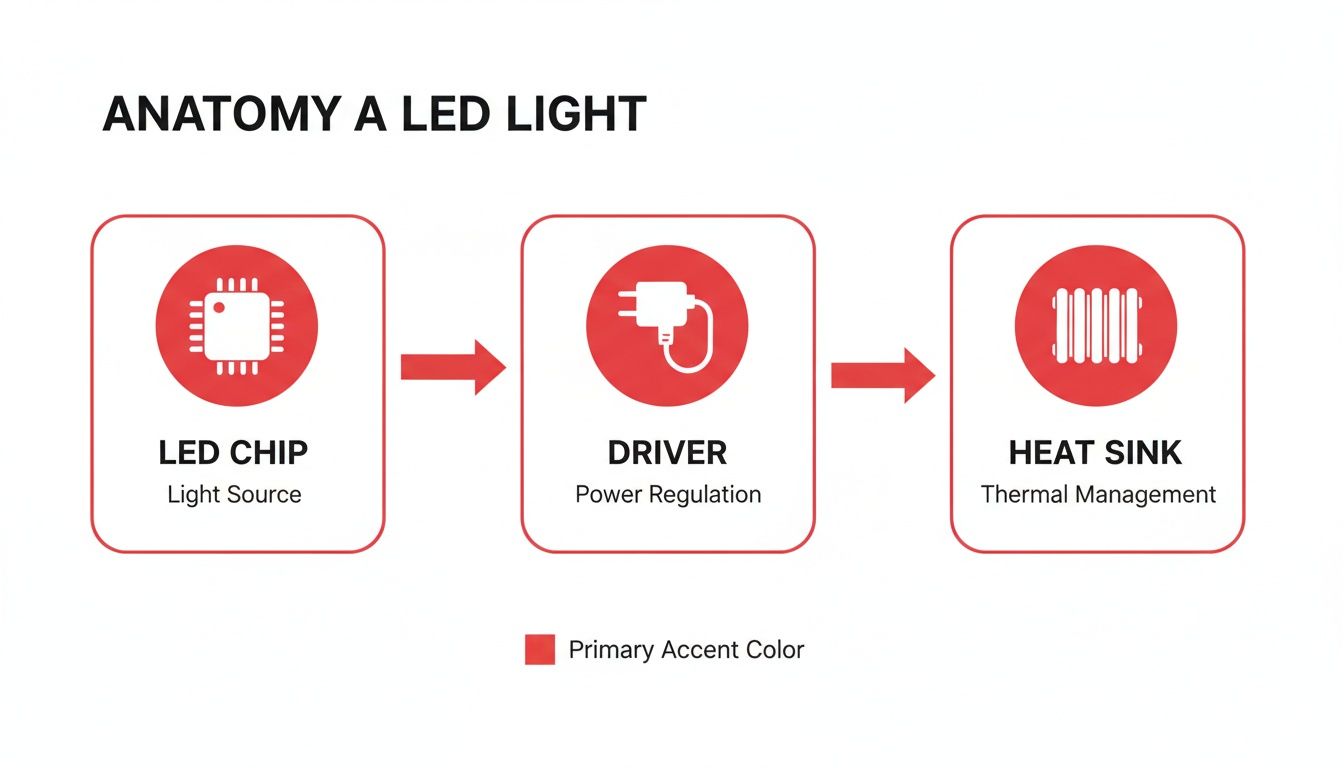
The LED chip, driver, and heat sink form a critical system. A deficiency in any of these components will compromise the entire system's performance and lifespan.
Defining Light Quality and Environment
The quality of light is as important as its brightness for both safety and aesthetics. Two key metrics define the visual environment a light will create.
Color Rendering Index (CRI) is a score indicating how accurately a light source reveals the true colors of objects compared to natural daylight. For professional outdoor lighting, a CRI of 80+ is essential, especially for applications like architectural illumination or ensuring clarity in security camera footage.
Correlated Color Temperature (CCT) describes the perceived color of the light, measured in Kelvins (K).
- Warm White (2700K-3000K): Creates a cozy, inviting ambiance suitable for hospitality or residential common areas.
- Neutral White (4000K): A clear, balanced light that is a versatile choice for most commercial and industrial applications.
- Cool White (5000K+): A crisp, high-contrast light ideal for large-area security lighting where maximum visibility is the priority.
Built for the GCC Climate: IP and IK Ratings
The UAE's environment is unforgiving, with relentless dust, heat, and humidity. Two specific ratings are therefore essential for any flood LED light specified for outdoor use.
IP (Ingress Protection) Rating indicates how well a fixture is sealed against solids (dust) and liquids. The first digit rates solids protection (0-6), and the second rates liquids (0-8).
For any outdoor project in the GCC, IP66 should be considered the minimum acceptable standard. The '6' for solids means it is completely dust-tight, while the '6' for liquids means it can withstand powerful water jets, protecting it from both sandstorms and high-pressure cleaning.
IK (Impact Resistance) Rating measures the enclosure's resistance to physical impact on a scale from IK00 to IK10. In public spaces or industrial sites where physical contact is likely, an IK08 rating ensures the fixture can withstand significant impact without failing.
These ratings are a guarantee of a product's suitability for the region's demanding conditions. This commitment to quality has contributed to Dubai's municipal lighting energy consumption being reduced by 55%, saving approximately AED 150 million annually.
Comparison of Lighting Technologies for Outdoor Applications
This table provides a side-by-side comparison of modern Flood LED Lights with legacy Halogen and High-Pressure Sodium (HPS) technologies, highlighting the key metrics for efficiency, cost, and longevity.
| Performance Metric | Flood LED Lights | Halogen Floodlights | HPS Floodlights |
|---|---|---|---|
| Luminous Efficacy | 100-170 lm/W | 12-20 lm/W | 80-140 lm/W |
| Lifespan (Hours) | 50,000 - 100,000+ | 1,000 - 2,000 | 24,000 |
| CRI | 70-95 | 95-100 | 20-30 |
| Durability (IK Rating) | IK08 Typical | IK02 - IK05 | IK07 - IK08 |
| Control & Dimming | Instant & Granular | Instant On, Limited | Slow Start-up |
| Energy Consumption | Very Low | Very High | Moderate |
The data clearly shows that while HPS offered a reasonable lifespan and efficacy, its poor color rendering makes it unsuitable for many modern applications. Halogen, though inexpensive upfront, is highly inefficient and fragile. Flood LEDs outperform both technologies across nearly every metric, providing a robust, efficient, and high-quality lighting solution designed for today’s projects.
Matching Flood LED Lights to Real-World GCC Applications
Selecting the right flood led lights involves more than interpreting a spec sheet; it requires translating technical data into practical, application-specific solutions for projects across the Gulf. For engineers and procurement teams in the UAE and GCC, the key skill is matching fixture performance to project requirements to ensure long-term reliability.
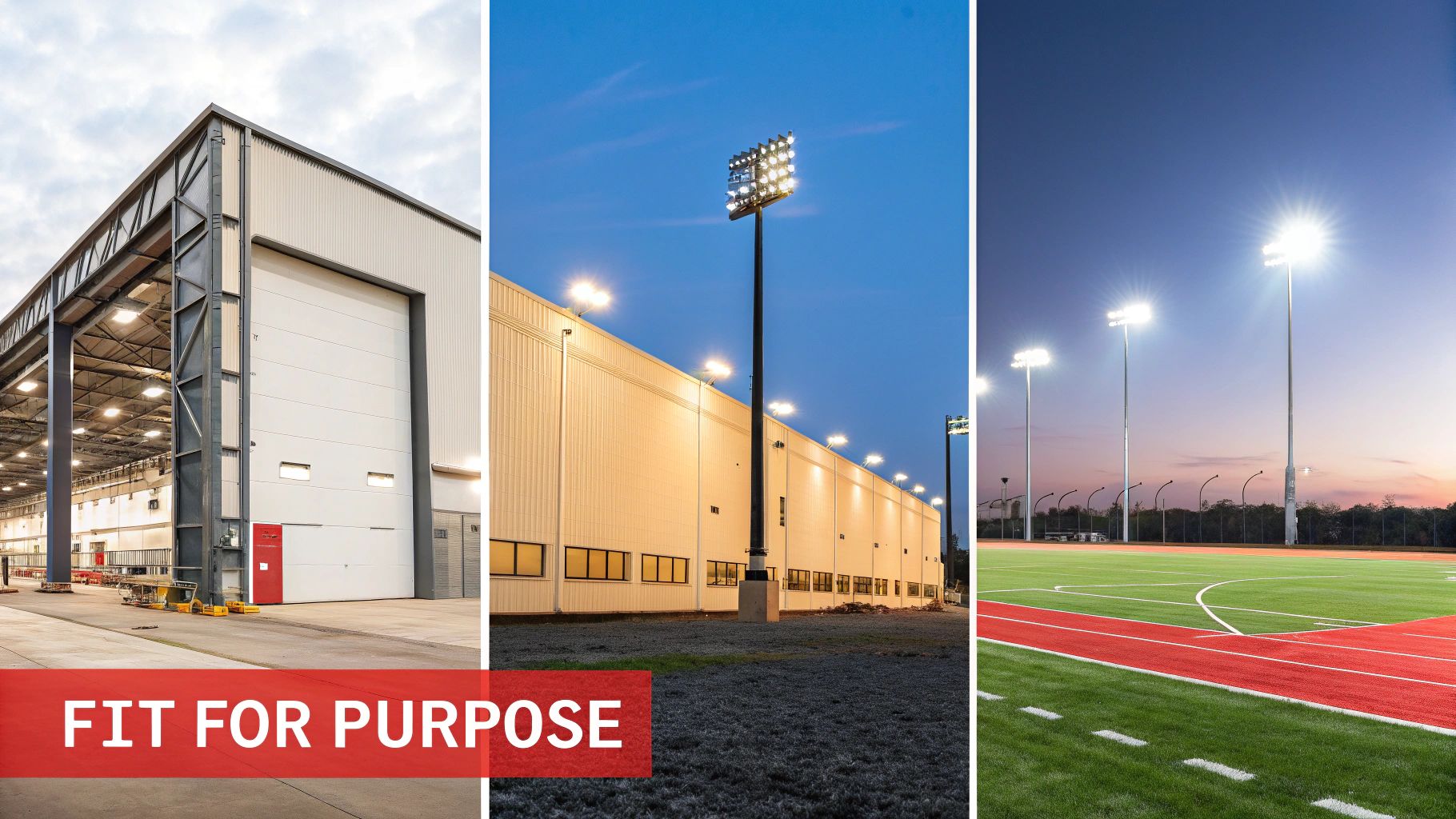
The right fixture must meet safety, aesthetic, and budgetary goals. Below, we examine four common scenarios in the region and identify the specific lighting requirements for each.
Industrial Warehouses and Logistics Centres
The massive logistics hubs in Jebel Ali and industrial zones across Saudi Arabia operate 24/7 and are harsh environments for equipment. Lighting in these facilities must prioritize safety and productivity, requiring fixtures that can withstand heat, dust, and physical impacts.
- Lumen Output: High output is essential. Fixtures in the 20,000 to 50,000 lumens range are needed to eliminate shadows across large floor areas and high racking.
- CCT: A cool white 5000K is the industry standard, providing crisp, high-contrast light that enhances worker alertness and visibility during night shifts.
- Durability: An IP66 rating is mandatory to protect against dust and high-pressure washing. An IK08 rating ensures the fixture can withstand accidental impacts from machinery.
Architectural Façade Illumination
Illuminating the iconic skylines of Dubai and Abu Dhabi requires precision and control. The objective is to accentuate architectural features, create visual impact, and ensure the building's colors are rendered accurately.
- Beam Angle: Asymmetric beams are ideal for directing light precisely onto the building surface, preventing light pollution and trespass.
- CRI: A Colour Rendering Index of 90+ is essential. A lower CRI will cause building materials like stone, glass, or metal to appear dull and lifeless.
- CCT: The choice often depends on the desired aesthetic, with 3000K (warm white) or 4000K (neutral white) being popular for creating an elegant and sophisticated appearance.
Sports Arenas and Recreational Facilities
Sports lighting, whether for a local football pitch or a professional stadium, has some of the most stringent requirements. It must provide intense, uniform illumination that is comfortable for players and spectators and meets broadcast standards.
For sports applications, the primary focus is on delivering high lux levels on the playing surface while minimizing glare. A single misplaced beam can impact a critical moment in a game.
- Lux Levels: Requirements vary by sport and level of play, but often 500 lux or more is needed on the field of play.
- Glare Control: Fixtures must be equipped with specialized optics and shields to prevent glare that could distract athletes or spectators.
- Flicker-Free: For broadcasted events, flicker-free drivers are non-negotiable to ensure smooth and clear slow-motion replays without strobing effects.
Solar-Powered Lighting for Remote Sites
For applications such as perimeter security at isolated industrial plants or lighting for off-grid infrastructure, solar-powered flood LED lights are an ideal solution. Here, the focus shifts to efficiency and reliable energy storage.
The key is to balance a high-efficiency luminaire with a correctly sized solar panel and a battery capable of providing several nights of autonomy. In the UAE, solar flood LED lights are becoming a key component of renewable energy and industrial projects, making them a relevant focus for customers of GoSwitchgear. This approach eliminates the high costs associated with trenching and cabling, making it the preferred solution for remote locations.
Getting Installation and Maintenance Right for Maximum Lifespan
Selecting a high-quality fixture is only the first step; proper installation and a consistent maintenance routine are essential to achieving the advertised 50,000+ hour lifespan. For electricians and technicians, following best practices from day one prevents costly callbacks, ensures compliance with local regulations, and protects the client's investment.
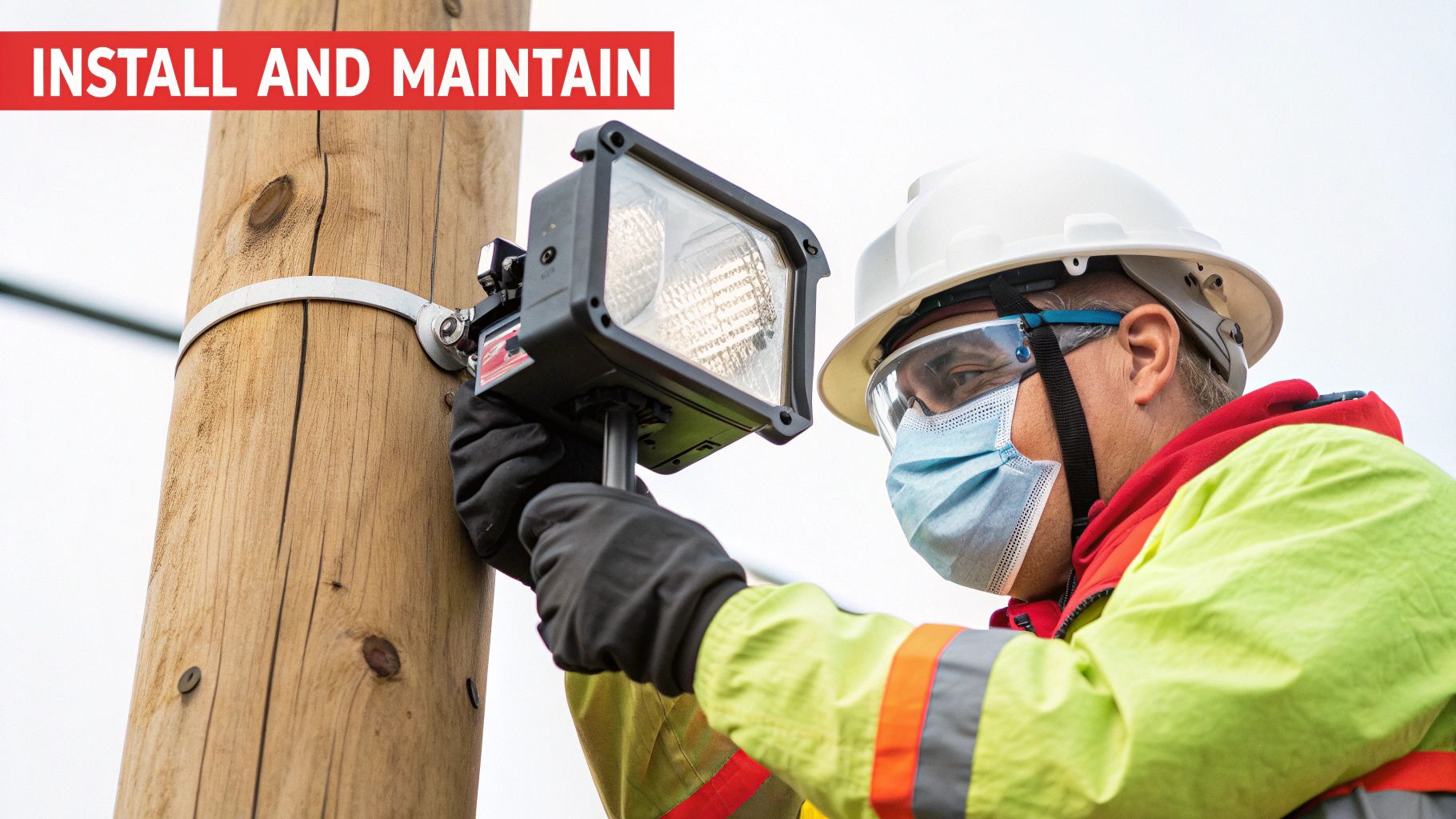
Here are practical steps for proper installation and long-term care.
How to Install: Secure Mounting and Smart Aiming
The fixture must be securely mounted using appropriate corrosion-resistant hardware. In the UAE's climate, this means stainless steel or hot-dip galvanized fasteners are essential to prevent rust and failure.
Proper aiming is equally critical to ensure effective and responsible lighting.
- Prevent Light Trespass: Aim fixtures downward to illuminate the target area without spilling light onto adjacent properties or into the night sky.
- Minimize Glare: Ensure beams are not directed at roads or walkways to avoid creating a safety hazard for drivers and pedestrians.
- Maximize Efficiency: Correct aiming ensures every lumen is utilized effectively, improving security and visibility without needing a more powerful fixture.
Compliant Wiring and Weatherproof Connections
All electrical work must comply with local utility regulations and IEC standards. Use appropriately gauged, UV-resistant cabling, and ensure all connections are housed within certified, weatherproof junction boxes.
The connection point between the fixture’s cable and the main supply is the most vulnerable part of the system. Use IP67-rated gel-filled connectors or heat-shrink tubing to create a seal that is impervious to humidity and dust.
Neglecting this step can lead to short circuits, driver failure, and significant safety risks. Always verify proper grounding to protect the system from power surges.
Common Installation Mistakes to Sidestep
Even experienced professionals can make small errors that shorten a system's lifespan. Avoid these common installation mistakes.
| Mistake to Avoid | The Painful Consequence | The Right Way to Do It |
|---|---|---|
| Lousy Waterproofing | Moisture ingress causes short circuits and corrosion. | Always use IP67+ rated connectors and junction boxes. |
| Careless Aiming | Results in light pollution, dangerous glare, and wasted energy. | Use a laser or an aiming tool for precise alignment. |
| Loose Mounting | Vibrations can loosen internal components and connections. | Torque all mounting bolts to the manufacturer’s specifications. |
| Skipping Surge Protection | A voltage spike can instantly destroy the LED driver. | Ensure the fixture has adequate built-in surge protection. |
A Simple Maintenance Schedule
While flood LED lights are low-maintenance, they are not maintenance-free. A proactive inspection schedule will keep them performing optimally for years.
- Visual Check-Up (Every 6 Months): Inspect the fixture for any damage to the housing, lens, or mounting hardware. Check that all seals and gaskets are intact and not degraded by sun exposure.
- Annual Cleaning (Every 12 Months): Dust and sand accumulation can reduce light output by up to 30%. Clean the lens with a soft cloth and mild detergent to restore full brightness.
- Connection Check (Every 24 Months): During routine electrical inspections, verify that all connections are tight and show no signs of corrosion.
For a broader perspective on equipment care, reviewing top preventive maintenance best practices can provide valuable strategies. Following these installation and maintenance guidelines protects the hardware and ensures a long, reliable service life.
Your Partner for High-Quality Lighting Solutions in the GCC
Selecting the right flood LED lights for projects in the GCC requires an engineering-focused approach. It means looking beyond wattage to specify fixtures based on critical performance metrics like luminous efficacy and IP ratings.
It also demands matching the fixture to the application's real-world needs, whether for industrial durability or architectural precision. Finally, professional installation practices are essential to guarantee safety and achieve the promised longevity.
By mastering these areas, you can design and implement lighting systems that are robust, efficient, and reliable in our demanding regional climate. This empowers you to make informed decisions that save energy and reduce long-term operational costs for your clients.
Sourcing Your Next Project
When you are ready to source high-quality, compliant flood LED lights and the necessary electrical accessories for your projects in Dubai, Abu Dhabi, and across the GCC, consider GoSwitchgear your digital partner.
At GoSwitchgear, our mission is to simplify procurement for the region's leading electrical professionals. We provide access to certified products and the technical support needed to execute projects flawlessly, ensuring both compliance and performance.
This guide provides the foundational knowledge to specify with confidence. For your next project, explore our extensive catalogue of industrial and commercial lighting solutions. We are committed to the success of engineers, panel builders, and contractors by providing the right components for any challenge. Find the ideal lighting solution for your needs on GoSwitchgear today.
Frequently Asked Questions
When specifying or installing flood LED lights in the demanding conditions of the UAE and GCC, several common questions arise. Here are clear, practical answers to help engineers, electricians, and procurement teams address these challenges.
What IP Rating Is Essential For Flood LED Lights in Coastal UAE Cities Like Dubai?
For coastal cities like Dubai, where salt, sand, and humidity are prevalent, a minimum rating of IP66 is essential.
While an IP65 rating protects against dust and water spray, IP66 provides protection against powerful water jets. This is crucial for withstanding sandstorms, heavy rain, and the high-pressure cleaning common on commercial buildings. For optimal durability, look for fixtures with specialized coatings that offer salt-mist resistance to prevent corrosion from the humid, salty air.
How Do I Choose Between a Symmetric and an Asymmetric Beam Angle?
The choice depends entirely on where the light needs to be directed.
- Symmetric Beam Angle: This is the standard choice for illuminating wide, open areas uniformly. It is ideal for applications like car parks, storage yards, or construction sites, where a broad, even distribution of light (e.g., 90° or 120°) is required.
- Asymmetric Beam Angle: This option provides precise light control, pushing light forward and downward to prevent upward or backward spill. It is the best choice for lighting building façades, sports fields, or streets, as it directs light exactly where it is needed without causing glare or light pollution.
A simple way to visualize the difference is that a symmetric beam creates a circular pool of light, while an asymmetric beam creates a more controlled rectangular or oval shape. This control is critical for performance-focused applications.
Are Integrated Solar Flood LED Lights a Viable Option For Commercial Projects in the UAE?
Yes, they are not only viable but are increasingly becoming a preferred solution for commercial projects throughout the UAE. They are an excellent choice for applications such as perimeter security, signage illumination, and lighting remote areas where trenching for power cables is impractical or cost-prohibitive.
Modern solar units feature highly efficient panels and long-lasting LiFePO4 batteries, designed to provide several nights of illumination even after overcast days. By eliminating electricity costs and simplifying installation, they can significantly reduce both the initial and long-term costs of a project.
What Is the Importance of Surge Protection For Outdoor LED Floodlights?
Surge protection is a critical requirement for outdoor floodlights in the GCC, not an optional feature. The regional power grid can experience transient voltage spikes from lightning strikes or the switching of large industrial equipment.
A single surge can instantly destroy the sensitive electronic drivers in an LED fixture, leading to immediate failure and costly replacement. A Surge Protection Device (SPD), whether internal or external, acts as a safeguard by diverting harmful excess voltage. Specifying floodlights with robust, built-in surge protection is a small upfront investment that protects the larger investment in the lighting system itself.
For sourcing high-quality, compliant flood LED lights and all the electrical accessories needed to do the job right, think of GoSwitchgear as your digital partner. We give you direct access to the components you need for projects across Dubai, Abu Dhabi, and the entire GCC. Find the ideal lighting solution for your needs on GoSwitchgear today.
Share this post

Related
Posts
A Guide to Choosing AC to DC Converters for UAE & GCC Electrical Systems
Master AC to DC converters with this comprehensive guide for engineers in the UAE & GCC. Learn selection, installation, and...
A Guide to Drill Machine Prices in the UAE for Technical Professionals
Find the best drill machine price in UAE. Our 2026 guide helps contractors and engineers choose the right corded, cordless,...
A Professional’s Guide to Choosing AGM VRLA Batteries in the UAE Climate
Discover why AGM VRLA batteries are the superior power solution for UPS, solar, and industrial systems in the UAE. Get...
How to Choose the Right Lithium Ion Battery Charger for UAE & GCC Projects
Discover how to select the right lithium ion battery charger for UAE projects. This guide covers specs, BMS integration, and...
.jpg)