.jpg)


Posted by:
Category:
Comments:
Post Date:
How to Select the Optimal Hacksaw Blade for Electrical Components in UAE Climate
In UAE’s harsh climate, cutting conduit, sheet metal, or PVC for switchgear and panel installations demands the right hacksaw blade. Engineers and panel builders need blades that withstand extreme heat, humidity and dust while ensuring precise cuts and minimal downtime. This guide offers technical specs, installation best practices and maintenance tips tailored to GCC projects.
Benefits Of Hack Saw Blade Selection
On electrical components UAE sites, a blade that underperforms becomes a daily headache. You need to match blade material, tooth-per-inch count and protective coating to your environment. Get it right and your cuts stay clean, downtime stays low, and your toolbox carries fewer extras.
Plus, the math backs it up. The global hacksaw blade market jumps from $74.8 M in 2024 to $144.8 M by 2030, growing at a 5.746 % CAGR. Read more here.
And just as you’d specify precise energy meters GCC to optimise your energy management solution Dubai, blade choice impacts overall project quality and cost-per-cut.
Exploring Hack Saw Blade Anatomy And Material Types
When you glance at a hacksaw blade, it’s tempting to think “one size fits all.” Yet every notch, curve and coating can dramatically change how it slices through conduit or panel framing on a dusty GCC site. Similar to selecting a reliable DIN rail isolator or SMPS power supply for control panels, blade geometry determines performance in real-world conditions.
Key Blade Components
- Tooth Geometry: Controls chip ejection and cutting speed.
- Back Support (Spine): Steel rail that keeps the blade from flexing under tension.
- Blade Length: 150 mm to 300 mm to match frame sizes and cutting reach.
- Mounting Holes: Fit quick‐release or fixed‐frame hacksaws with secure locking.
Materials And Heat Treating
Blade metal dictates flexibility, hardness and wear resistance. In humid, salty UAE air you’ll also want a corrosion‐fighting finish.
- High‐carbon steel: Bendable but wears faster on rough metals.
- Bi‐metal blades: Weld high‐speed steel teeth to spring‐steel backs—ideal for steel conduit.
- Carbide‐tipped blades: Rock‐hard teeth hold their edge cutting thick or abrasive materials.
Manufacturer datasheets (e.g., from Bahco or Lenox) show bi-metal blades can outlast carbon blades by up to 50 % in steel cutting. Heat quenching and tempering balance hardness and toughness to resist both yaw and shattering.
Tooth Patterns And Thickness
Think of TPI (teeth per inch) and thickness like comb spacing:
- 8–14 TPI: Chunky PVC or aluminium.
- 18–24 TPI: General steel conduit and sheet-metal.
- 32+ TPI: Burr‐free stainless or non‐ferrous alloys.
Thickness ranges:
- 0.5 mm: Flexible, curved cuts.
- 1.0 mm: Rigid, straight‐line work.
Thinner blades bend around curves; thicker blades stay rigid under high tension.
Application Examples In Electrical Work
- Cutting 20 mm GI conduit? A 24 TPI bi‐metal blade holds its edge and resists heat.
- Trimming PVC trunking? A 14 TPI high‐carbon blade flexes around curves.
- Slicing thin steel panels? An 18 TPI carbide blade leaves burr‐free edges.
These setups stand up to GCC heat, dust and humidity (IEC 60529 IP54/IP65 considerations) and reduce blade swaps on busy Abu Dhabi and Dubai sites.
Environmental Considerations
Hot, humid air and sand accelerate corrosion and clog teeth:
- Black Oxide: Cuts glare, repels rust under bright sun.
- Phosphate: Abrasion resistance on sandy sites.
- Teflon: Lowers friction for smoother strokes.
Pick coatings that shed debris to prolong blade life and keep cuts predictable.
Choosing The Right Hack Saw Blade For Electrical Tasks
Selecting the right hacksaw blade can feel like a guessing game on a busy electrical site. When you match blade specs to material and frame, each cut becomes predictable. Follow this step-by-step guide.
Framework For Blade Selection
- Identify workpiece material.
- Match TPI to thickness and speed.
- Select blade material (hardness vs flexibility).
- Choose protective coating for heat, dust and humidity.
- Verify frame IP rating (IP54/IP65) and tension gauge.
- Plan inventory by expected cut counts.
Comparison Of Blade Materials And Tooth Configurations
| Material Type | TPI Range | Ideal Application | Expected Lifespan |
|---|---|---|---|
| High-Carbon Steel | 14–18 | PVC and plastics | 3–5 cuts |
| Bi-Metal | 18–24 | Steel conduit | 20–30 cuts |
| Carbide-Tipped | 24–32 | Sheet metal panels | 50+ cuts |
Balance performance, durability and cost per cut using this table.
Coating And Corrosion Resistance
- Black Oxide: Blocks glare and rust in dusty conditions.
- Phosphate: Abrasion resistance against sand and grit.
- Teflon: Low friction, less heat in continuous cuts.
Frame Fit And IP Rated Combinations
- Choose an IP54 or IP65 frame to block dust and humidity.
- Ensure blade sits flush without gaps.
- Follow manufacturer tension specs.
- Label frame orientation for quick swaps.
Pro Tip
Select a frame with an integrated tension gauge for on-the-fly checks.
Cost-Benefit Comparison
Calculate cost per cut:
- $5 bi‐metal blade, 25 cuts → $0.20 per cut.
- $2 carbon blade, 5 cuts → $0.40 per cut.
Investing in bi‐metal often lowers long-term costs and aligns with procurement strategies for electrical components UAE.
For deeper material insight, see insulation materials for electrical applications.
Next Steps For Site Selection
Review project requirements and site conditions. Use this decision framework as a checklist. The right blade choice slashes downtime, minimises waste and guarantees precise cuts. Contact GoSwitchgear’s Dubai team for expert procurement support.
Summary Of Key Points
- Match TPI to material thickness for fast, clean cuts.
- Pick blade material for the right hardness-flex balance.
- Choose coatings that withstand heat, dust and humidity.
- Confirm frame fit, IP rating and tension gauges.
- Compare cost per cut vs blade lifespan for budget efficiency.
Installing And Replacing Hack Saw Blades Safely
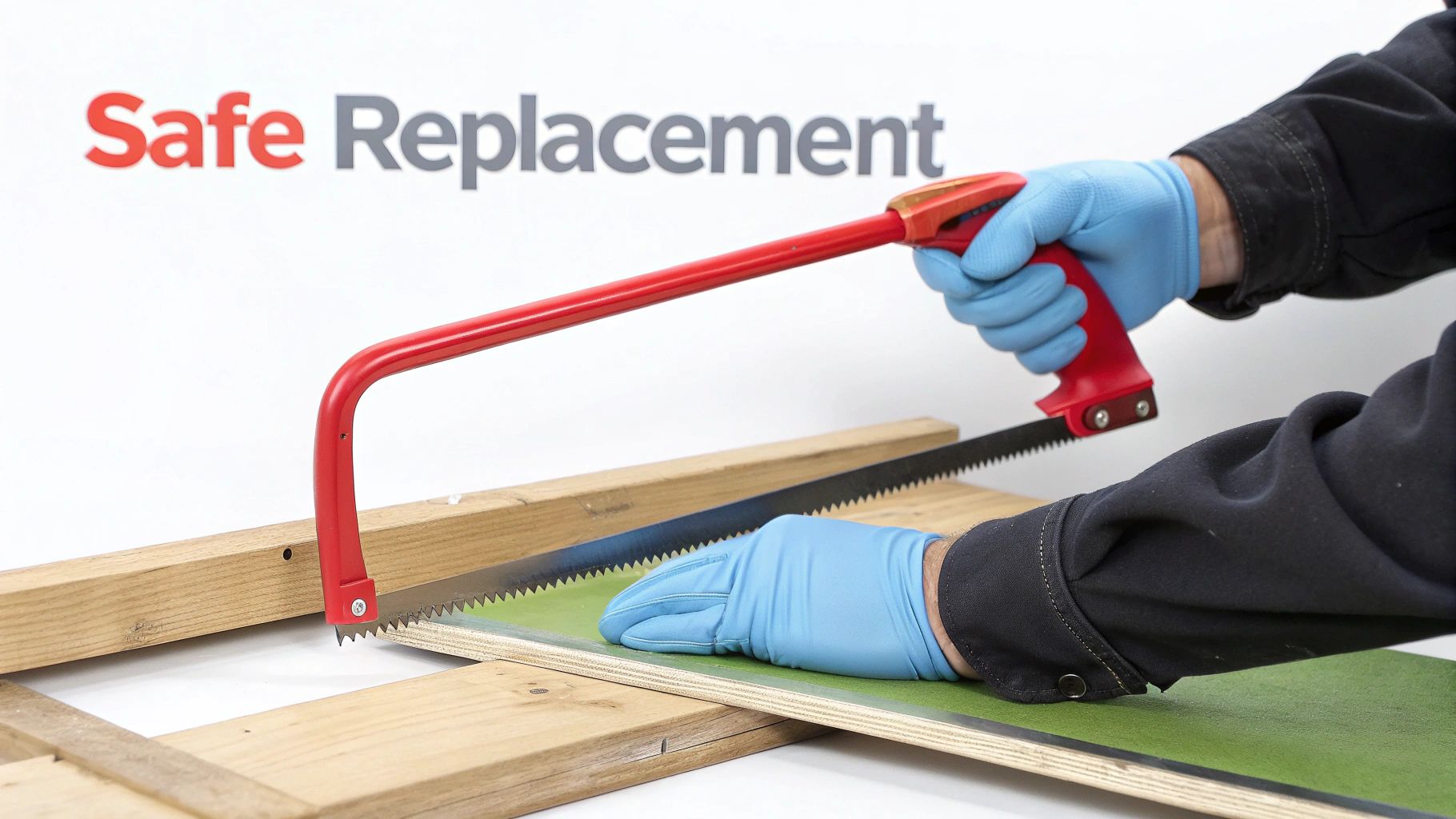
Proper blade seating makes the difference between a smooth cut and costly delays on UAE job sites. Follow these steps to remove old blades, set tension, check alignment and keep your crew safe.
Preliminary Safety Checks
- Wear cut-resistant gloves and ANSI Z87.1 safety glasses.
- Confirm IP-rated barriers if working near live panels.
- Inspect frame for cracks, loose pins or worn tension dials.
Removing Old Blades
Release tension slowly. Keep hands clear. Pull blade ends straight off mounting pins. Dispose of used blades in a covered metal box.
Installing New Blades
- Orient teeth forward or backward by cutting style.
- Push ends onto frame pins until they click.
- Tension to a level that yields a small spring under thumb pressure.
Tension And Alignment
Aim for 20–30 kgf on a 300 mm blade per UAE hand-tool safety codes. Use built-in or separate tension meter. Ensure blade runs parallel to the frame spine.
Common Mistakes To Avoid
- Under-tension leads to drift.
- Over-tighten risks blade breakage.
- Skip orientation marks and slow down swaps.
UAE Safety Regulations
Every 6 months, log tool calibration and safety inspections per site rules and IEC-aligned standards. Document routines to reduce accidents and downtime.
Torque Settings And Guidelines
| Frame Type | Blade Length | Recommended Torque |
|---|---|---|
| Quick-Release | 300 mm | 25–30 N·m |
| Fixed-Frame | 250 mm | 20–25 N·m |
| Adjustable Handle | 300 mm | 22–28 N·m |
Maintenance After Blade Change
- Inspect frame pins for wear.
- Wipe seat clean of filings.
- Apply light machine oil to pivot points.
Cutting Best Practices For Different Materials
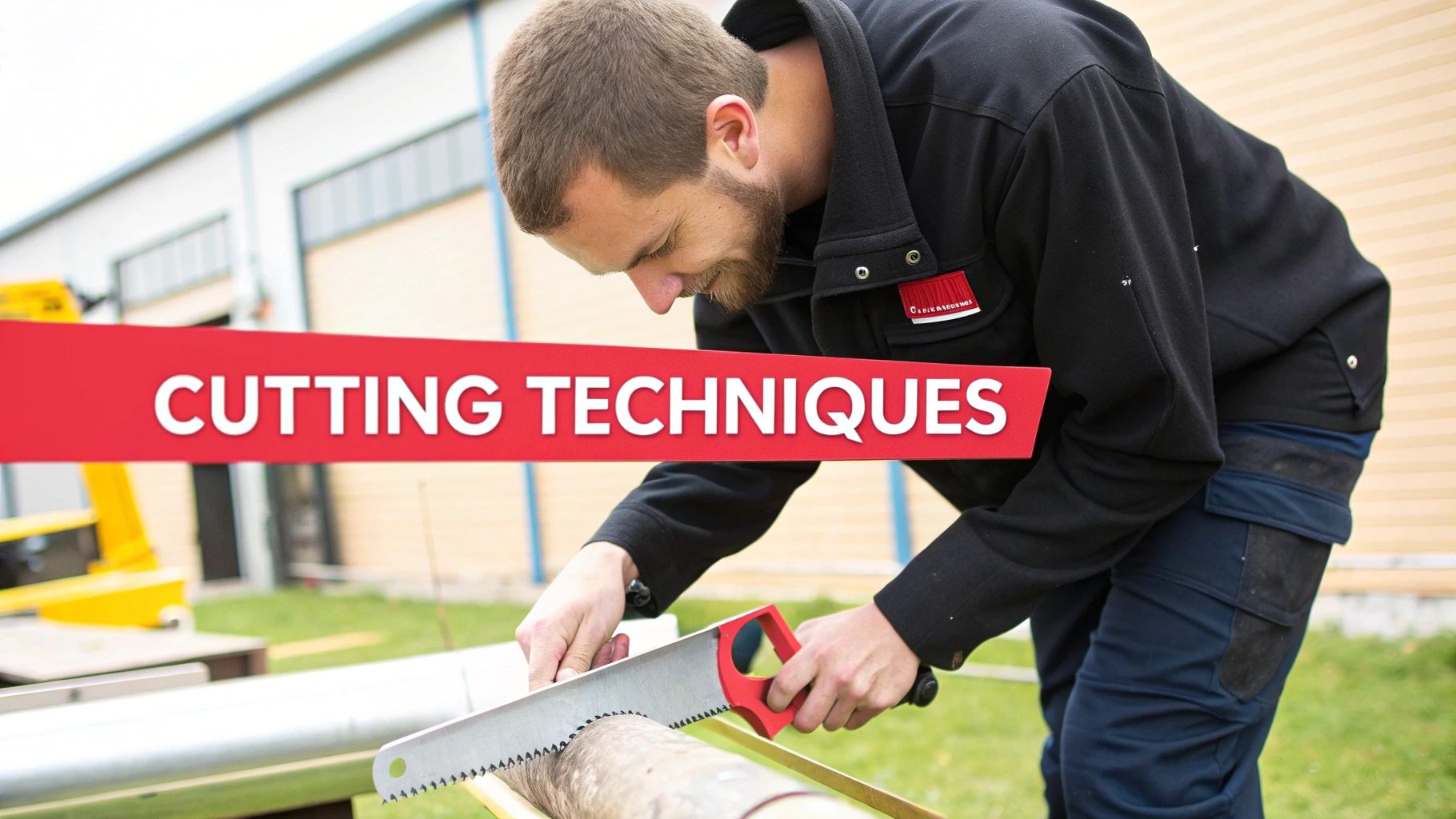
Feed rate and stroke length are critical:
- Ferrous metals: 0.1–0.3 mm/stroke at 40–50 SPM with 24 TPI bi-metal blades and cutting oil.
- Non-ferrous alloys: 0.3–0.5 mm/stroke with 18 TPI blades and light oil.
- Plastics: Under 0.2 mm/stroke with 14 TPI carbon blades to avoid melting.
| Material Type | Feed Rate (mm/Stroke) | Blade TPI | Lubrication |
|---|---|---|---|
| Steel Panels | 0.1–0.3 | 24 | Cutting Oil |
| Aluminium Alloy | 0.3–0.5 | 18 | Light Oil |
| Stainless Steel | 0.1–0.2 | 32 | Soapstone |
For PVC conduit, consult our guide on PVC electrical conduit.
“Swap in a fresh blade the moment you see rough edges,” advises site engineers integrating switchgear and energy meters.
After each shift, clear debris and wipe blades with an oiled cloth to repel moisture. Store blades in sealed racks to maintain performance.
Maintenance And Storage Strategies For Longevity
In the Gulf’s heat, humidity and dust, a simple maintenance plan extends blade life by 30 % and slashes replacements by 40 %.
Pre-Job Inspection Checklist
- Check for chipped or missing teeth.
- Remove filings with a soft brush.
- Inspect frame pins and tension dials.
- Verify coating integrity against Gulf humidity.
- Record cut counts for sharpening or replacement.
Cleaning And Coating Methods
- Brush filings with nylon bristles.
- Wipe blades with light machine oil.
- Apply corrosion inhibitor spray for bi-metal blades.
Storage Solutions
- Store racks away from direct sun and moisture.
- Label blade positions for quick retrieval.
- Rotate blades to balance wear.
For cable management steps, see removing cable ties.
Optimising Inventory And Usage
- Keep high-carbon, bi-metal and carbide stocks.
- Match phosphate coatings to sandy sites.
- Reserve Teflon blades for high-moisture areas.
- Stock extra 24 TPI bi-metal blades for conduit runs.
Track inventory and usage trends quarterly to forecast needs and avoid downtime.
Conclusion And Next Steps For Blade Selection
Matching blade anatomy to your work environment ensures smooth, precise cuts across UAE and GCC projects. You’ve seen how material choice and TPI affect performance. Now integrate this guide into your procurement process alongside quality DIN rail isolator and SMPS power supply packages and reliable energy meters.
Actionable Recommendations
- Identify material and thickness; match to TPI and blade material.
- Verify frame IP rating and tension gauge.
- Label frames and maintain tension records.
- Apply corrosion coatings for dust and humidity.
Implementation Plan
- Audit your blade inventory and usage logs.
- Tag blades: green for fresh, red for end-of-life.
- Rotate stocks and schedule bi-annual reviews.
- Host hands-on demos for site teams.
Ready to equip your team with top-tier hacksaw blades and integrated switchgear solutions? Contact GoSwitchgear’s Dubai team to streamline your procurement and support Abu Dhabi and GCC projects.
Share this post

Related
Posts
A Guide to Choosing AC to DC Converters for UAE & GCC Electrical Systems
Master AC to DC converters with this comprehensive guide for engineers in the UAE & GCC. Learn selection, installation, and...
A Guide to Drill Machine Prices in the UAE for Technical Professionals
Find the best drill machine price in UAE. Our 2026 guide helps contractors and engineers choose the right corded, cordless,...
A Professional’s Guide to Choosing AGM VRLA Batteries in the UAE Climate
Discover why AGM VRLA batteries are the superior power solution for UPS, solar, and industrial systems in the UAE. Get...
How to Choose the Right Lithium Ion Battery Charger for UAE & GCC Projects
Discover how to select the right lithium ion battery charger for UAE projects. This guide covers specs, BMS integration, and...
.jpg)