.jpg)


Posted by:
Category:
Comments:
Post Date:
Ensuring Power Quality in the UAE: A Guide for Engineers and Panel Builders
For engineers, panel builders, and procurement teams in the UAE and wider GCC, an unstable electrical supply is a direct threat to operational efficiency. Poor power quality—issues like voltage sags or harmonic distortion—can cause equipment failures, increase energy costs, and lead to costly downtime, especially in the region's demanding climate. This guide provides a practical, solution-focused framework for diagnosing and resolving these critical issues.
Why Power Quality Is a Critical Business Concern in the GCC
In the UAE and KSA, power quality is more than a technical metric; it's a core business asset tied directly to uptime and profitability. Poor power quality is a silent threat, causing unexplained equipment failures, inflating energy bills, and triggering expensive, unplanned downtime. An effective energy management solution Dubai teams can rely on must address these foundational issues first.
The region's unique environmental and operational challenges amplify this problem, placing immense stress on both the public grid and in-house electrical distribution systems.
The Impact of Regional Challenges
Your power supply's stability is constantly challenged by factors unique to the GCC. Understanding these pressures is the first step toward building a resilient electrical infrastructure.
- Extreme Heat and Humidity: During peak summer months in Dubai and Abu Dhabi, high ambient temperatures push HVAC systems to their limits. This creates massive electrical loads that can destabilize voltage and strain components like transformers and switchgear.
- Dust and Particulates: Pervasive fine dust requires equipment with high IP ratings (e.g., IP54 or higher) to prevent ingress that causes insulation failure and short circuits. Dust also compromises cooling efficiency, worsening heat-related issues.
- Rapid Renewable Energy Integration: The GCC's ambitious adoption of solar power introduces grid variability. Solar inverters, while essential, can inject significant harmonic distortion back into the network if not properly filtered, impacting nearby facilities.
Practical Example: In a Dubai manufacturing plant, a single voltage sag lasting a fraction of a second can trip an entire production line. This results in hours of lost productivity and wasted materials, making proactive power quality management essential, not optional.
Ignoring these issues traps your team in a reactive maintenance cycle, constantly fighting fires instead of preventing them. Modern equipment—from variable frequency drives (VFDs) to sensitive PLCs—is more susceptible than ever to electrical disturbances. A proactive approach means identifying potential problems before they halt operations. For a deeper dive, explore why power quality monitoring is so important in our detailed guide.
Ultimately, investing in a robust power quality strategy is a direct investment in your facility’s long-term health. It ensures your operations in the UAE and KSA remain competitive and reliable.
Spotting Common Power Quality Problems in the UAE
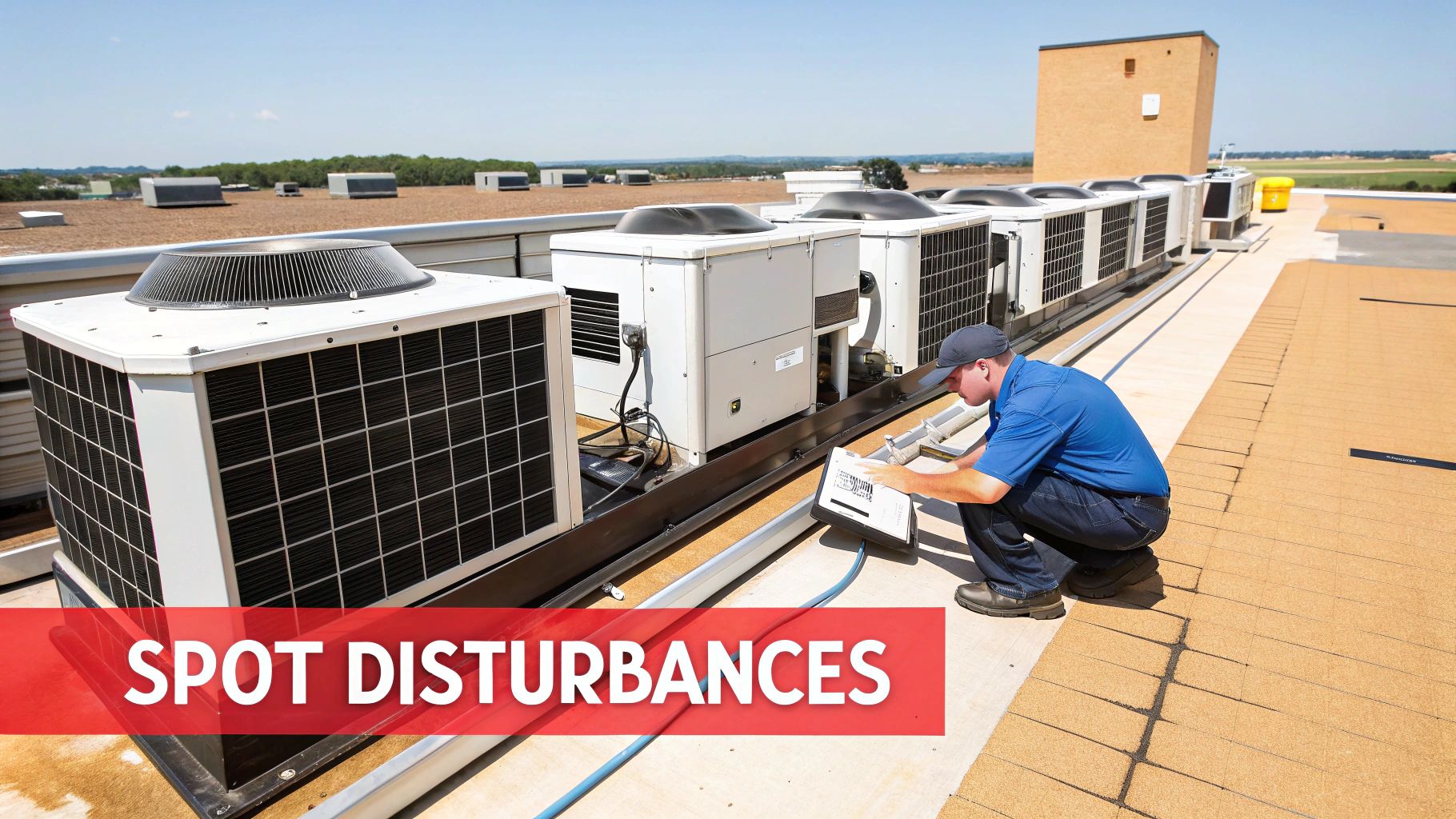
To effectively manage power quality, you must first recognize its primary adversaries. In the demanding industrial and commercial environments across the UAE and Saudi Arabia, electrical issues are symptoms of deeper problems. Pinpointing them is the critical first step toward preventing equipment damage and avoiding costly downtime.
Each disturbance has a distinct signature and a list of common culprits, many exacerbated by the operational realities of the GCC climate. Learning to spot these signs transforms you from a passive victim of power problems into an effective troubleshooter.
Voltage Sags and Swells
Voltage sags (dips) are momentary drops in voltage, often lasting less than a second. When a large air conditioning unit starts, the brief dimming of lights is a classic voltage sag. While seemingly minor, sags can cause sensitive electronics in production lines or data centers to reset or shut down.
A voltage swell is a brief increase in voltage, which can occur when a large load is suddenly disconnected. This spike can stress or destroy delicate electronic components.
Common causes in the GCC include:
- Large Motor Start-ups: The high inrush current drawn by HVAC chillers, pumps, and industrial motors is a primary cause of voltage sags.
- Grid Faults and Switching: Utility operations, such as clearing a fault or switching sources, often create sags and swells that affect multiple facilities.
- Sudden Load Shedding: Abruptly turning off heavy machinery can cause swells as system voltage momentarily overshoots.
The Challenge of Harmonic Distortion
Harmonics are a form of electrical pollution created by "non-linear loads"—equipment that draws power in short pulses rather than a smooth wave. This "noise" is measured as Total Harmonic Distortion (THD) and contaminates the entire power system.
Sources of harmonics are ubiquitous in modern facilities, especially in the UAE and KSA where energy efficiency is a priority.
- Variable Frequency Drives (VFDs): Essential for controlling motor speeds in pumps and fans, VFDs are major harmonic generators.
- LED Lighting: Large-scale, energy-saving LED lighting projects introduce significant non-linear loads.
- SMPS Power Supply: The switch-mode power supplies in computers, servers, and nearly all modern electronics are a key source of harmonics.
- Solar Inverters: The increasing deployment of solar power across Dubai and the wider GCC means more grid-tied inverters, which can push harmonics back into the grid.
High levels of harmonic distortion can cause transformers and neutral conductors to dangerously overheat, trip circuit breakers without a clear cause, and reduce overall energy efficiency.
Transients and Surges
Transients (surges) are extremely fast, high-energy voltage bursts that can last mere microseconds. Despite their brevity, they are among the most destructive power quality issues, capable of degrading or instantly destroying microprocessors and sensitive circuits. While lightning is a known cause, most transients are generated internally or by the local utility grid.
- Capacitor Bank Switching: Utilities switch large capacitor banks to manage power factor, a process that can generate significant voltage transients.
- Internal Switching: Routine starting and stopping of elevators, pumps, and other large inductive loads can create damaging surges within your facility.
- Arcing from Faulty Gear: A poor connection or failing component, such as a faulty DIN rail isolator, can create arcs that send transients through your local network.
To help you connect these issues to their sources, here’s a quick-reference guide relevant to the region.
Common Power Quality Issues and Their Primary Causes
| Disturbance | Description | Common Causes in UAE/GCC | Typical Impact |
|---|---|---|---|
| Voltage Sag | A short-term decrease in voltage, typically lasting less than a second. | Large motor startups (HVAC, pumps), utility grid faults, internal short circuits. | Equipment shutdowns, data loss, production line resets. |
| Voltage Swell | A short-term increase in voltage, often following the removal of a large load. | Sudden load shedding, utility capacitor bank switching, incorrect transformer taps. | Stress on components, insulation breakdown, premature equipment failure. |
| Harmonics | Distortion of the AC waveform by non-linear loads. | VFDs, LED lighting, computer power supplies (SMPS), EV chargers, solar inverters. | Overheating of transformers & neutrals, nuisance tripping of breakers, energy waste. |
| Transients | Extremely fast, high-energy voltage spikes lasting microseconds. | Lightning strikes, utility switching, starting/stopping large motors, arcing. | Instant destruction of electronics, data corruption, gradual degradation of components. |
Recognizing these problems is the foundation of any effective power quality strategy. By understanding their causes, particularly triggers common in the GCC's climate, you can move from reactive repairs to building a resilient electrical system.
The Hidden Costs of Ignoring Power Quality
Poor power quality is more than a technical issue; it's a silent drain on your bottom line. Abstract problems like voltage sags and harmonics translate into tangible financial losses that can hinder even the most efficient facilities. For procurement teams and facility managers, understanding these costs is crucial for justifying proactive investment.
Ignoring these underlying electrical issues leads to a constant battle with unplanned expenses and disruptions, creating a financial drag that often goes unnoticed until a major failure occurs.
Financial Drain of Equipment Failure and Maintenance
The most direct cost comes from damage to physical assets. Every voltage surge weakens sensitive electronic boards, while consistent harmonic distortion slowly degrades the insulation in motors and transformers. This leads to a cascade of expensive problems.
- Premature Asset Failure: A VFD or PLC designed to last a decade may fail in just a few years, forcing unplanned capital expenditure.
- Expensive Replacement Parts: Sourcing specialized electrical components UAE-based distributors may not have in stock can lead to costly delays and extended downtime.
- Increased Maintenance Labour: Technicians spend valuable time chasing "ghost" failures and replacing damaged components instead of performing preventative maintenance, driving up operational costs.
The Crippling Price of Unplanned Downtime
Often, the cost of a failed component is minor compared to the cost of the resulting downtime. The financial impact grows with every minute a critical system is offline. A production line halting in a Jebel Ali factory or a server farm going down in an Abu Dhabi data center has far-reaching consequences.
A single hour of downtime can cost a small manufacturer thousands of dirhams. For larger industrial operations, that figure can easily escalate into the hundreds of thousands.
This isn't just about lost production; it's about paying an idle workforce and facing potential penalties for missing delivery deadlines. The damage to your reputation can be equally severe, eroding client trust.
Hidden Inefficiencies and Wasted Energy
Poor power quality also quietly inflates your utility bills. Harmonic currents, for example, perform no useful work. They simply circulate through your system, generating waste heat and consuming energy inefficiently. This forces transformers, motors, and cables to work harder, leading to higher DEWA or SEWA bills. Over a year, this wasted energy becomes a significant and avoidable operational expense.
The region is recognizing this challenge. The Middle East & Africa (MEA) power quality equipment market is projected to grow significantly, underscoring the urgent need for solutions like harmonic filters and voltage regulators to combat grid instability in extreme climates. You can read more about the trends in the MEA power quality market.
Investing in a robust energy meter GCC-wide and a comprehensive power quality strategy isn't a cost—it's a strategic decision to protect assets, reduce waste, and secure profitability in the competitive Gulf market.
How to Diagnose and Monitor Your Power Quality
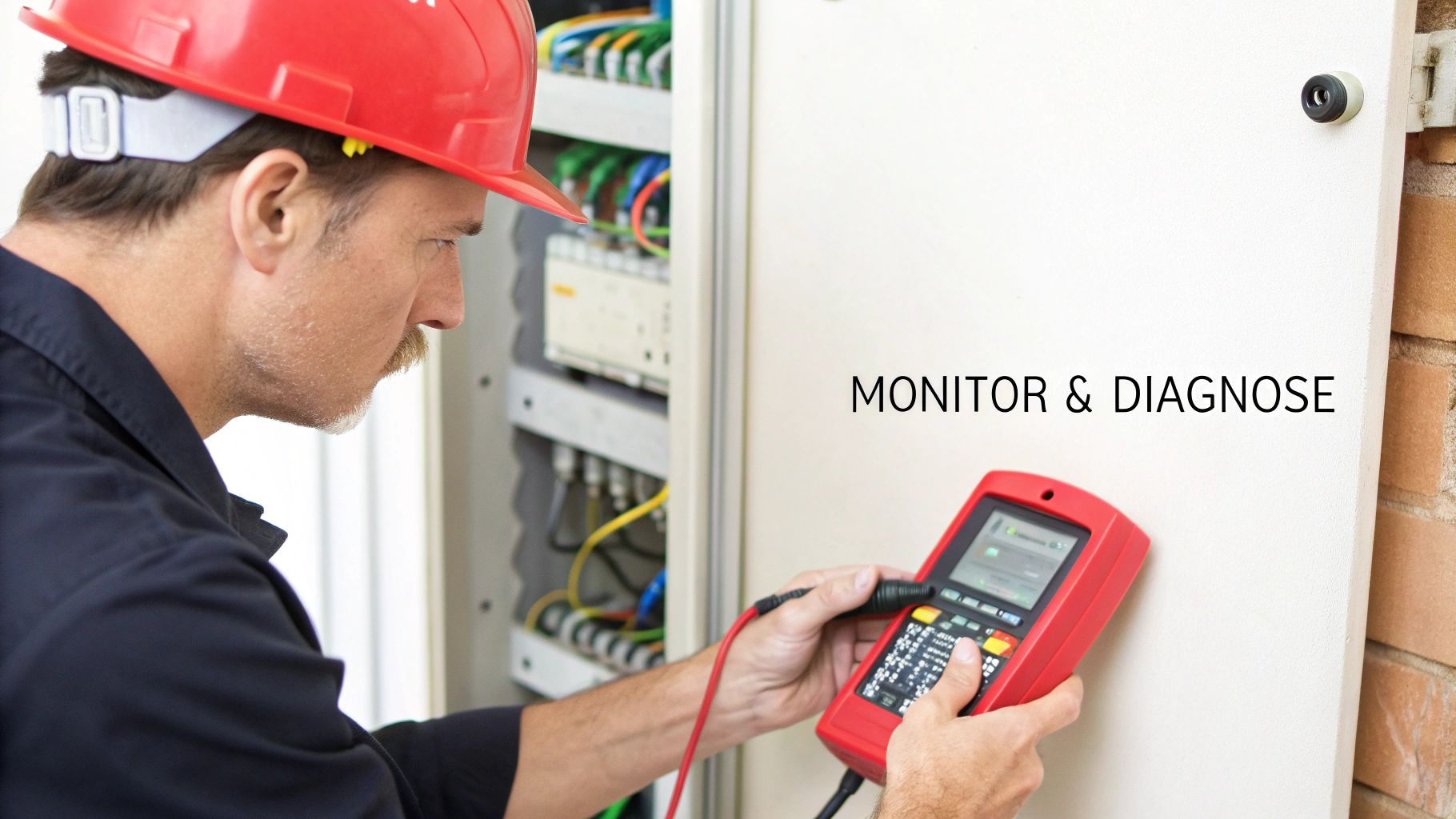
Effective power quality management begins with accurate diagnosis. For engineers and technicians in the UAE, guesswork is an expensive luxury. Reliable data is the only foundation for implementing effective solutions and making informed decisions.
Correctly diagnosing electrical issues requires the right tools and the expertise to interpret the data they provide. This skill transforms a reactive maintenance cycle into a proactive strategy that saves time and money.
Your Diagnostic Toolkit
Choosing the right instrument depends on whether you are troubleshooting a specific issue or establishing a baseline for long-term monitoring.
- Handheld Power Quality Analyzers: These are the workhorses for on-the-spot diagnostics. An electrician can connect one to a suspect panel or machine to capture a real-time snapshot of voltage, current, harmonics, and transients, quickly pinpointing the source of a problem.
- Permanent Monitoring Systems: For mission-critical facilities like data centers in Abu Dhabi or automated manufacturing lines in Dubai, continuous monitoring is essential. These systems are permanently installed at key points in the electrical network, providing 24/7 data logging and instant alerts for any deviations.
Proper placement is critical. For a system-wide overview, start at the main service entrance. For isolated problems, move downstream and take readings at the distribution panel feeding the affected zone.
Best Practices for Installation and Maintenance
- How to Install: Ensure current transformers (CTs) are correctly oriented and that voltage leads are connected to the proper phases. In the dusty GCC environment, verify all connections are tight and enclosures are sealed to their specified IP rating.
- Common Installation Mistakes: Incorrectly configured CT ratios, improper grounding of the analyzer, and placing sensors too far from the load can all lead to inaccurate data.
- Maintenance Schedule: Periodically (e.g., annually) verify connections are secure and free of corrosion. Calibrate the monitoring equipment according to manufacturer recommendations (typically every 1-2 years) to ensure data accuracy.
From Data Collection to Proactive Maintenance
Modern power quality diagnosis integrates advanced technology. The most effective approaches use data analytics and IoT to stream grid data directly into a Building Management System (BMS) or a dedicated energy platform.
This is where a modern energy management solution excels. By implementing a continuous monitoring program, facilities across the GCC can anticipate and prevent problems.
A robust system delivers value in several ways:
- Early Warning Alerts: Receive email or SMS notifications the moment a parameter like voltage or THD exceeds predefined limits, enabling intervention before a catastrophic failure.
- Trend Analysis: Track power quality over time to identify degrading conditions or patterns linked to specific operational changes.
- Regulatory Compliance: Easily generate reports to demonstrate compliance with local utility standards from providers like DEWA or SEC, particularly regarding harmonic emissions and power factor.
The insights gained from a dedicated power quality meter and a smart monitoring system empower you to make data-driven decisions that protect critical assets and ensure operational stability in the demanding climates of the UAE and KSA.
Choosing the Right Mitigation Solutions
After diagnosing your power quality problems, the next step is selecting the right mitigation equipment. This requires a targeted approach, matching the correct solution to the specific issue while ensuring it can withstand the harsh local environment in the UAE.
Choosing correctly transforms your electrical system from a source of failure into a stable, dependable asset. Here are the most effective solutions for disturbances commonly seen across the GCC.
Addressing Sags and Outages with UPS Systems
For critical applications where even a momentary power loss is catastrophic, an Uninterruptible Power Supply (UPS) is the essential first line of defense. Data centers in Abu Dhabi, automated production lines, and hospital operating rooms all rely on the seamless power a UPS provides. When the grid falters, the UPS battery takes over instantly, providing clean, stable power to allow for a graceful system shutdown or for a backup generator to start.
When selecting a UPS in the GCC, consider these factors:
- Load Capacity (kVA): The UPS must be correctly sized to handle its protected load. An undersized unit will fail when needed most.
- Battery Runtime: Determine the required backup time—a few minutes to bridge to a generator or a longer period for a safe shutdown.
- Operating Temperature: Crucially, select units rated for high ambient temperatures to ensure reliable performance during the UAE summer.
Taming Harmonics with Active and Passive Filters
Harmonic distortion, caused by VFDs, energy meters, and modern power supplies, degrades system efficiency and shortens equipment life. Harmonic filters act like a sponge, absorbing this electrical noise.
There are two main types:
- Passive Filters: Composed of capacitors and reactors, these are rugged, cost-effective solutions tuned to eliminate specific harmonic frequencies from consistent, non-changing loads.
- Active Filters: These high-tech solutions continuously sample the line for distortion and inject an opposing current to cancel harmonics in real time. They are ideal for facilities with dynamic, changing loads, such as office buildings with hundreds of computers.
The choice between active and passive filters depends on load complexity. A single large VFD may only require a passive filter, whereas a modern commercial building benefits from the adaptability of an active filter.
Filtering harmonics also improves your system's power factor. For more details, explore our guide on dedicated power factor correction solutions.
Defending Against Transients with SPDs
Transients (surges) are high-energy voltage spikes that can destroy sensitive microelectronics. A Surge Protection Device (SPD) is your primary defense. It detects excess voltage and safely diverts the damaging energy to ground before it reaches your equipment.
Effective surge protection requires a layered approach:
- Service Entrance (Type 1): Installed at the main electrical panel to stop large external surges from the utility grid.
- Distribution Panels (Type 2): Placed at downstream distribution panels feeding critical sub-circuits.
- Point of Use (Type 3): A final SPD at the plug for the most sensitive and valuable equipment.
In the GCC, always select SPDs and other electrical components UAE-certified with an appropriate IP (Ingress Protection) rating to protect against dust and humidity. Ensure all equipment is certified to IEC standards for safety and performance, a key requirement for local compliance.
Power Quality Solutions Comparison Table
This table pairs common problems with the most effective solutions, tailored for the GCC environment.
| Problem | Primary Solution | Best For | Technical & Local Considerations (UAE/KSA) |
|---|---|---|---|
| Voltage Sags & Outages | Uninterruptible Power Supply (UPS) | Critical loads: data centers, medical equipment, automated control systems. | Select units with high ambient temp ratings (≥40°C). Size kVA with a 20% margin. Verify battery life specifications. |
| Harmonic Distortion | Active or Passive Harmonic Filters | Facilities with many VFDs, LED lights, or computer power supplies. | Active filters are best for dynamic loads. Ensure enclosures have high IP ratings (IP54+) to protect against dust. |
| Transients & Surges | Surge Protection Device (SPD) | Protecting sensitive electronics from utility switching and internal load changes. | Use a layered (Type 1, 2, 3) approach. Verify IEC 61643-11 compliance and ensure proper grounding. |
By matching the right solution to the diagnosed problem, you can build a layered defense that delivers robust power quality and protects your operations.
Navigating Regional Grid Codes and Compliance
Maintaining your facility's power quality is only half the battle; you must also comply with local utility regulations. Your facility is part of an interconnected grid, and disturbances you generate—like harmonics from VFDs—can bleed back into the network, degrading stability for all users.
In the UAE and KSA, authorities like DEWA and SEC enforce strict grid codes that limit harmonic distortion and mandate a high power factor. Non-compliance can result in significant financial penalties or even disconnection from the grid.
Why Grid Stability Is a Shared Responsibility
The regional grid is the foundation of the GCC’s economic and green energy ambitions. Every facility connected to it plays a role in maintaining its stability. When a large industrial plant injects high levels of harmonic distortion, it degrades power quality for everyone, making the entire energy system less efficient and resilient.
This problem has global socio-economic implications. A study found that in some regions, poorer areas experienced significantly more power outages and undervoltage events, highlighting the importance of a stable grid for all. You can learn more about these power quality findings.
This decision tree offers a simplified approach to addressing common power quality issues.
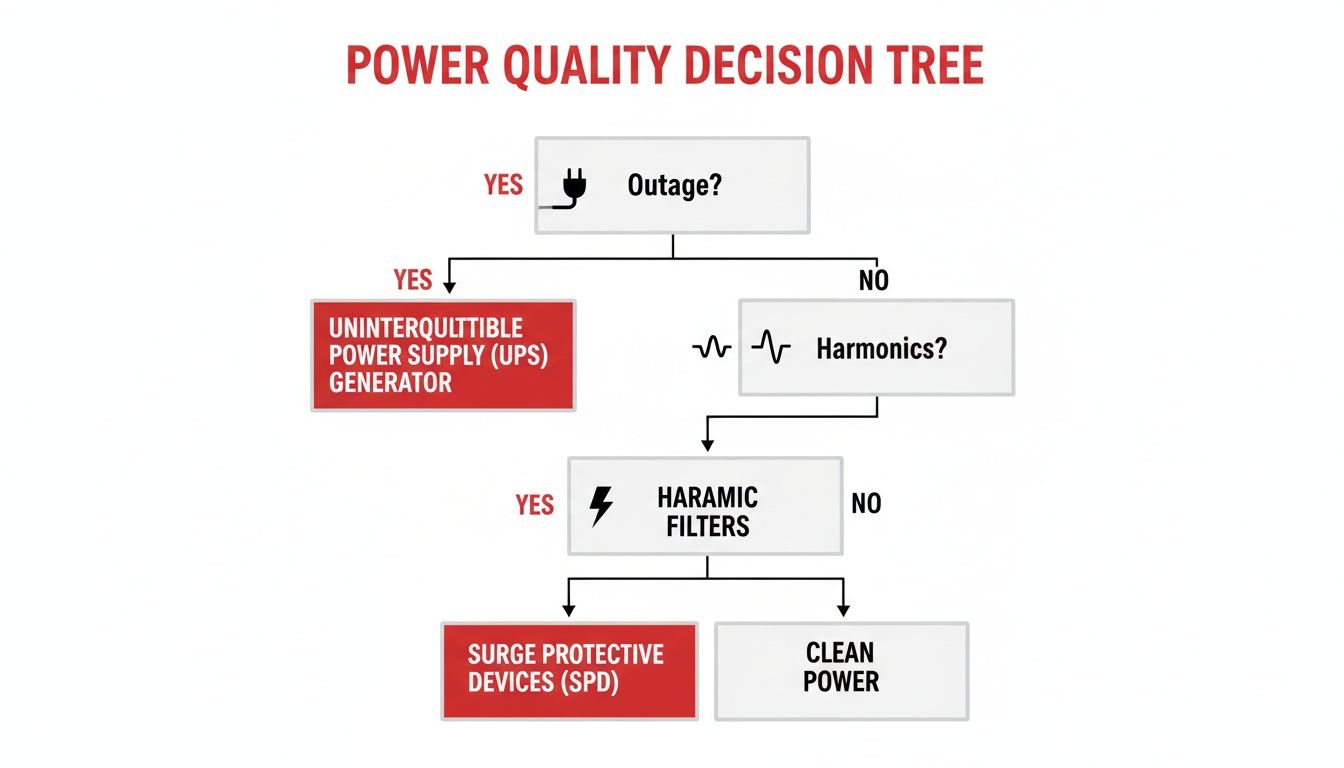
As the flowchart illustrates, different problems require distinct solutions. A thorough diagnosis is essential before investing in any mitigation equipment.
Meeting Local Compliance Standards in UAE & KSA
Ensuring your facility meets local standards is a critical risk management activity. This begins with understanding the specific limits set by your utility provider (e.g., DEWA's regulations on THD).
The next step is implementing the right solutions, such as active harmonic filters or power factor correction banks, to maintain a clean electrical footprint. Beyond technical codes, adopting general compliance management strategies provides a strong framework for navigating any complex regulatory environment.
Managing your facility's impact on the grid isn't just about avoiding fines. It is a fundamental contribution to the reliability of the region's infrastructure, ensuring a stable power supply for future economic development.
Your Next Steps Toward Clean, Reliable Power
Mastering power quality is an ongoing commitment to your facility's electrical health. You now have the foundational knowledge to identify disturbances, understand their financial impact, and select the right solutions. The next step is to put this knowledge into practice.
For engineers and facility managers in Dubai, Abu Dhabi, and across the GCC, this means partnering with a local expert who understands the unique challenges of our region. The team at GoSwitchgear is ready to provide expert advice, project support, and quotes for power quality equipment built to perform in our demanding climate. Contact us for project support in Dubai.
Let's work together to build a more resilient and efficient electrical system. By choosing the right components and strategies, you not only protect your assets and reduce operating costs but also contribute to a more stable regional grid. Don't wait for a costly failure to address preventable power quality issues.
Partner with GoSwitchgear to secure your facility's electrical health. Explore our range of power quality and energy management solutions.
Share this post

Related
Posts
A Guide to Choosing AC to DC Converters for UAE & GCC Electrical Systems
Master AC to DC converters with this comprehensive guide for engineers in the UAE & GCC. Learn selection, installation, and...
A Guide to Drill Machine Prices in the UAE for Technical Professionals
Find the best drill machine price in UAE. Our 2026 guide helps contractors and engineers choose the right corded, cordless,...
A Professional’s Guide to Choosing AGM VRLA Batteries in the UAE Climate
Discover why AGM VRLA batteries are the superior power solution for UPS, solar, and industrial systems in the UAE. Get...
How to Choose the Right Lithium Ion Battery Charger for UAE & GCC Projects
Discover how to select the right lithium ion battery charger for UAE projects. This guide covers specs, BMS integration, and...
.jpg)