.jpg)


Posted by:
Category:
Comments:
Post Date:
Predictive Maintenance vs Preventive Maintenance: A Guide for UAE & GCC Industries
Updated: October 2023
For engineers, panel builders, and facility managers across the UAE and GCC, maintaining electrical systems in our demanding climate is a constant challenge. Extreme heat, humidity, and dust accelerate component wear, making unplanned downtime a significant threat to operational continuity and profitability. Choosing the right maintenance strategy is therefore not just a technical decision—it's a critical business one.
This guide compares two core strategies: time-based preventive maintenance and data-driven predictive maintenance, offering practical insights to help you select the optimal approach for your facility.
Choosing Your Maintenance Strategy in the GCC Climate
The core difference between predictive maintenance vs preventive maintenance is timing. Preventive maintenance operates on a fixed schedule, meaning service happens whether a component needs it or not. In contrast, predictive maintenance uses real-time data to monitor equipment health, triggering action only when necessary.
In the GCC, where environmental factors can cause unpredictable degradation, a fixed schedule can be problematic. It might lead to servicing perfectly functional equipment, wasting resources, or worse—failing to catch a sudden issue that arises between scheduled checks. This is why many procurement teams and engineers are now evaluating which energy management solution Dubai facilities can leverage for greater reliability. Predictive maintenance offers a smarter, more adaptive path forward, ideal for high-stakes environments from Dubai to Riyadh.
Quick Comparison: Preventive vs. Predictive Maintenance
This table provides a high-level overview of the two approaches, helping to frame the key differences for decision-making.
| Attribute | Preventive Maintenance (PM) | Predictive Maintenance (PdM) |
|---|---|---|
| Trigger for Action | Fixed schedule (e.g., time, usage hours) | Real-time asset condition data (e.g., temperature, vibration) |
| Core Principle | Routine upkeep to reduce failure probability | Monitoring and analysis to predict failures before they occur |
| Initial Investment | Lower (scheduling and labour) | Higher (sensors, software, integration) |
| Long-Term Cost | Can be higher due to unnecessary work and unexpected failures | Lower due to optimised labour, reduced parts usage, and minimal downtime |
| Best For | Non-critical assets, equipment with predictable failure modes | Critical assets, high-impact equipment, systems in harsh environments |
| Regulatory Compliance | Meets baseline requirements from authorities like DEWA/ADDC | Exceeds requirements by providing auditable performance data |
This comparison highlights the strategic trade-offs. As we delve deeper, you'll see how to apply each strategy effectively within the unique operational context of the UAE and KSA.
Understanding Preventive Maintenance: The Foundational Approach
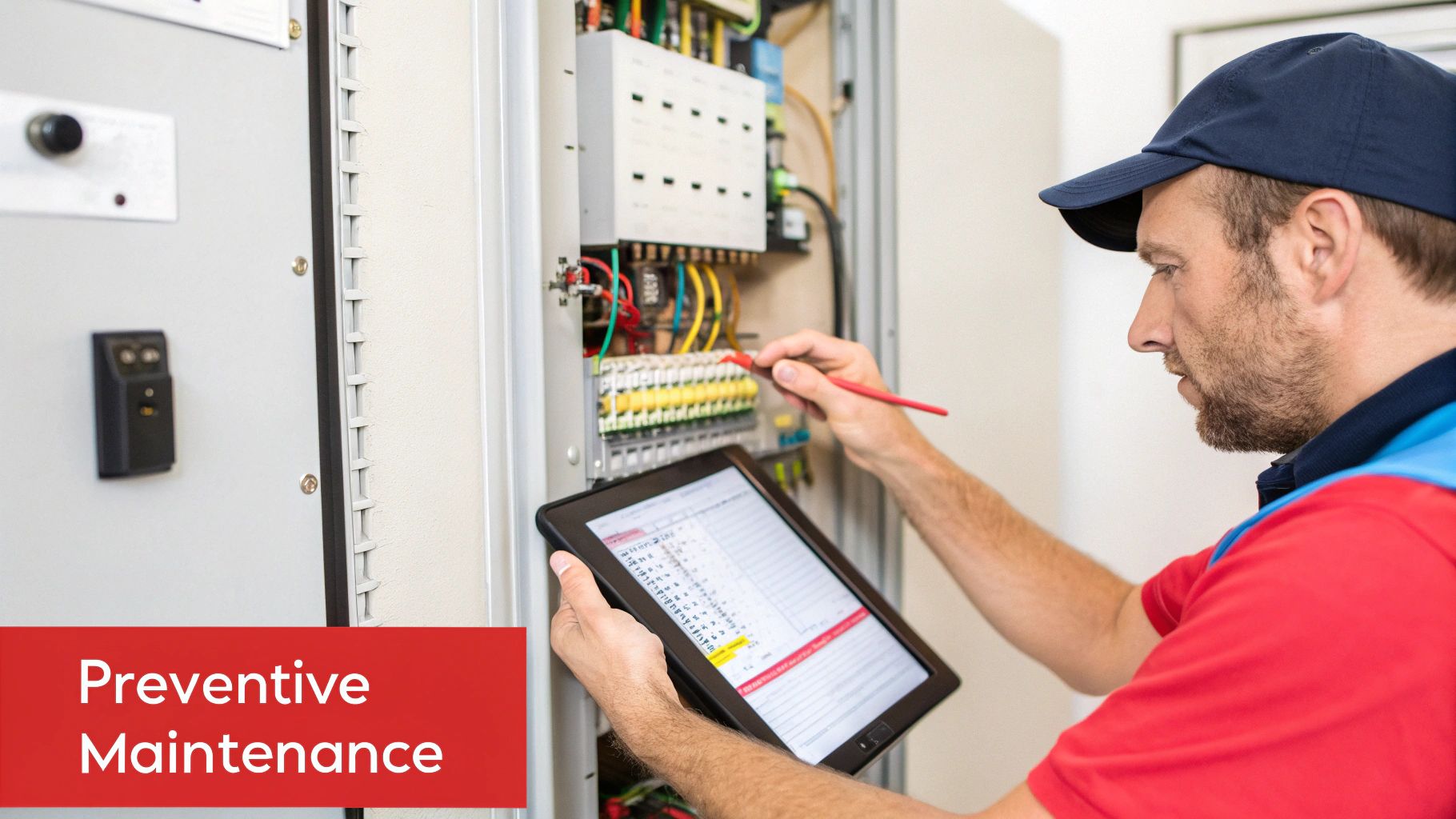
Preventive maintenance (PM) has long been the standard for industrial operations in the GCC. The principle is straightforward: service equipment based on a predetermined schedule—calendar time, runtime hours, or cycle counts—regardless of its actual condition. The objective is to perform routine upkeep to pre-emptively address potential failures.
For electricians and panel builders, this means a structured workflow. It’s analogous to a vehicle's scheduled oil change every 10,000 km—it's done based on the manufacturer's recommendation, not a real-time oil analysis. This disciplined, calendar-based approach has been the standard for managing electrical components UAE businesses rely on for decades.
The Appeal of a Structured Approach
The primary advantage of preventive maintenance is its simplicity and predictability.
- Predictable Budgeting: Procurement teams can forecast costs for labour and spare parts with high accuracy.
- Simple Implementation: Schedules are based on OEM guidelines and industry best practices, requiring minimal complex setup.
- Structured Workflow: Maintenance teams have a clear plan, simplifying resource allocation and task management.
The Drawbacks in the GCC Climate
However, this one-size-fits-all model has significant limitations, especially in the demanding GCC climate. Relentless heat, humidity, and dust can cause electrical components to degrade at unpredictable rates. A fixed schedule cannot adapt to these harsh realities.
A critical flaw of relying solely on preventive maintenance is its inability to detect unforeseen issues that develop between scheduled service intervals. An asset may be on the verge of failure just days after a routine check, leaving the facility completely vulnerable to unplanned downtime.
This inflexibility leads to two major problems:
- Over-maintenance: Technicians may spend valuable time and resources replacing components like a DIN rail isolator or an SMPS power supply that are still in perfect working order. This not only inflates costs but also introduces the risk of human error during unnecessary interventions.
- Under-maintenance: A schedule might dictate a check every six months, but extreme summer temperatures in the UAE could cause a critical component to fail in four. Since the system isn't monitoring real-time conditions, these accelerated failure curves go unnoticed until it's too late.
Exploring Predictive Maintenance: The Data-Driven Evolution
Predictive maintenance (PdM) represents a significant leap forward, shifting from rigid schedules to real-time, data-informed interventions. Instead of adhering to a calendar, PdM actively monitors equipment, enabling teams to act with precision right before a failure occurs. This approach uses a suite of technologies to maintain constant vigilance over critical electrical systems, allowing engineers to accurately predict potential failures and schedule work only when genuinely required.
The Technology Behind Predictive Insights
PdM relies on a network of sensors and analytical tools to detect subtle changes in equipment performance. These technologies are crucial for any modern energy management solution Dubai or Abu Dhabi facilities deploy.
Key monitoring technologies include:
- Thermal Imaging: Essential for identifying overheating connections in switchgear or transformers—a common issue in the high ambient temperatures of the UAE. High IP ratings on enclosures are vital here.
- Vibration Analysis: Detects mechanical stress in motors and fans, indicating issues like misalignment or bearing wear.
- IoT-Enabled Energy Meters: Modern energy meters provide a continuous stream of data on power quality, consumption, and voltage fluctuations. This data is invaluable for diagnosing underlying electrical faults and ensuring compliance with local utility regulations.
The Tangible Business Outcomes
For procurement teams and facility managers, the true value of predictive maintenance lies in its measurable results. While there is an initial investment in sensors and software, it is quickly offset by significant operational and financial gains.
- Extended Asset Life: By ensuring equipment operates under optimal conditions and is serviced only when needed, PdM extends its operational lifespan.
- Reduced Unplanned Downtime: This is the most significant benefit, drastically cutting costs associated with production halts and emergency repairs.
- Optimised Resource Allocation: Maintenance teams are deployed based on data-driven needs, improving efficiency and reducing labour costs.
The debate over predictive maintenance vs preventive maintenance is increasingly tilting towards PdM as businesses recognise its powerful ROI and alignment with regional digital transformation goals, such as UAE's smart city initiatives and Saudi Arabia's Vision 2030.
Analyzing Performance Metrics and ROI
The decision between predictive and preventive maintenance ultimately comes down to performance metrics and return on investment (ROI). While a preventive plan offers predictable costs, it often conceals operational inefficiencies. Predictive maintenance requires a higher initial investment but delivers substantial long-term savings through optimised labour and parts management.
The Impact on Unplanned Downtime
Preventive maintenance aims to reduce failures, but its rigid schedule is blind to issues arising between service dates. In the harsh GCC climate, where components can degrade rapidly, unexpected breakdowns are a constant risk, leading to costly unplanned downtime.
Predictive maintenance directly addresses this by monitoring equipment in real-time and detecting developing faults long before they become catastrophic. This data-driven approach transforms potential emergencies into planned, manageable maintenance tasks. Studies show predictive methods can reduce unplanned downtime by 30% to 50% and extend asset life by up to 40%. For further details, you can explore predictive maintenance market insights.
Boosting Overall Equipment Effectiveness (OEE)
Overall Equipment Effectiveness (OEE) is a key industrial metric measuring productive manufacturing time, based on availability, performance, and quality.
- Preventive Maintenance and OEE: While PM schedules downtime to maintain availability, it can paradoxically lower OEE by stopping production for potentially unnecessary maintenance.
- Predictive Maintenance and OEE: PdM enhances all three OEE components. It increases availability by preventing unplanned stops, improves performance by ensuring optimal equipment operation, and enhances quality by catching anomalies that could lead to defects.
Head-to-Head ROI Comparison
A direct comparison reveals the long-term financial implications of each strategy.
| Evaluation Criterion | Preventive Maintenance | Predictive Maintenance |
|---|---|---|
| Maintenance Trigger | Time-based schedule | Real-time condition data and alerts |
| Unplanned Downtime | Reduced, but still a significant risk | Drastically minimised (30-50% reduction) |
| Labor Efficiency | Lower; often performs unnecessary tasks | Higher; focused on genuine, identified needs |
| Spare Parts Usage | High; parts replaced on schedule, not by need | Optimised; parts replaced just before failure |
| Initial Investment | Low (minimal equipment/software) | High (sensors, software, training) |
| Long-Term ROI | Moderate | High; significant savings from optimised resources |
| Asset Lifespan | Can be shortened by unnecessary intervention | Extended by up to 40% |
The upfront simplicity of preventive maintenance often carries hidden long-term costs. Predictive maintenance demands a greater initial investment but delivers superior ROI through smarter, more efficient operations.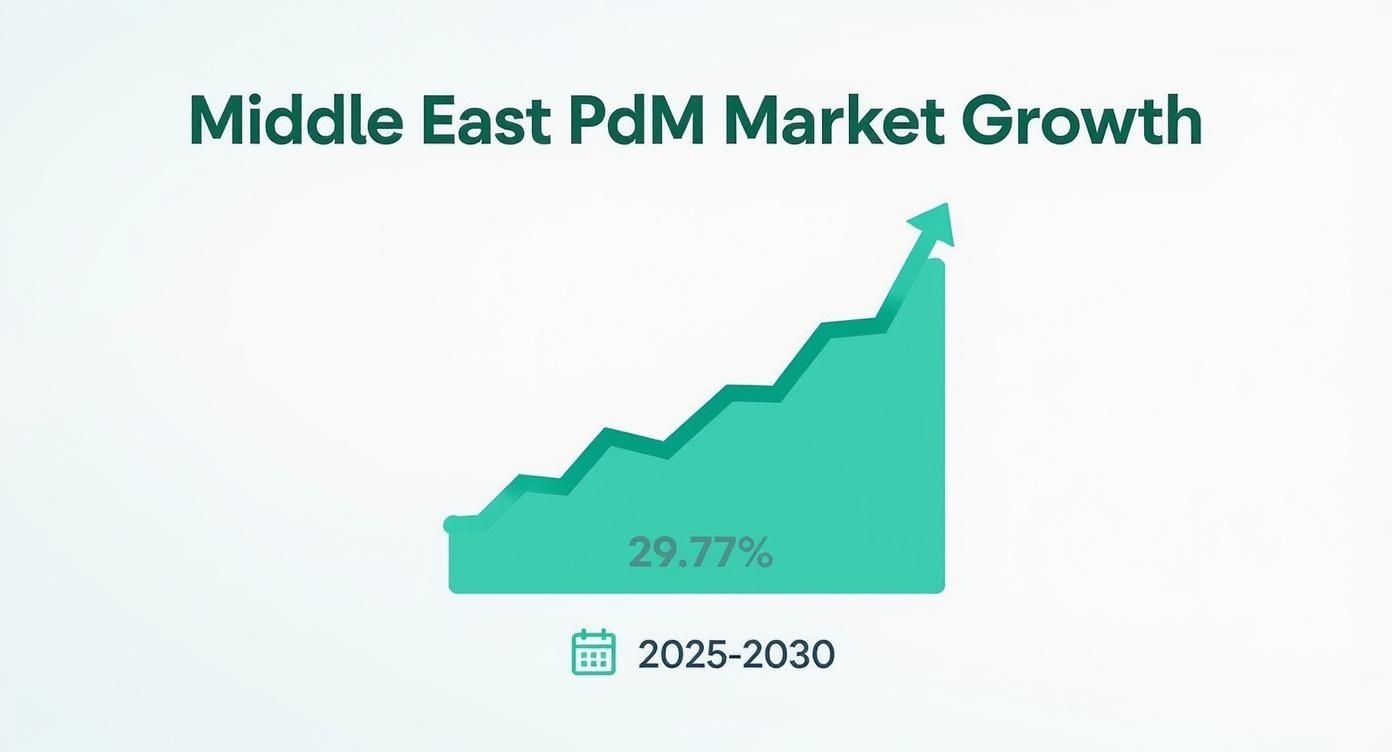
This projected growth indicates strong regional confidence in the financial returns of data-driven strategies, offering a competitive edge and greater operational resilience for any facility in the energy meter GCC market.
Navigating Practical Implementation and Technology Needs
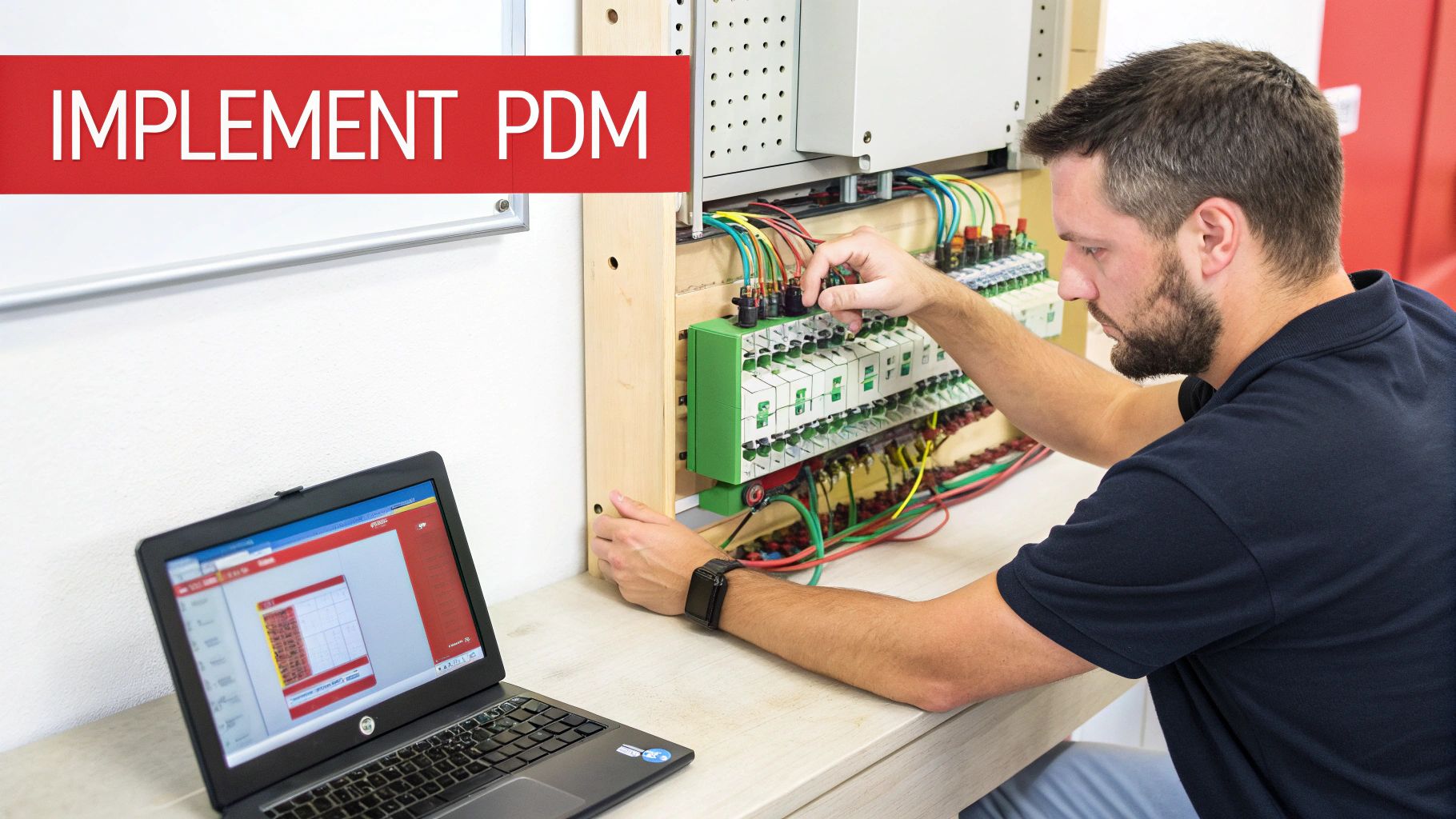
Transitioning from a calendar-based to a data-led maintenance model requires a clear, actionable plan. Success depends on strategic planning, selecting the right tools, and ensuring your team has the necessary skills.
Best Practices for an Effective Preventive Maintenance Schedule
A robust PM schedule is tailored to your specific assets and the local environment.
- Asset Audit and Criticality Ranking: List and rank all electrical assets by their operational importance.
- Consult OEM Guidelines and Local Standards: Use manufacturer datasheets as a baseline, but cross-reference them with local regulations from utilities like DEWA or ADDC and standards such as IEC or GCC certifications.
- Factor in GCC Environmental Conditions: Adjust maintenance frequency to account for heat, dust, and humidity. Components with lower IP ratings will require more frequent checks.
- Standardize Procedures: Create clear, documented checklists for all tasks to ensure consistency and simplify training.
Outlining the Predictive Maintenance Infrastructure
Implementing PdM requires a solid technological foundation for data acquisition, transmission, and analysis.
Data Acquisition (Sensors):
- Smart Energy Meters: Provide continuous data on voltage, current, power factor, and harmonics. An effective energy meter GCC solution is the cornerstone of PdM.
- Thermal Sensors: Detect overheating in connections, busbars, and circuit breakers.
- Vibration Sensors: Monitor the health of motors in HVAC systems and other rotating equipment.
Data Transmission (Network): Data is sent to a central hub via wired (Ethernet) or wireless (Wi-Fi, LoRaWAN) connections.
Data Analysis (Software): A Condition Monitoring System (CMS) or analytics platform uses algorithms to identify patterns, flag anomalies, and generate predictive alerts.
A well-executed PdM program can reduce maintenance costs by up to 30% and cut equipment breakdowns by 45%. You can explore the market research behind these operational benefits to build a strong business case. At GoSwitchgear, our Dubai team can help you select the right electrical components UAE businesses need for a smooth integration.
Building Your Optimal Maintenance Strategy
The most resilient and cost-effective plan for businesses in the UAE is rarely a single strategy but rather a hybrid model tailored to your specific operational needs. This involves a strategic assessment of asset criticality, failure impact, and cost-benefit analysis.
A Practical Framework for Decision Making
Categorize your assets into three tiers to allocate maintenance resources effectively:
- Critical Assets: Equipment whose failure causes major operational disruptions, safety risks, or significant financial loss (e.g., main distribution panels, primary switchgear).
- Important Assets: Equipment vital for smooth operations but with some redundancy (e.g., secondary distribution boards, redundant HVAC motors).
- Non-Essential Assets: Low-impact components whose failure is an inconvenience, not a catastrophe (e.g., office lighting circuits).
Applying the Right Strategy to the Right Asset
This tiered approach ensures your maintenance budget is invested where it delivers the greatest impact.
- Predictive Maintenance (PdM) for Critical Assets: The high upfront cost of installing advanced energy meters and thermal sensors is justified by the catastrophic cost of an unplanned shutdown. For a data centre in Dubai or a petrochemical plant in KSA, PdM on main switchgear is non-negotiable.
- Preventive Maintenance (PM) for Important and Non-Essential Assets: For lower-tier equipment, a scheduled PM program is the most practical and cost-effective solution. The risk and consequences of failure are manageable, making a full PdM system unnecessary. For example, an annual check-up on lighting circuits in an Abu Dhabi office is sufficient.
The ultimate goal is to create a dynamic maintenance ecosystem that blends the precision of predictive insights for high-value assets with the practical, cost-effective structure of preventive schedules for everything else.
This hybrid model empowers engineers and facility managers across the GCC to make strategic decisions that balance risk, cost, and reliability. For more on optimising operations, review these tips on How to Improve Operational Efficiency: 5 Quick Wins.
Frequently Asked Questions
What Is The Typical ROI For Switching To Predictive Maintenance In The UAE?
For most industries in the UAE, a positive ROI is typically seen within 18 to 24 months. The return comes from significantly reduced unplanned downtime, lower spare parts inventory, and more efficient use of maintenance teams. For critical facilities like data centres or manufacturing plants in Dubai, where downtime costs are extremely high, the ROI can be achieved even faster.
Do I Need To Completely Replace My System To Implement Predictive Maintenance?
No, a complete replacement is rarely necessary. A phased approach is most effective. You can begin by retrofitting modern sensors, like advanced energy meters and thermal monitors, onto your most critical existing switchgear. Many PdM platforms are designed to integrate with existing systems like a CMMS, allowing you to layer predictive capabilities without a full-scale overhaul.
Is Preventive Maintenance Still Relevant In The Age Of Industry 4.0?
Absolutely. The most effective maintenance strategies today are hybrid models. Preventive maintenance remains the most cost-effective choice for non-critical assets or equipment with highly predictable failure modes. The key is to apply the right level of maintenance to the right asset, using PM for low-impact equipment and focusing advanced predictive efforts where they deliver the most value.
What Skills Does My Team Need To Manage A Predictive Maintenance Program?
The transition requires an evolution of skills. Your team will need a basic understanding of data analysis and condition monitoring. However, modern PdM software is increasingly user-friendly, with intuitive dashboards and automated alerts that simplify analysis. The technology behind the predictive maintenance vs preventive maintenance shift makes complex data more accessible. Training and support can help your teams in the UAE become confident in using these new tools to make better, data-driven decisions.
At GoSwitchgear, we provide the essential electrical components and expert guidance to help you build a robust and efficient maintenance strategy tailored for the GCC climate. Contact our Dubai team for project support. Explore our extensive product catalogue to find the right solutions for your next project.
Share this post

Related
Posts
A Guide to Choosing AC to DC Converters for UAE & GCC Electrical Systems
Master AC to DC converters with this comprehensive guide for engineers in the UAE & GCC. Learn selection, installation, and...
A Guide to Drill Machine Prices in the UAE for Technical Professionals
Find the best drill machine price in UAE. Our 2026 guide helps contractors and engineers choose the right corded, cordless,...
A Professional’s Guide to Choosing AGM VRLA Batteries in the UAE Climate
Discover why AGM VRLA batteries are the superior power solution for UPS, solar, and industrial systems in the UAE. Get...
How to Choose the Right Lithium Ion Battery Charger for UAE & GCC Projects
Discover how to select the right lithium ion battery charger for UAE projects. This guide covers specs, BMS integration, and...
.jpg)