.jpg)


Posted by:
Category:
Comments:
Post Date:
Single-Core Cable VS. Multi-Core Cable: Voltage, Current, and Safety Comparison
30-Second Summary
- When comparing Single-Core Cable VS. Multi-Core Cable, there are several key differences regarding voltage, current, and safety.
- Single-core cables are simpler and generally used in environments with stable conditions, while multi-core cables offer flexibility and durability, making them suitable for complex setups.
- This article will explore the benefits, applications, and considerations of both cable types, providing insights into when each type is ideal for use.
Single-Core Cable VS. Multi-Core Cable: Voltage, Current, and Safety Comparison
In the world of electrical wiring, two of the most commonly used types of cables are single core and multi core cables. Both are integral to the safe and efficient operation of electrical systems, but they differ in several aspects, making the selection process crucial for optimal performance. When considering a cable selection guide, one of the first decisions to make is whether to use single-core or multi-core cables. Each type has its specific advantages, depending on the application and environmental factors.
Single-core cables consist of a single conductor, which makes them simpler and more rigid. These cables are often used for applications where flexibility is not a priority, such as in fixed installations or where space is limited. They are particularly suited for situations requiring high voltage transmission over long distances and are known for their robustness in harsh environments. However, they may not perform well in areas with a high degree of movement or vibration, as the lack of flexibility can lead to wear and tear over time.
On the other hand, multi-core cables contain several conductors twisted together, providing greater flexibility and durability. These cables are ideal for applications where cables need to bend or flex regularly, such as in machinery or movable equipment. They are also more versatile, with a higher current-carrying capacity, making them suitable for power distribution and more complex wiring systems. Multi-core cables often have superior safety features, such as individual insulation for each conductor, reducing the risk of short circuits.
Ultimately, the decision between Single-Core Cable VS. Multi-Core Cable depends on specific requirements such as environment, flexibility, and power needs. Each type offers distinct advantages, and understanding these differences is essential for making the best choice for your project.
Understanding the Basics of Electrical Cables
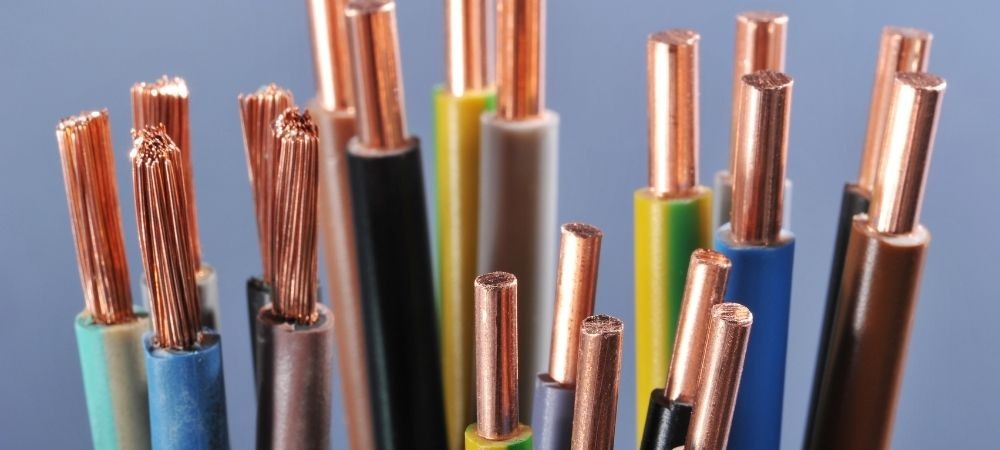
Electrical cables are the backbone of any electrical system. Without them, transmitting electricity from one place to another would be impossible. Whether you're working with single-core cable or multi-core cables, it’s crucial to understand the distinct features and benefits of each type. Both cables have their specific uses depending on the application, and their choice can significantly impact the efficiency and safety of the entire electrical system.
Now, let’s explore and look into the comparison of Single-Core Cable VS. Multi-Core Cable.
What Is a Single-Core Cable?
A single core cable is a type of electrical cable that consists of a single conductor, often made of copper or aluminum, enclosed in an insulating layer. This makes the cable simple and straightforward, typically used in applications where flexibility and high performance aren’t as crucial.
Single-core cable is usually employed in areas where there's little to no risk of mechanical stress or wear, such as in indoor wiring, power plants, or in situations requiring stable, low-voltage transmission.
Key Features:
- One conductor inside the insulation
- Generally used in simpler systems
- Less flexible compared to multi-core cables
- Common in power transmission over long distances
What Is a Multi-Core Cable?
In contrast, a multi-core cable consists of multiple insulated conductors within a single outer layer. This allows for greater flexibility and versatility, making it suitable for applications where multiple electrical signals need to be transmitted or where more than one power source is needed.
Multi-core cables can be used for complex wiring systems, including industrial, residential, and telecommunications installations. They are designed to handle multiple circuits simultaneously, providing a solution for intricate wiring needs.
Key Features:
- Contains multiple conductors within a single cable
- Higher flexibility and more complex designs
- Commonly used in industrial, automotive, and residential settings
- Better for carrying multiple signals at once
Single-Core Cable VS. Multi-Core Cable: Voltage and Current-Capacity Comparison
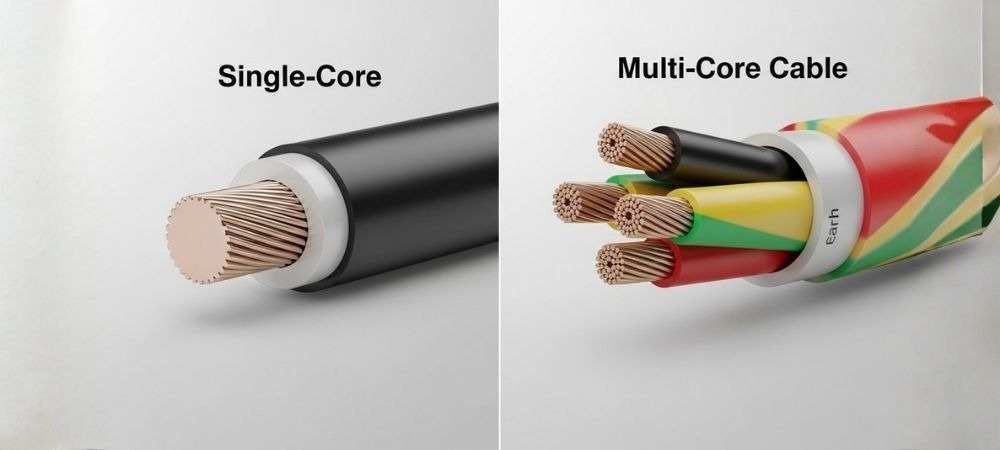
When comparing the single-core cable vs multi-core cable in terms of voltage and current capacity, there are several key differences to consider.
Voltage Capacity:
- Single-Core Cables generally have higher voltage resistance, which makes them suitable for long-distance power transmission. Their design ensures that the conductor can safely carry higher voltage loads without overheating.
- Multi-Core Cables, however, may have slightly lower voltage resistance due to the added conductors. However, advancements in insulation materials have improved their performance, making them capable of handling medium to high voltage applications.
Current Capacity:
- Single-Core Cables can carry a higher current than multi-core cables of the same gauge, due to their simple design. They are ideal for high-current applications, such as in power plants or large machines.
- Multi-Core Cables have a lower current-carrying capacity because the current is divided among the multiple conductors inside the cable. The total current capacity will depend on the gauge and number of cores.
Flexibility: Why Multi-Core Cables Are More Flexible
One of the key differences between single-core wire vs multi-core cables is flexibility. While single-core wire vs multi-core cables both have applications where flexibility is required, multi-core cables offer significantly better flexibility. This is because the individual conductors within a multi-core cable can bend independently of each other, making them more adaptable to complex routing and installation.
- Single-Core Cable: Lacks the inherent flexibility due to its single conductor.
- Multi-Core Cable: More flexible, making it suitable for tighter spaces and more intricate installations.
Safety Considerations in Single-Core and Multi-Core Cables
Safety is paramount when choosing the right cable for any electrical installation. Single-core cable and multi-core cables both offer distinct advantages when it comes to safety features.
Single-Core Cable Safety:
- Typically, it has better insulation since there is only one conductor inside the cable, which minimizes the risk of short circuits and electrical faults.
- It can be easier to manage and install, reducing human error during setup.
Multi-Core Cable Safety:
- The multiple conductors inside multi-core cables are typically shielded with additional layers of insulation, which can improve overall protection against electrical hazards, such as short circuits and fire.
- The flexibility of multi-core cables allows for easier and safer installation, especially in complex electrical systems.
Benefits of Single Core Cables
Below mentioned are some of the benefits of Single Core Cables:
- Simplicity: Easier to install and manage due to the simplicity of the design.
- Higher Voltage Resistance: Suitable for long-distance power transmission and high-voltage systems.
- Durability: Can last longer when installed in stable environments.
Benefits of Multi-Core Cables
- Flexibility: Ideal for complex installations that require the routing of multiple wires in a single cable.
- Multi-signal Transmission: Enables the transmission of multiple electrical signals or circuits at the same time.
- Safety: Improved insulation and protection due to multiple layers of shielding and conductors.
Which Is Better: Single-Core or Multi-Core Cable?
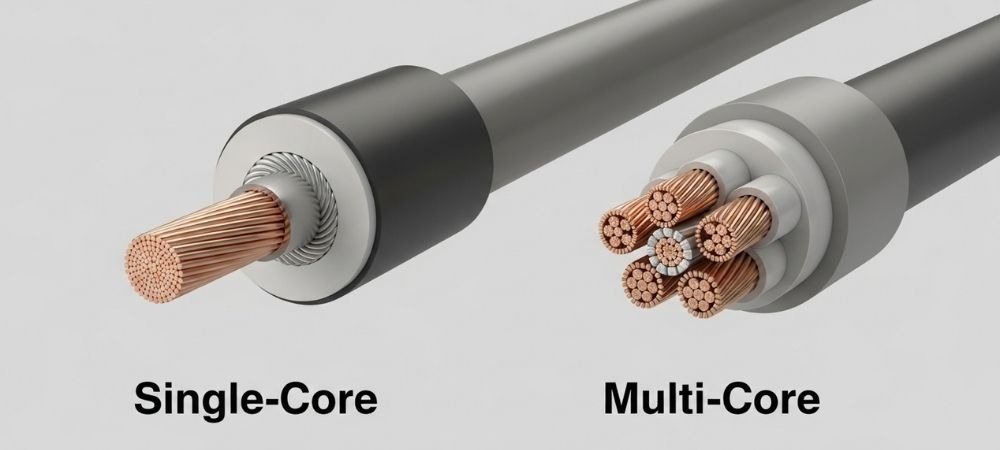
The decision between single-core vs multi-core cable depends largely on the specific requirements of the installation. For simpler, high-voltage applications, single-core cables might be the best choice. On the other hand, if flexibility, multiple signal transmission, and easier handling are more important, multi-core cables would be the better option.
- Single-Core Cable: Best for stable, high-voltage power transmission over long distances.
- Multi-Core Cable: Best for intricate systems that require flexibility and multiple signals.
Conclusion
Both single-core and multi-core cables offer distinct advantages depending on the specific application. Selecting the right cable is crucial for ensuring optimal performance, safety, and efficiency in any electrical system. Single-core cables are ideal for applications that require simple, rigid wiring, particularly in environments where flexibility is not essential. They are often used in high-voltage transmission and are better suited for fixed installations. However, their lack of flexibility can limit their use in applications with frequent movement or vibration.
In contrast, multi-core cables are more versatile and provide greater flexibility, making them suitable for installations where the cable needs to bend or flex, such as in machinery or equipment. They also tend to have a higher current-carrying capacity, making them ideal for power distribution and complex wiring systems. Additionally, multi-core cables often feature enhanced safety measures, such as individual insulation for each conductor, reducing the risk of short circuits.
When selecting between these two types of cables, it’s important to consider factors like voltage, current requirements, flexibility, and safety features. To ensure you choose the best cables for your needs, visit our website at GoSwitchgear, where we offer a wide range of high-quality cables and expert advice from trusted electrical cable suppliers in UAE.
FAQs
Is Single-Core Better Than Multi-Core?
It depends on the application. For high-voltage, long-distance transmission, single-core cables are ideal. However, for flexible installations and multi-signal systems, multi-core cables are preferred.
What Is a Multi-Core Cable Used For?
Multi-core cables are used for applications where multiple signals need to be transmitted through a single cable, such as in control systems, electrical circuits, and telecommunications.
What Is the Difference Between Single-Core Wire vs Multi-Core?
The key difference lies in the number of conductors: single-core wire has one, while multi-core cables have multiple conductors, offering greater flexibility and capacity for multiple circuits.
Share this post

Related
Posts
A Guide to Selecting Float Switches for Water Tanks in the UAE & GCC
Select the best float switches for water tanks in the UAE & GCC. This guide covers types, materials, and wiring...

What Is Gas Insulated Switchgear (GIS)? A Complete Guide
30 Second Summary Understand what GIS switchgear is and why it matters in modern power grids. Learn key GIS switchgear components and...
MCB vs MCCB: Choosing the Right Circuit Breaker for UAE Projects
Explore the difference between mcb and mccb with UAE-focused guidance on selection, applications, and standards to help engineers choose confidently.
Optimising Motor Starts in the UAE: A Guide to the Star Delta Control Circuit Diagram
A complete guide to the star delta control circuit diagram. Learn to design, wire, and troubleshoot motor starters for industrial...
.jpg)