.jpg)


Posted by:
Category:
Comments:
Post Date:
5 Common Causes of Electrical Cable Failure & How to Avoid Them
30 Second Summary
- Cable problems usually begin quietly. Heat, moisture, rough handling, loose terminations, and aging insulation are the biggest triggers behind breakdowns and costly downtime.
- Prevention starts with smarter selection. Correct sizing, proper installation, regular inspection, and code-compliant products dramatically reduce risk.
- Moisture and mechanical stress are often underestimated. Research from EPRI and PNNL shows wet environments and physical damage can accelerate insulation deterioration and dielectric weakness.
- Standards matter. NFPA, IEC, OSHA, and UL guidance all point to the same conclusion: better installation and maintenance decisions prevent expensive failures later.
NFPA research shows wiring and related equipment account for 68% of home fires caused by electrical distribution and lighting equipment, while electrical failures or malfunctions are factors in nearly 80% of those fires. That is the real cost of getting cable decisions wrong.
Why This Problem Gets Expensive Fast
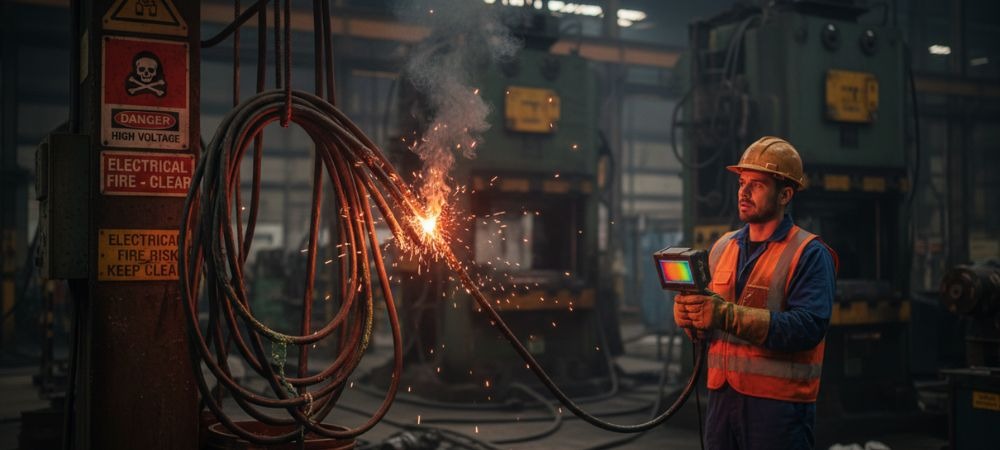
It stops production, delays maintenance, increases safety risk, and can damage connected equipment too. The Electrical Safety Foundation, using U.S. Bureau of Labor Statistics data through 2024, reports 2,070 occupational fatalities from contact with electricity between 2011 and 2024. While not every incident is cable-related, it is a powerful reminder that electrical reliability is a safety issue, not just a maintenance issue.
In many cases, electrical cable failure develops gradually through heat, moisture, stress, or installation mistakes long before the final breakdown becomes visible. Many cable faults are preventable. EPRI’s guidance on aging cable systems explains that cable life is strongly affected by installation practices, insulation type, thermal stress, and the surrounding environment. A 2025 review of 217 publications on cable insulation degradation also highlighted thermal-oxidative aging, electrical treeing, and surface tracking as key pathways that can lead to fire hazards.
Understanding the main causes of electrical cable failure helps maintenance teams prevent shutdowns instead of only reacting after damage is already done.
Overheating Quietly Destroys Insulation
When a cable is undersized for the connected load, installed in a hot area, grouped too tightly, or used without proper ampacity planning, conductor temperature rises. Over time, that heat hardens insulation, reduces flexibility, and increases the chance of cracking or dielectric breakdown. EPRI notes that using larger conductors can reduce ohmic heating, lower cable temperature, and extend insulation life.
A cable does not need to melt to fail. Repeated operation above its thermal design window can age the insulation long before anyone sees obvious external damage. Research on XLPE insulation and broader reviews of insulation aging consistently show that thermal stress accelerates degradation and shortens service life.
The right conductor size, correct derating, ventilation, and installation layout all reduce heat stress. That is also why matching the cable to the application matters more than price alone. Choosing the wrong electric cable wire for the load is one of the fastest ways to create a long-term reliability problem.
How to avoid it
Use ampacity tables from the governing code. Account for ambient temperature, bundling, conduit fill, and duty cycle. Review load growth, not just today’s load. And never assume “close enough” is safe enough. Even small thermal margins matter over years of service.
Moisture Sneaks In and Weakens the Cable From the Inside
It enters through damaged sheaths, poor terminations, underground joints, flooded ducts, or outdoor exposure. Once moisture gets in, insulation quality can drop, partial discharge risk can rise, and long-term dielectric strength can fall.
Research from PNNL, summarizing EPRI and related work, states that water trees are one of the leading degradation mechanisms behind loss of dielectric insulation strength in medium-voltage cable insulation used in wet or submerged environments. EPRI also advises that cables in environments above 60% relative humidity should be treated as subject to water-related degradation, even when they are not fully submerged.
The cable may look fine from the outside, while deterioration is already underway inside the insulation system. This is especially important when specifying an outdoor electrical cable for rooftops, utility yards, industrial plants, or buried routes where water ingress is a realistic operating condition.
How to avoid it
Specify the right jacket and insulation for wet, underground, or UV-exposed environments. Protect joints and glands. Inspect seals. Prevent standing water in trays or ducts. And during shutdowns, inspect areas with repeated condensation or washdown exposure first. That is often where the trouble starts.
A damaged electrical cable may continue operating for some time, but hidden sheath or insulation defects can still grow into serious reliability and safety problems.
Rough Handling Leaves Hidden Damage Behind
OSHA warns that flexible cords are more susceptible to damage than fixed wiring because they are exposed, flexible, and unsecured. Federal rules also state that flexible cords must not be handled in ways that damage them, must not be used to raise or lower equipment, and must not be fastened with staples or hung in a way that harms the jacket or insulation.
This is one reason electrical cable failure often surprises maintenance teams. The visible issue appears late. The actual damage may have happened weeks or months earlier during delivery, pulling, or installation.
How to avoid it
Train installers on minimum bend radius, pulling tension, reel handling, and support spacing. Use rollers, lubrication, and correct pulling methods on long runs. Inspect sheaths before energization. If the route is harsh, add mechanical protection instead of hoping the jacket alone will survive.
Loose Terminations Create Dangerous Hot Spots
Loose lugs, poorly crimped connectors, contaminated contact surfaces, and untorqued terminals create resistance. Resistance creates heat. Heat accelerates oxidation and insulation stress. Eventually, the connection carbonizes, arcs, or burns.
NFPA’s fire data makes the point clear: electrical malfunctions play a major role in serious fire events tied to electrical distribution systems. And while “the cable” often gets blamed, the real starting point is frequently the termination, splice, or accessory. The cable spec may be excellent. The install may look neat. But if the terminations are not matched, clean, torqued, and tested, the system can still become unreliable.
How to avoid it
Use manufacturer-approved lugs and accessories. Follow torque values exactly. Check contact surfaces. Perform commissioning tests. Reinspect critical connections during planned maintenance, especially after thermal cycling, vibration, or heavy startup loads. For high-priority circuits, thermography can reveal trouble before failure becomes visible.
Aging, Chemicals, and Sunlight Break Materials Down Over Time
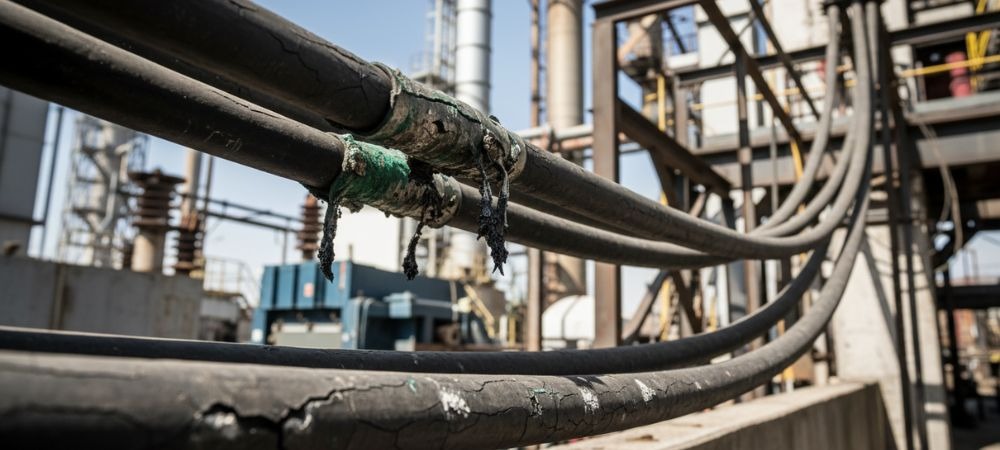
Even when a cable is correctly installed, the surrounding environment keeps working on it. Heat, oxygen, chemicals, oils, UV exposure, and mechanical vibration slowly change polymer properties. The material can become brittle, lose elongation, crack, or track under stress.
The 2025 review of cable insulation degradation linked thermal-oxidative aging, surface tracking, and related degradation pathways directly to increased fire hazard risk. EPRI’s aging guidance also stresses that cable longevity depends on cable design, insulation system, and local environmental stressors over time.
On global projects, confusion around electric cable colours can contribute to misidentification during maintenance if teams fail to verify conductor marking rules under the applicable code and documentation. IEC 60445 specifically covers the identification of equipment terminals, conductor terminations, and conductors using colours or alphanumeric notation.
How to avoid it
Match the insulation and sheath to the actual site conditions. Review UV resistance, chemical compatibility, temperature class, and expected service life before purchase. If the environment is harsh, spend more up front. It is usually the cheaper decision in the long run.
The Prevention Playbook That Saves Money
If you want fewer failures, fewer shutdowns, and fewer emergency repairs, focus on the process instead of reacting to symptoms. Start with correct cable selection. Then install it properly. Then inspect it before minor damage becomes major damage.
Following relevant electrical cable standards is one of the most effective ways to reduce installation errors, improve safety, and extend service life.
Conclusion
Electrical cable failure rarely happens without warning. In most cases, it develops over time due to overheating, moisture ingress, mechanical damage, poor terminations, or insulation aging. That is why prevention matters so much. When you choose the right cable, follow proper installation practices, comply with relevant standards, and inspect systems regularly, you significantly reduce the risk of costly downtime, safety hazards, and unexpected replacement work. In short, a proactive approach always delivers better long-term performance than reactive repairs. For reliable products, expert guidance, and trusted support, visit Go Switchgear for high-quality electrical cable solutions from experienced electrical cable suppliers in the UAE.
FAQs
What is the most common reason cables fail?
The most common pattern is a combination of heat, poor installation, and environmental stress. In practice, overload, moisture, mechanical damage, weak terminations, and insulation aging account for a large share of preventable cable problems.
Can moisture really damage cable insulation that much?
Yes. Research summarized by PNNL and EPRI shows that wet or submerged conditions can promote water-treeing and other degradation mechanisms that reduce dielectric strength over time.
Why do terminations fail even when the cable itself is high quality?
Because termination is a stress point. Loose torque, poor crimping, contamination, and mismatched accessories increase resistance and temperature at the connection.
Do cable markings and conductor identification really matter?
Absolutely. Clear identification reduces maintenance mistakes, speeds troubleshooting, and supports safer installation and service work. IEC 60445 exists for exactly that reason.
How often should cables be inspected?
That depends on the environment and criticality of the circuit. High-load, wet, hot, vibrating, or safety-critical systems should be inspected more often than low-risk indoor runs, with commissioning checks and periodic condition assessment built into maintenance planning.
Share this post

Related
Posts
How to Choose the Right Terminal Block for Your Electrical Control Panel
Table of Contents Toggle 30 Seconds...

Understanding the Role of Energy Audits in ISO 50001 Certification in the UAE
Quick SummaryDiscover how energy audits support ISO 50001 certification in the UAE. Learn their role in improving efficiency, cutting costs, and...
Why Installing a Home EV Charger in the UAE is a Smart Move: Convenience and Significant Savings
As electric vehicles (EVs) become increasingly popular in the UAE, cities like Dubai and Abu Dhabi are witnessing a surge...

Exploring AC and DC EV Chargers: A UAE-Specific Guide
The rapid adoption of electric vehicles (EVs) in the UAE has increased the demand for efficient and versatile EV charging...
.jpg)