.jpg)


Posted by:
Category:
Comments:
Post Date:
Selecting the Right Contactors for AC Units in the UAE’s Demanding Climate
An AC contactor is a heavy-duty electrical switch, but that simple description belies its critical role. It is the core component that safely manages the immense flow of high-voltage power to your air conditioning unit's compressor and condenser fan, a vital function for any energy management solution in Dubai.
Think of it as the muscle behind your thermostat's command. When the thermostat signals for cooling, the contactor engages, closing a powerful circuit to start the system. Once the desired temperature is reached, it disengages, cutting power just as quickly and safely.
The Unsung Hero of AC Systems in the UAE
In the intense climate of the UAE and the wider GCC, air conditioning isn't a luxury—it's a necessity. The unsung hero ensuring your AC runs reliably day in and day out is the contactor. A standard switch would fail catastrophically under the electrical stress of starting an AC compressor, which is why a contactor is engineered specifically for this tough, repetitive job.
Imagine a traffic controller at a major highway intersection during peak rush hour. The low-voltage signal from the thermostat is the command from the control tower, but it's the contactor that stands on the road, directing the immense flow of high-voltage electricity to the AC unit's motors. Without this robust controller, the huge inrush of current needed to kickstart the compressor would lead to catastrophic failure. This is why selecting the right contactors for AC units is non-negotiable for engineers and panel builders in Dubai, Abu Dhabi, or across the region.
A Look Inside an AC Contactor
To understand what a contactor does, you need to know its three main parts working in unison:
- The Coil: This electromagnet is energized by the low-voltage signal from the thermostat. When it receives the signal, it generates a powerful magnetic field.
- The Contacts: The magnetic field created by the coil forcefully pulls a set of heavy-duty electrical contacts together. This action completes the high-voltage circuit, sending power to the AC compressor and fan motor.
- The Enclosure: This is the tough, protective housing that shields internal components from dust, humidity, and physical impact—a critical feature for ensuring a long service life in the demanding GCC environment, where high IP ratings are paramount.
The need for these durable components is growing. As the Middle East's air conditioning systems market continues to expand—projected to hit USD 7,368.9 million by 2033—the demand for top-quality contactors is rising with it. You can learn more about the market's growth projections and see why trusted suppliers of electrical components UAE, like GoSwitchgear, are essential to the industry's health.
How to Choose the Right AC Contactor Every Time
Selecting the right contactor involves more than just matching numbers from a datasheet. It’s about ensuring the safety, reliability, and long-term performance of the entire air conditioning system. For engineers and electricians working in the UAE, the right choice means specifying a component that can withstand the region's climate challenges, including extreme heat and humidity.
Let's walk through a repeatable process to help you specify the perfect contactors for AC units.
The first step is always identifying the load type. Are you dealing with a simple resistive load or a powerful inductive one? This flowchart clarifies the decision.
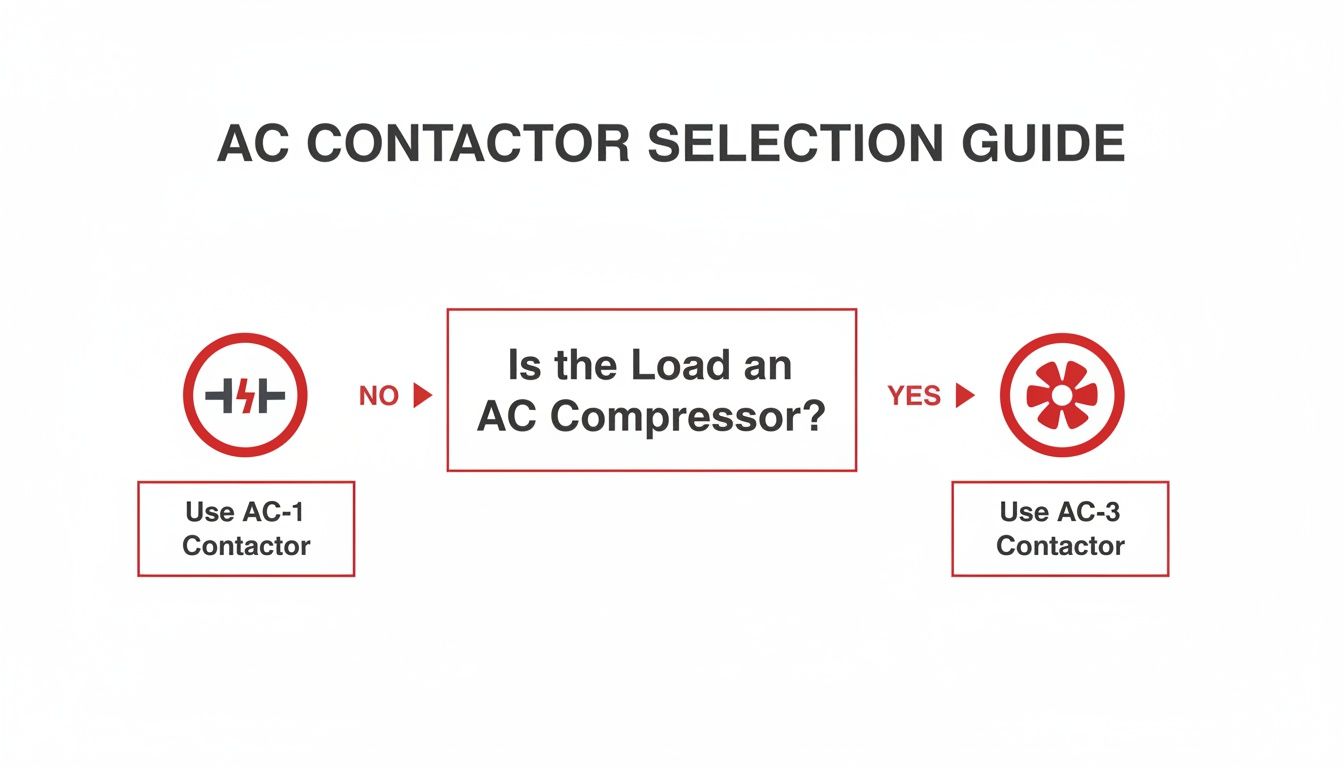
As you can see, the path is clear: AC compressors are inductive loads, which means they require an AC-3 rated contactor. Simpler resistive loads like heaters can use an AC-1 rating.
Step 1: Decode the AC Unit Nameplate
Your single most crucial source of truth is the AC unit’s nameplate. This label holds all the electrical data you need.
You're looking for two specific values:
- Full Load Amps (FLA): This tells you the maximum current the motor will draw during normal operation. Your contactor's continuous current rating must be equal to or slightly higher than this value.
- Locked Rotor Amps (LRA): This is the critical value. It’s the massive surge of current the motor draws for a split second on startup. The contactor must be robust enough to handle this jolt repeatedly without its contacts welding together. This is precisely what an IEC AC-3 rated contactor is designed for.
A classic mistake is choosing a contactor based only on FLA. Ignoring LRA sets the contactor up for a very short service life, as the intense startup current will destroy a contactor not rated for heavy motor starting duty.
Step 2: Match the Coil Voltage
The contactor’s coil is its control center. It receives a low-voltage signal from the thermostat or control system, telling it when to energize and switch the high-power circuit. It is absolutely critical that the contactor's coil voltage matches the output voltage of your control circuit.
Here in the GCC, the most common control voltages for HVAC systems are 24V AC and 230V AC. A mismatch means one of two outcomes: either the contactor won't engage because the voltage is too low, or the coil will burn out because the voltage is too high. Always verify the control circuit voltage before procurement.
Step 3: Determine the Number of Poles
The number of poles on a contactor corresponds to the number of power lines it needs to switch. This is dictated by the electrical system feeding the AC unit.
- Single-Phase AC Units: Common in residential setups, these systems require a 2-pole contactor. One pole is for the live line, and the second is for the neutral.
- Three-Phase AC Units: Larger commercial and industrial systems in places like Dubai and Abu Dhabi almost always use three-phase power. For these, you'll need a 3-pole contactor to switch all three power lines (L1, L2, L3) simultaneously.
Using a 3-pole contactor for a single-phase application is not best practice; it leaves a pole unused and adds unnecessary cost and size to the panel. Matching poles to the system is a mark of professional installation.
Step 4: Account for the GCC Climate
This last step is perhaps the most important for any project in the UAE and the wider GCC region. The relentless heat, high humidity, and airborne dust can destroy electrical components that are not properly specified.
Start by looking for a contactor with a suitable IP rating (Ingress Protection). An IP20 rating is generally sufficient for components inside a clean, well-sealed control panel. However, if the unit is in a dusty environment or exposed to moisture, a higher IP rating is necessary for survival.
Equally important, check the contactor’s operating temperature range. It must be certified to handle the high ambient temperatures common in the summer. Components not rated for our conditions will overheat and fail, leading to costly downtime. At GoSwitchgear, we stock robust electrical components UAE specifically chosen to perform reliably in these harsh conditions.
Comparing Different AC Contactor Technologies
Choosing the right contactors for AC units is about more than matching volts and amps; it's about selecting the right technology for the application. For engineers and panel builders in the UAE, this decision is key to designing systems that perform efficiently, reduce operational costs, and remain reliable for years.
The two main types you'll encounter are the traditional electromagnetic contactor and the newer permanent magnet (latching) contactor. Each has strengths suited to different project goals. A solid grasp of their differences is crucial, especially when addressing the GCC's climate demands and focus on energy efficiency.
The Workhorse: Electromagnetic Contactors
The electromagnetic contactor is the industry standard for a reason. It's the most common type found in AC systems across Dubai and the wider region. Its operation is simple: when the control circuit energizes the internal coil, it creates an electromagnetic field that physically pulls the main contacts together, closing the circuit and starting the AC compressor.
The drawback of this design is its need for a constant flow of power to the coil to hold the contacts closed. This continuous power draw, known as holding current, may seem minor for one AC unit. However, across a large commercial building or residential tower with hundreds of units, it adds up significantly. This is a key consideration for any project where an energy management solution Dubai is a priority.
The Efficient Challenger: Permanent Magnet (Latching) Contactors
Permanent magnet contactors are a smart evolution of the classic design. Instead of consuming energy to maintain an electromagnetic field, they use a built-in permanent magnet to lock the contacts in place after switching.
Here’s how it works:
- A brief electrical pulse hits a closing coil, generating a magnetic field that snaps the contacts shut.
- Once closed, the permanent magnet takes over, holding them tight with zero additional power consumption.
- To open the circuit, another short pulse is sent to a separate opening coil, neutralizing the magnet's pull and allowing the contacts to spring open.
This "pulse-to-switch" operation makes them incredibly energy-efficient. We are seeing a significant push for these contactors in the UAE's AC market, especially for facilities managers and solar developers. For more data on this trend, you can review the growth of the AC contactor market.
Head-to-Head Technology Comparison
So, how do you decide? A direct comparison helps clarify the choice, which often comes down to a trade-off between initial purchase price and long-term operational savings.
Electromagnetic vs. Permanent Magnet Contactors
This table will help you determine which technology best fits your application's needs regarding energy consumption, noise, and cost.
| Feature | Electromagnetic Contactor | Permanent Magnet Contactor |
|---|---|---|
| Energy Consumption | Requires constant holding current, leading to higher energy costs. | Uses power only for a split second during switching; almost zero idle draw. |
| Operating Noise | Can create a noticeable hum or buzz that often worsens with age. | Completely silent after the initial switching click. |
| Heat Generation | The energized coil generates heat, adding to the panel's thermal load. | Stays cool, generating virtually no heat—ideal for compact or poorly ventilated panels. |
| Upfront Cost | Generally a lower initial purchase price. | Higher initial cost but offers a lower total cost of ownership (TCO). |
| Best Application | Standard commercial and residential AC systems where budget is the primary driver. | High-efficiency buildings, solar-powered systems, and noise-sensitive areas like hotels or hospitals. |
For projects aiming for high efficiency ratings or installed in noise-sensitive environments—such as luxury hotels, recording studios, or high-end residential towers—the advantages of permanent magnet contactors easily justify the higher initial cost.
Ultimately, the "best" technology depends on your project's specific requirements. At GoSwitchgear, we stock a vast selection of electrical components UAE, giving you the flexibility to source the perfect contactor whether you're prioritizing upfront budget or long-term efficiency.
A Practical Guide to Installing and Wiring Contactors
A properly installed contactor is the foundation of a safe and reliable air conditioning system. For any electrician or maintenance engineer in the UAE, correct installation is critical, as we contend with extreme ambient heat and fine airborne dust that can compromise components. A solid installation ensures longevity and prevents premature failures.
This guide provides clear, actionable steps for installing and wiring contactors for AC units, with a focus on safety protocols and best practices tailored for conditions across the GCC.
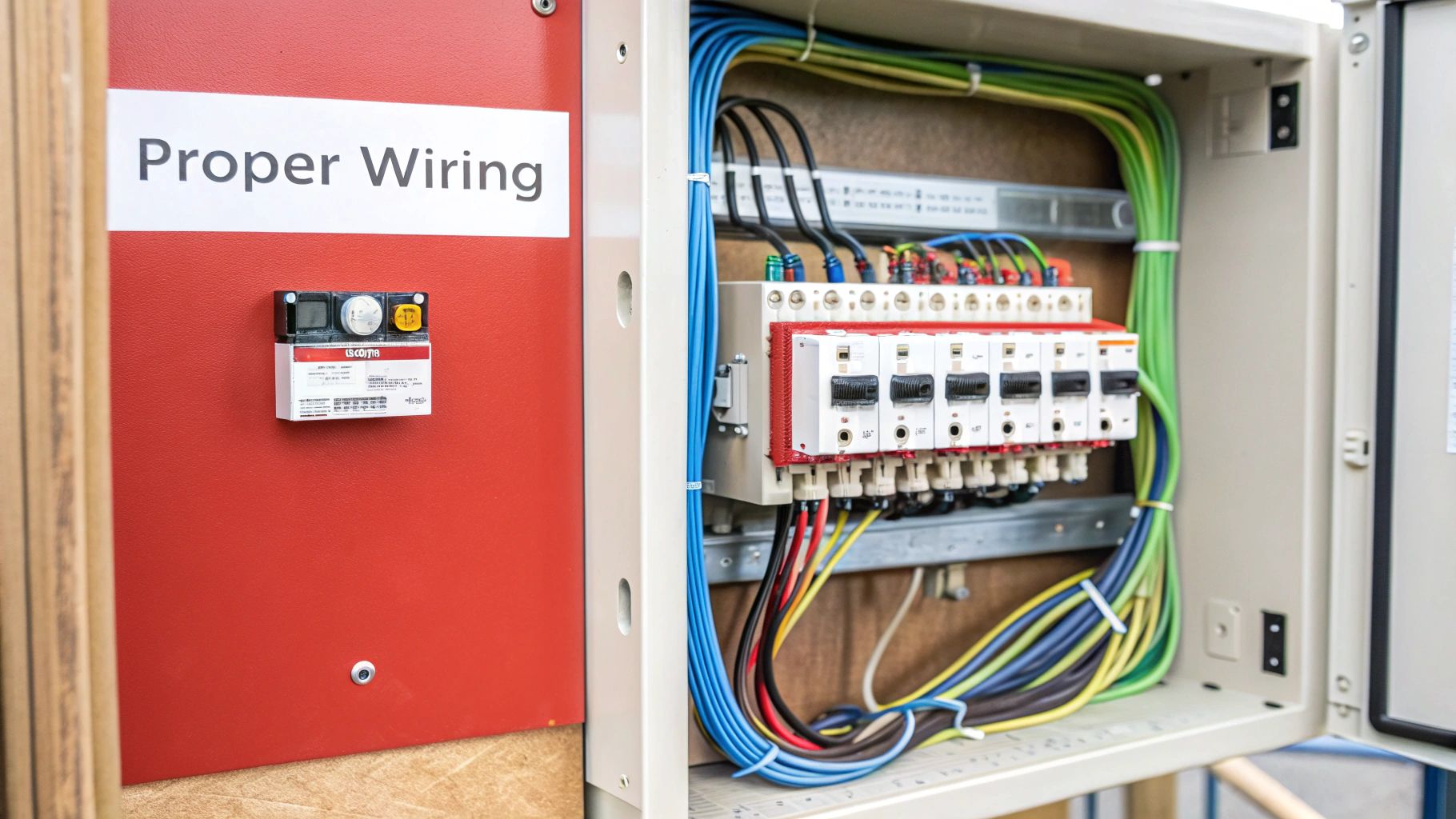
Pre-Installation Safety First
Before beginning any work, safety must be the top priority. The risk of electrical shock is real, making a strict lockout/tagout (LOTO) procedure non-negotiable.
- Isolate Power: Completely de-energize the AC unit by switching off the corresponding circuit breaker at the main distribution board.
- Verify De-energization: Use a multimeter to test the contactor's line-side terminals to confirm zero voltage. Never assume a circuit is dead.
- Lock and Tag: Secure a lock and tag to the breaker to prevent accidental re-energization while you are working.
Mounting Best Practices for the GCC Climate
How and where you mount a contactor inside a control panel directly impacts its lifespan, especially given the high ambient temperatures in the UAE. Overheating is a primary cause of failure for electrical components.
- Ensure Proper Ventilation: Do not install a contactor in a tight corner. Always allow adequate clearance—typically a few centimeters on all sides—for natural heat dissipation.
- Consider Panel Fans: For control panels located outdoors or in hot, unconditioned spaces like plant rooms, a panel ventilation fan is a wise investment. It actively removes hot air, protecting all your electrical components UAE from thermal stress.
- Choose the Right Mounting: Most modern contactors snap onto a DIN rail. If using panel-mount screws, ensure they are fastened tightly to a flat, stable surface.
Proper heat management is a necessity. A contactor operating consistently above its rated temperature will experience accelerated wear on its coil insulation and contacts, leading to premature failure.
Wiring and Termination: A Step-by-Step Guide
Clean, correct wiring prevents issues ranging from poor performance to dangerous electrical arcing. Always have the manufacturer’s wiring diagram for your specific contactor model on hand.
- Select the Correct Wire Gauge: Use wires properly sized for the Full Load Amps (FLA) of the AC unit. Undersized wires are a fire hazard as they will overheat.
- Connect Line and Load: Incoming high-voltage power lines connect to terminals marked L1, L2, and L3. Wires going to the AC compressor connect to terminals marked T1, T2, and T3.
- Wire the Control Circuit: Connect the low-voltage control wires from the thermostat to the coil terminals, typically labeled A1 and A2. Double-check that this matches the specified coil voltage.
- Torque to Specification: Use a calibrated torque wrench to tighten every terminal screw to the manufacturer's exact specification. Under-tightening causes high resistance and heat, while over-tightening can damage the terminal.
Common Installation Mistakes to Avoid
Even experienced technicians can make errors. Knowing these common pitfalls can prevent callbacks.
- Ignoring Torque Specs: Using a standard screwdriver and guessing tightness is a recipe for disaster. Loose connections are a leading cause of contactor burnout.
- Mixing Line and Load Wires: Swapping incoming power and outgoing load connections can damage control circuits and prevent the unit from operating correctly.
- Failing to Leave a Service Loop: Leaving a small loop of extra wire makes future maintenance or replacement significantly easier.
By following these installation guidelines, you can ensure the contactors for AC units you install are set up for safe, reliable performance, with the durability needed to withstand the rigors of the GCC environment. For detailed datasheets and technical support, explore the extensive catalogue at GoSwitchgear.
Troubleshooting Common Contactor Failures in the GCC
In a region where air conditioning is essential, any system downtime is a critical problem. For facility managers and field technicians across the UAE, the ability to rapidly diagnose a failing AC contactor is vital. A fault in this small component can bring an entire cooling system to a halt.
This guide is for the professionals who keep these systems running. We will cover the most common failure modes for contactors for ac units, their likely causes in our challenging climate, and practical steps to restore operation quickly.
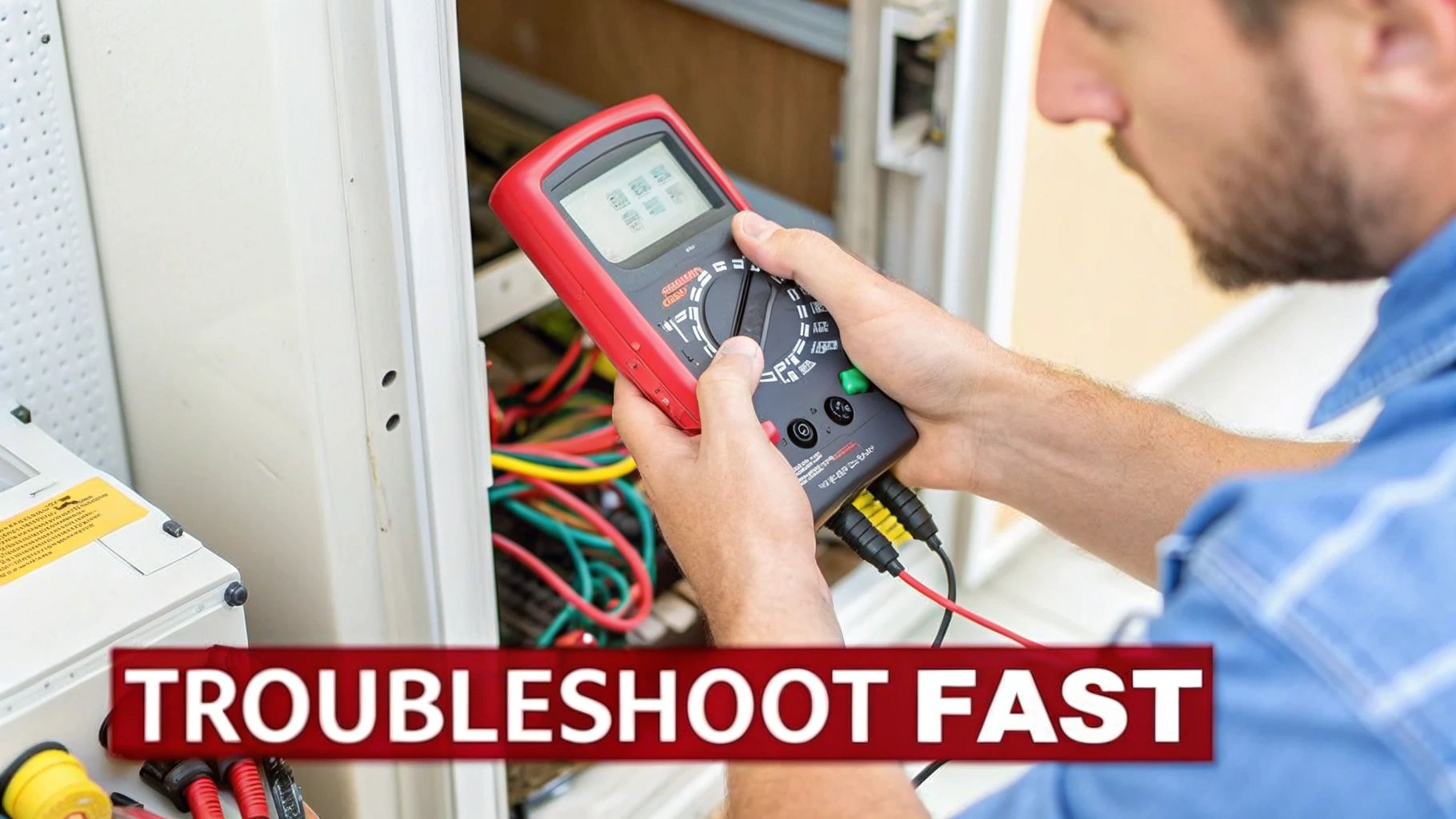
Problem 1: The Contactor Is Chattering or Buzzing
One of the most frequent service calls involves a loud, vibrating, or "chattering" sound from the outdoor unit. This noise almost always indicates an issue with the contactor's electromagnet.
Likely Causes:
- Low Control Voltage: The coil isn’t receiving sufficient voltage (typically 24V AC) to create a solid magnetic pull, causing the internal plunger to bounce rapidly.
- Debris or Dust: In the GCC, dust can work its way inside the contactor, preventing the contacts from seating firmly and causing the same vibrating effect.
- Failing Coil: Over years of heat and use, the coil's insulation can break down, weakening its magnetic force until it can no longer hold the contacts closed properly.
Expert Tip: Before replacing the contactor, always check the control circuit voltage first. A faulty transformer or loose wire is often the root cause, and a new contactor will not fix this underlying issue.
Problem 2: The Contacts Are Welded Shut
A serious problem occurs when the AC unit runs continuously and will not shut off, even when commanded by the thermostat. This is a classic sign of welded contacts, a hazardous situation where the high-voltage circuit is stuck "on."
A major driver is the massive inrush current AC compressors demand on startup—a constant challenge in the UAE. This reality makes proactive maintenance and correctly specified contactors critical. To understand the scale of regional demand, you can discover more insights about the region's HVAC market.
Likely Causes:
- Undersized Contactor: This is the primary cause. If a contactor isn't rated for the compressor's Locked Rotor Amps (LRA), the electrical arc during startup can melt the contact surfaces and fuse them.
- Frequent Short Cycling: An AC system constantly turning on and off subjects the contactor to repeated LRA surges, dramatically shortening its lifespan.
- Voltage Sag: A significant drop in line voltage can cause the motor to draw excessive current, leading to overheating and welded contacts.
Problem 3: The Coil Has Burned Out
A burnt-out coil is another common failure, identifiable by a distinct smell or visible discoloration and melting on the coil's housing. When the coil fails, the contactor will not pull in, and the AC unit will not start.
This type of failure highlights why sourcing quality electrical components UAE from trusted suppliers like GoSwitchgear is crucial for long-term system reliability.
Diagnostic Steps with a Multimeter:
- Safety First: Always perform a full lockout/tagout procedure before beginning work.
- Visual Inspection: Look for obvious signs of failure like blackened contacts, melted plastic, or corrosion.
- Test the Coil: Set your multimeter to Ohms (Ω). Disconnect the low-voltage control wires from the A1 and A2 terminals and measure the resistance. A good coil will have a specific resistance reading (refer to the datasheet). An open coil will read OL (Over Limit), and a shorted coil will read near zero.
- Check for Continuity: With the power off, test continuity across the main power terminals (L1 to T1, L2 to T2). The meter should read OL. Manually press the plunger in and test again. You should now get a reading near zero Ohms. If it fails either test, the contacts are damaged.
Sourcing Your Electrical Components with GoSwitchgear
Access to high-quality, reliable parts is critical for any project's success. You need a partner who understands the pressures of the GCC market. GoSwitchgear is the leading online hub for professional-grade electrical components UAE, specifically designed to support panel builders, electricians, and engineers. We provide a direct line to a massive inventory of trusted brands, ensuring you can always find the exact component you need.
Our platform is built for the trade professional. We eliminate the typical headaches of sourcing by providing instant access to detailed technical datasheets, competitive wholesale pricing, and a streamlined ordering process. This allows procurement managers and electrical traders to make informed decisions quickly, securing the right parts without risking project delays.
A Partner for Your UAE Projects
We know that speed and reliability are paramount. With a strong local presence and dedicated branches in Dubai and Abu Dhabi, GoSwitchgear is more than a supplier—we are your project partner on the ground. Our team is committed to getting you the correct contactors for AC units and any other critical components with the efficiency your business requires.
At GoSwitchgear, our digital catalogue empowers our clients. By centralizing access to top-tier products and technical data, we give professionals across the UAE and GCC the confidence to build safer, more reliable systems.
Finding what you need on our platform is simple. Filter by technical specs, brand, or application to pinpoint the exact contactor for any HVAC system. We invite you to browse our comprehensive selection of electrical components and see how we can support your next project in Dubai or Abu Dhabi.
Your Top Questions About AC Contactors Answered
Have questions about contactors for AC units? You're not alone. Here are direct answers to common queries we hear from engineers and technicians in the UAE.
What's the Real Difference Between FLA and LRA?
These two ratings are vital for selecting the right contactor for an AC motor, as they represent two distinct operational moments.
- FLA (Full Load Amps): This is the motor's "cruising speed"—the steady electrical current the AC compressor draws when running normally under its heaviest designed load.
- LRA (Locked Rotor Amps): This is the massive jolt of current the motor requires for a split second to start from a standstill. This initial surge can be 5 to 6 times higher than the FLA.
Your contactor must be rated to handle the LRA surge repeatedly without the contacts welding shut. Always check the AC unit's nameplate and select a contactor rated for both FLA and LRA to ensure system longevity.
Can I Use a 3-Pole Contactor for a Single-Phase AC Unit?
Technically, yes, but it is not best practice. While it will function, a 2-pole contactor is the correct and more cost-effective choice for a single-phase system, which only requires switching two lines (live and neutral).
Using a 3-pole contactor leaves one pole unused, wasting panel space and adding unnecessary cost to your project. For a professional and efficient installation, always match the number of poles to the system's requirements.
Why Is My AC Contactor Buzzing or Chattering So Loudly?
That annoying buzzing or chattering is a classic symptom of a problem. In our experience across the GCC, it usually points to one of two culprits.
The first and most common issue is low control voltage. The contactor's electromagnet requires a steady voltage—typically 24V AC—to pull the contacts closed firmly. If the voltage drops, the magnetic field weakens, causing the contacts to vibrate.
The second likely cause is contamination. The regional climate means dust and sand can get inside the contactor's mechanism, physically preventing the contacts from closing properly. Start by using a multimeter to check if the control circuit voltage is stable. If the voltage is correct, safely power down the unit and visually inspect the contactor for debris.
For any project in Dubai, Abu Dhabi, or across the UAE, securing reliable electrical components UAE is critical. Here at GoSwitchgear, we’ve built an extensive digital catalogue of high-quality contactors and switchgear proven to handle the demands of the GCC climate.
Explore our full range of electrical components at GoSwitchgear and build your projects with the quality they deserve.
Share this post

Related
Posts
A Guide to Choosing AC to DC Converters for UAE & GCC Electrical Systems
Master AC to DC converters with this comprehensive guide for engineers in the UAE & GCC. Learn selection, installation, and...
A Guide to Drill Machine Prices in the UAE for Technical Professionals
Find the best drill machine price in UAE. Our 2026 guide helps contractors and engineers choose the right corded, cordless,...
A Professional’s Guide to Choosing AGM VRLA Batteries in the UAE Climate
Discover why AGM VRLA batteries are the superior power solution for UPS, solar, and industrial systems in the UAE. Get...
How to Choose the Right Lithium Ion Battery Charger for UAE & GCC Projects
Discover how to select the right lithium ion battery charger for UAE projects. This guide covers specs, BMS integration, and...
.jpg)