.jpg)


Posted by:
Category:
Comments:
Post Date:
A Guide to Electrical Hazard Signs in the UAE and GCC for Engineers & Panel Builders
In the high-stakes industrial and construction sectors of the UAE, electrical hazards present a constant risk. For engineers, electricians, and panel builders, electrical hazard signs are not just a regulatory formality; they are a critical, immediate defense against severe injury and costly operational downtime. These signs are a universal language, instantly communicating life-threatening risks like high voltage, arc flash potential, and electric shock, forming a fundamental tool for risk management on any project site in Dubai or Abu Dhabi.
Why Compliant Electrical Hazard Signs Are Your First Defense
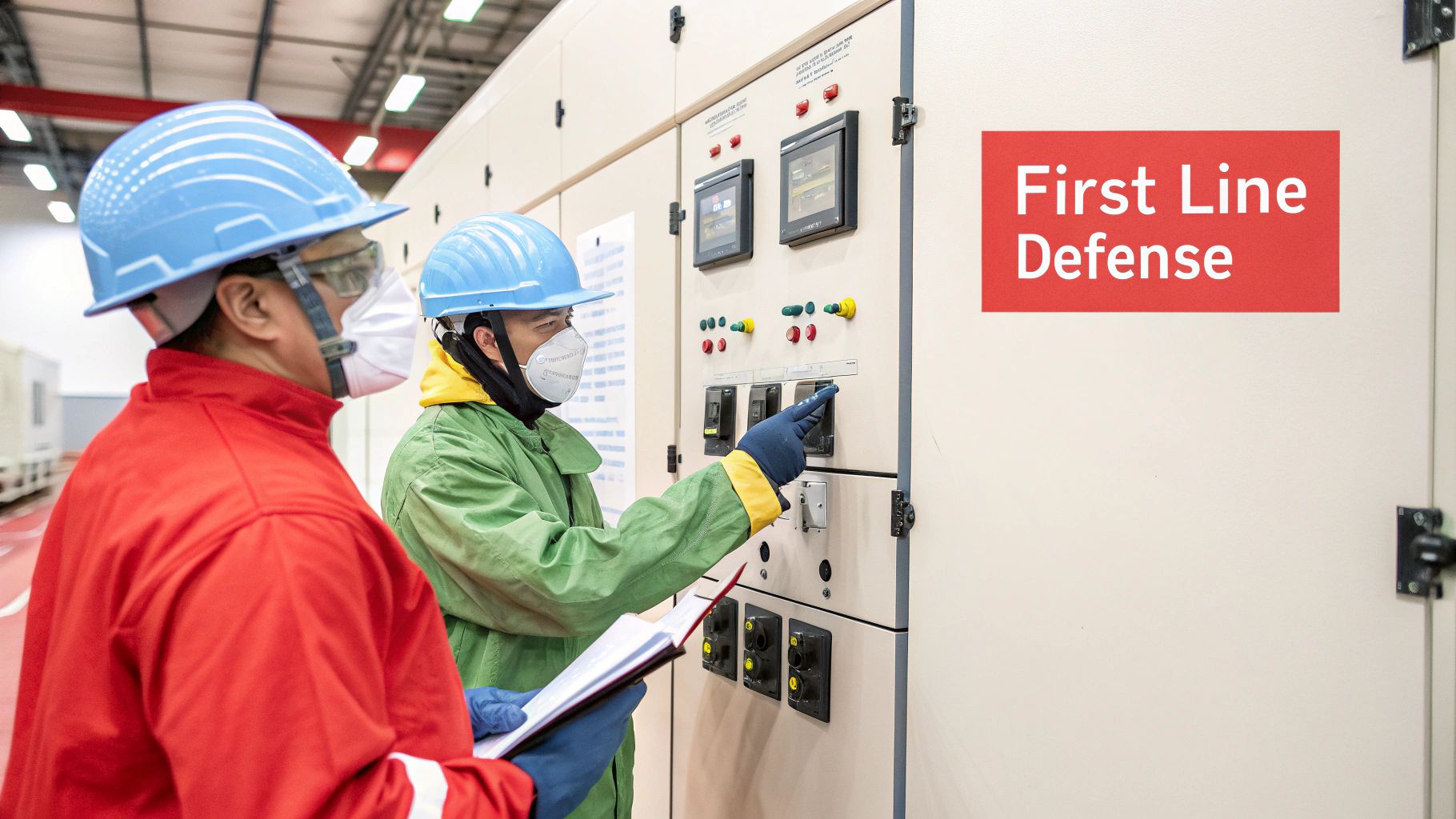
From sprawling manufacturing plants in Dubai to complex infrastructure projects in Saudi Arabia, the risk of electrical incidents is ever-present. This is where clear, compliant electrical hazard signs step in as the first line of defense. They act as an immediate visual warning, preventing accidental contact with energized components and serving as a cornerstone of a comprehensive safety strategy, especially in the challenging GCC climate.
The High Cost of Unclear Warnings in the GCC
The absence of proper signage can have devastating consequences. Across the energy-intensive industries of the UAE and KSA, inconsistent adoption of international safety standards often leaves electrical risks as a top operational threat.
- Financial Impact: Unmitigated hazards can lead to operational disruptions costing millions annually.
- Human Cost: More importantly, they can result in serious injuries or even fatalities.
Studies show that implementing a standardized signage program can reduce incident rates by up to 40% by boosting hazard awareness. For deeper insights, the DSS report on implementing electrical safety programs offers valuable data.
More Than a Regulatory Requirement
For panel builders and electrical contractors, viewing signage as just another box to tick is a critical mistake. It's an essential element of risk management that protects your most valuable asset: your team.
Effective signage is a multi-purpose tool that achieves several key objectives:
- Prevents Unauthorized Access: It clearly marks restricted areas like switchgear rooms and high-voltage cabinets, ensuring only qualified personnel can enter.
- Communicates Specific Dangers: It details the exact nature of the hazard, whether it's arc flash potential, stored energy from a SMPS power supply, or high voltage from a transformer.
- Reinforces Safe Work Practices: Signs serve as constant on-site reminders for mandatory procedures like lockout/tagout (LOTO) before any maintenance begins on equipment like a DIN rail isolator.
Partnering with a reliable supplier like GoSwitchgear ensures the electrical hazard signs you procure are not only compliant but also durable enough to withstand the demanding GCC climate, providing lasting protection for your projects and personnel.
Staying Compliant: Navigating UAE and GCC Electrical Safety Regulations
For engineers and procurement teams in the UAE and KSA, ensuring worksite safety begins with a solid grasp of local electrical regulations. This is not merely about avoiding fines; it's about embedding safety into your operations. The regulatory framework combines globally respected standards with specific local requirements.
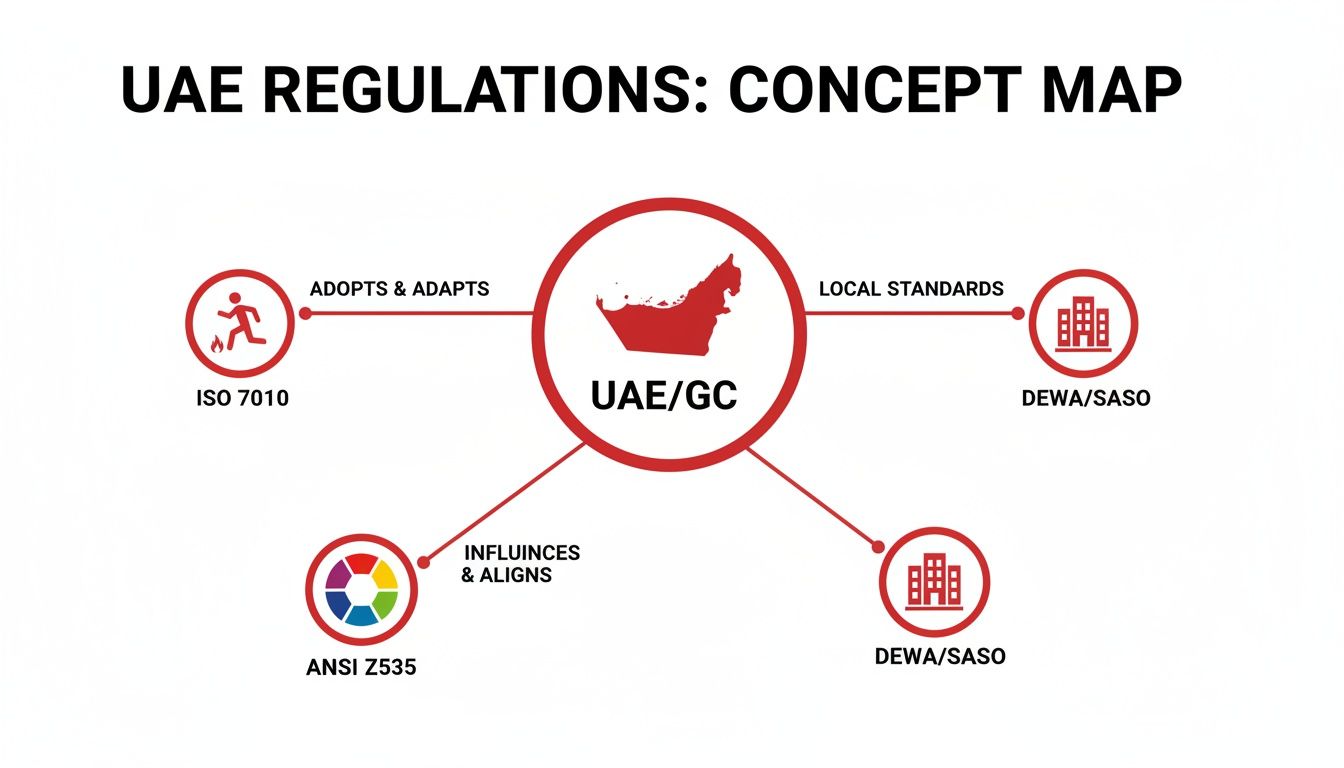
Two international standards form the foundation for electrical hazard signs:
- ISO 7010: This standard governs safety symbols, creating a universal visual language. On multicultural project sites across Dubai, ISO 7010 symbols ensure instant understanding without translation.
- ANSI Z535: This American standard details sign design—colors, formats, and signal words like Danger, Warning, and Caution. Its structure clearly communicates the severity of a risk to electricians on the ground.
How Local Authorities in the UAE and KSA Enforce Compliance
While international standards provide the "what," local bodies dictate the "how." In the UAE, the Dubai Electricity and Water Authority (DEWA) enforces these rules, while in Saudi Arabia, it's the Saudi Standards, Metrology and Quality Organization (SASO). Both mandate compliance with these international best practices.
For example, a high-voltage switchgear panel installed in a DEWA-regulated facility must feature a "Danger High Voltage" sign that adheres to both standards: the red, black, and white color scheme from ANSI Z535 and the lightning bolt symbol from ISO 7010. Non-compliance leads to failed inspections, costly rework, and project delays.
From a regulatory standpoint, a non-compliant sign is no better than having no sign at all. Both local authorities and global safety organizations demand clarity and consistency to eliminate ambiguity around life-threatening electrical hazards.
Practical Steps for Ensuring Compliance
For procurement teams, this translates to proactive risk management. Specifying certified electrical hazard signs that meet both ISO and ANSI standards is non-negotiable.
It's also about selecting the appropriate sign for each application. A battery backup room requires signs covering both electrical and chemical hazards, whereas a simple control panel may only need a "Risk of Electric Shock" notice. While this guide focuses on the UAE and GCC, the principles of regulatory adherence are universal. For a broader view, this article on commercial property safety regulations and compliance is a useful resource. Partnering with a trusted supplier like GoSwitchgear ensures your projects meet these stringent requirements.
Reading the Language of Electrical Safety Signs
Every color and symbol on an electrical hazard sign communicates the nature and severity of danger in a split second. For electricians and facility managers in the UAE, fluency in this visual language is a critical skill for on-the-fly risk assessment. This standardized system ensures a warning sign in Dubai carries the exact same weight as one in Riyadh.
Decoding the Colors of Safety: ANSI Z535 Standards
Color is the most powerful element of hazard communication, directly tied to the level of risk.
- Red (Danger): This is the highest alert level, reserved for immediate, life-threatening hazards that will cause severe injury or death if not avoided. Used on high-voltage switchgear, transformer enclosures, and arc flash boundaries.
- Orange (Warning): This signals a serious hazard that could result in severe injury or death. Common on equipment requiring LOTO procedures or in battery charging areas.
- Yellow (Caution): This alerts to potential hazards that might cause minor to moderate injury. Found on standard control panels or near temporary power sources.
Understanding Shapes and Symbols: ISO 7010 Standards
The equilateral triangle universally indicates a hazard. Inside, an ISO 7010 pictogram—like the lightning bolt for electricity—specifies the danger. This combination creates a clear, multi-layered message that transcends language barriers, which is vital for the diverse workforces across the GCC.
Electrical Hazard Sign Classification Guide
This table provides a practical breakdown for selecting the right sign for common applications in the UAE and KSA.
| Sign Category | Colour Code | Symbol/Shape | Meaning & Severity | Common Application (e.g., Switchgear, Panels) |
|---|---|---|---|---|
| Danger | Red | Triangle | Immediate, high-level hazard. Will cause severe injury or death. | High-Voltage Switchgear, Transformer Enclosures, Arc Flash Boundaries |
| Warning | Orange | Triangle | Serious hazard. Could result in severe injury or death. | Main Distribution Boards (MDBs), Motor Control Centers (MCCs), LOTO Points |
| Caution | Yellow | Triangle | Potential hazard. Could cause minor to moderate injury. | Control Panels, Junction Boxes, Temporary Power Setups |
| Notice | Blue | Rectangle | Informational. Not a hazard warning. Provides instructions or policies. | Equipment Rooms, Control Rooms (e.g., "Authorized Personnel Only") |
Mastering this visual language enables your team to operate more safely and efficiently. To ensure full compliance, source your electrical hazard signs from a trusted supplier like GoSwitchgear.
Choosing Sign Materials That Withstand the GCC Climate
In the UAE and across the GCC, a faded, cracked, or sand-blasted sign is a failed piece of safety equipment. The region’s punishing climate—with its intense heat, UV radiation, humidity, and abrasive dust—can rapidly degrade standard signage. For engineers, selecting the right material is a critical safety decision.
The unforgiving environment, where summer temperatures exceed 50°C, demands durable materials. A sign that cannot withstand these conditions becomes a liability, creating a false sense of security. Material selection is therefore a core component of any serious electrical risk management in the GCC on GoSwitchgear.ae strategy.
Comparison of Climate-Resistant Materials
The right material balances durability, cost, and application suitability.
| Material | Key Advantages | Best For | Considerations for GCC Climate |
|---|---|---|---|
| Aluminium | Excellent heat and UV resistance. Rigid and corrosion-proof for long-term outdoor use. | Permanent installations on switchgear, transformer enclosures, and outdoor substations. | The top choice for durability against sun and heat. A quality finish reduces glare. |
| Polycarbonate | Extremely tough and impact-resistant. Maintains clarity in high heat. | High-traffic areas or equipment prone to impact, like control panels and MCCs. | Superior UV stability prevents yellowing or cracking common in cheaper plastics. |
| Industrial Vinyl | Flexible, cost-effective, and adhesive. Often laminated for UV and chemical protection. | Indoor applications, curved surfaces, or temporary signs on machinery and junction boxes. | Laminated vinyl is essential for outdoor use to prevent fading and peeling. |
The Importance of IP Ratings
Ingress Protection (IP) ratings are crucial. An IP rating indicates how well an enclosure protects against solids (dust) and liquids.
For any outdoor or dusty industrial site in Dubai or Abu Dhabi, specify signs with at least an IP65 rating. This ensures the sign is dust-tight and can withstand low-pressure water jets, remaining legible through sandstorms and wash-downs.
Investing in high-quality, climate-appropriate materials from a supplier like GoSwitchgear guarantees your electrical hazard signs will provide reliable, long-term protection, ensuring compliance and safety without frequent replacements.
Effective Sign Placement for Maximum Visibility
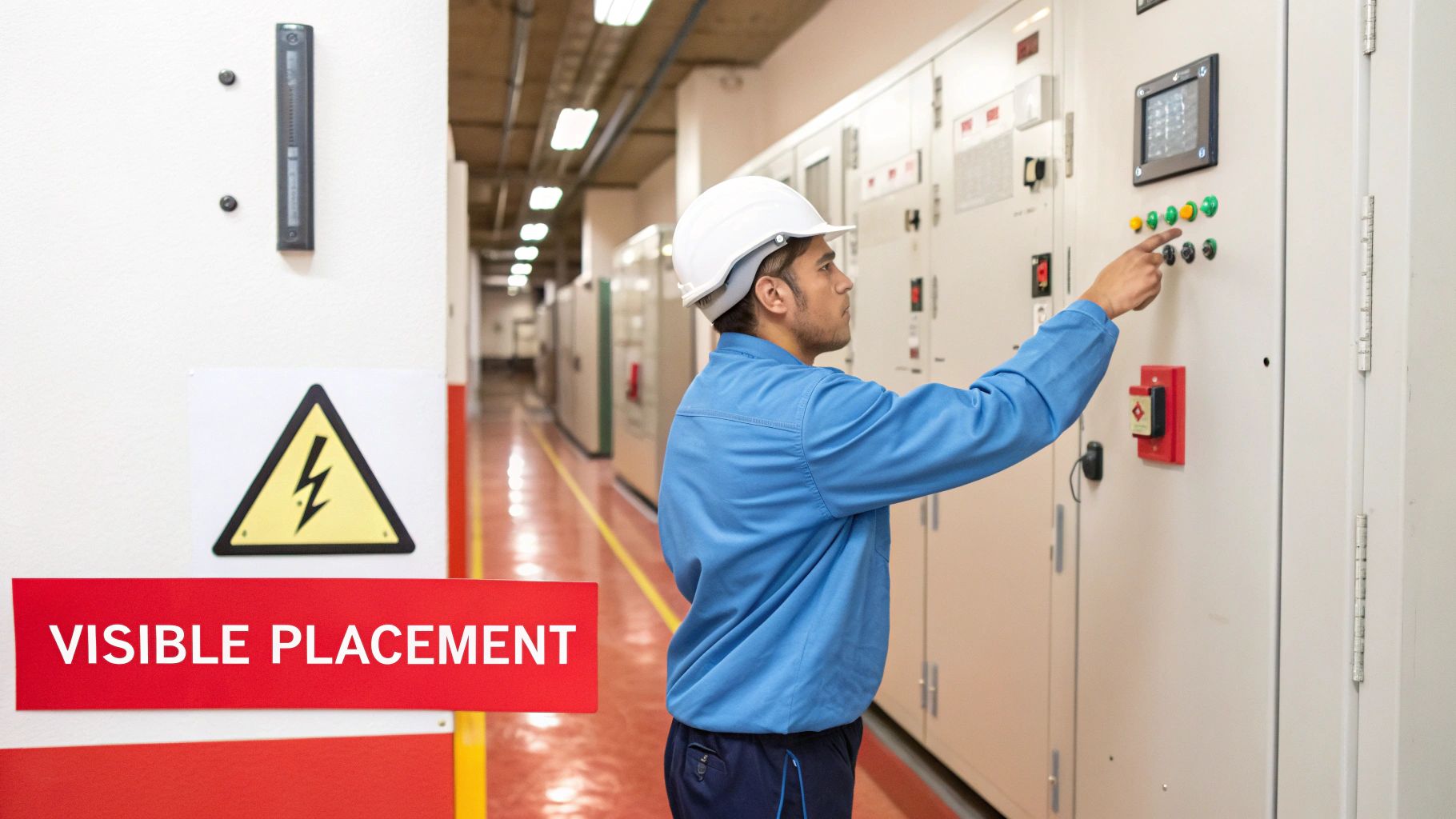
A perfectly designed electrical hazard sign is useless if it is not seen. In the fast-paced work environments across the UAE and GCC, correct sign placement is a legal and moral obligation to ensure every warning is visible before an individual approaches a hazard.
Proper placement transforms a sign from a passive notice into an active alert. This means installing it at eye level, in well-lit areas, and directly on or adjacent to the equipment it warns about.
Best Practices for Sign Installation
To ensure your electrical hazard signs are effective, follow these fundamental installation principles.
- At the Point of Hazard: Signs must be placed on access points like doors to electrical rooms, switchgear enclosures, and panel covers.
- Clear Sightlines: Ensure an unobstructed line of sight from a safe distance, allowing personnel to read and react before entering a danger zone.
- Sufficient Lighting: Verify that each sign location is well-lit. For areas with poor lighting, use reflective sign materials.
Practical Do's and Don'ts Checklist
This checklist helps electricians and maintenance teams ensure effective, compliant installation.
| Do | Don't |
|---|---|
| Install signs at eye level (typically 1.5 to 2 metres from the floor). | Mount signs too high or too low, forcing people to divert their attention. |
| Place signs on all access doors to electrical rooms and other restricted areas. | Assume one sign at a main entrance is sufficient for a large or complex room. |
| Use bilingual Arabic and English signs to communicate clearly with diverse workforces in the UAE. | Rely on English-only signs, creating dangerous communication gaps. |
| Ensure the area is free of visual clutter that could distract from the safety warning. | Place signs among other notices, diluting their impact and making them easy to ignore. |
A sign's effectiveness is a direct result of its visibility. A misplaced sign is an invisible sign, offering zero protection and failing to meet compliance standards for projects across the GCC.
Strategic placement is what transforms a passive warning into an active safety tool. For assistance selecting the right bilingual and climate-durable signs for your UAE projects, explore compliant options at GoSwitchgear.
Audits and Maintenance: Keeping Your Safety Signage Effective
Installing electrical hazard signs is not a one-time task. In the demanding industrial environments of the UAE and GCC, signs are constantly exposed to UV radiation, dust, and physical wear. A faded, cracked, or obstructed sign creates a significant gap in your safety protocol.
Proactive maintenance and auditing are essential. This systematic process ensures every warning remains clear, legible, and relevant to the current risks, protecting your team and demonstrating a commitment to a safe workplace.
How to Implement a Simple Inspection Schedule
Consistency is key. A straightforward, repeatable schedule helps catch minor issues before they become major liabilities.
- Quarterly Visual Checks: A safety officer should conduct a quarterly walk-through to spot obvious damage, fading, or obstructions.
- Annual Comprehensive Audit: Once a year, perform a detailed audit, comparing every installed electrical hazard sign against updated facility plans. This is vital to ensure all hazards are correctly marked, especially after equipment upgrades or layout changes.
An outdated sign is a direct threat. If a machine's voltage is increased, an old "Warning" sign may no longer be adequate and must be replaced with a "Danger" sign to reflect the heightened risk.
Signage Audit Checklist for Facility Managers
Use this checklist during inspections to ensure nothing is missed. It's a practical tool for facility managers in Dubai and Abu Dhabi focused on upholding top safety standards.
- Legibility: Can the text and symbols be easily read from a safe distance?
- Physical Condition: Are there cracks, peeling, or scratches obscuring the message?
- Correct Placement: Is the sign properly positioned at eye level and adjacent to the hazard, free from obstructions?
- Relevance: Does the sign accurately reflect the current hazard level (Danger, Warning, Caution), especially after any modifications to electrical systems?
Treating your safety signage as a dynamic system ensures it provides continuous, reliable protection. For durable solutions built for the GCC climate, partner with the experts at GoSwitchgear.
Answering Your Top Questions on Electrical Hazard Signs
Engineers, electricians, and facility managers across the UAE and GCC often have practical questions when implementing a signage strategy. Here are answers to some of the most common queries.
What is the most overlooked location for an electrical sign?
The most frequently forgotten area is the utility or breaker panel closet in commercial and office buildings. These doors require a "Warning: Electrical Panel" sign to prevent untrained staff from accessing equipment that could cause serious harm. Server rooms and UPS system areas are also commonly missed.
How often should I inspect my electrical hazard signs?
A proactive schedule is essential for safety and compliance.
- Quarterly Visual Checks: A brief walk-through every three months to spot obvious issues like fading, damage, or obstructions.
- Annual Comprehensive Audit: A detailed annual inspection to verify every sign is legible, in good condition, and relevant to current hazards.
Are bilingual signs necessary in the UAE?
Yes, absolutely. With the diverse workforces in Dubai, Abu Dhabi, and across the GCC, using bilingual Arabic and English electrical hazard signs is a critical safety measure. It eliminates communication gaps and ensures vital warnings are understood by every person on site, regardless of their native language.
For a complete range of climate-durable, compliant electrical components UAE needs, including safety signage designed for the tough environments of the GCC, trust GoSwitchgear. A robust energy management solution Dubai relies on starts with clear safety protocols. Find the right electrical hazard signs at GoSwitchgear and ensure your facility is fully protected. Contact us for project support in Dubai.
Share this post

Related
Posts
A Guide to Choosing AC to DC Converters for UAE & GCC Electrical Systems
Master AC to DC converters with this comprehensive guide for engineers in the UAE & GCC. Learn selection, installation, and...
A Guide to Drill Machine Prices in the UAE for Technical Professionals
Find the best drill machine price in UAE. Our 2026 guide helps contractors and engineers choose the right corded, cordless,...
A Professional’s Guide to Choosing AGM VRLA Batteries in the UAE Climate
Discover why AGM VRLA batteries are the superior power solution for UPS, solar, and industrial systems in the UAE. Get...
How to Choose the Right Lithium Ion Battery Charger for UAE & GCC Projects
Discover how to select the right lithium ion battery charger for UAE projects. This guide covers specs, BMS integration, and...
.jpg)