.jpg)


Posted by:
Category:
Comments:
Post Date:
A Guide to Selecting the Right LED Tube Light for UAE & GCC Projects
Are your facility's energy bills climbing? Are you constantly dispatching maintenance teams to fix flickering lights? For engineers and procurement managers in the UAE, these are persistent challenges. The solution is a strategic upgrade to a modern LED tube light, a direct replacement for fluorescent tubes that cuts energy consumption by up to 75%.
The Smart Shift to LED Tube Lights in the UAE
For any engineer, electrician, or facility manager in the UAE and the broader GCC region, the job comes with a unique set of challenges. We're talking intense heat, endless dust, and some of the highest energy costs around. It's a constant battle to keep equipment running efficiently without breaking the bank.
This fight is especially tough when you're dealing with outdated fluorescent lighting. Those old tubes are notorious energy hogs, their ballasts fail constantly, and they just don't perform well when the temperature climbs.
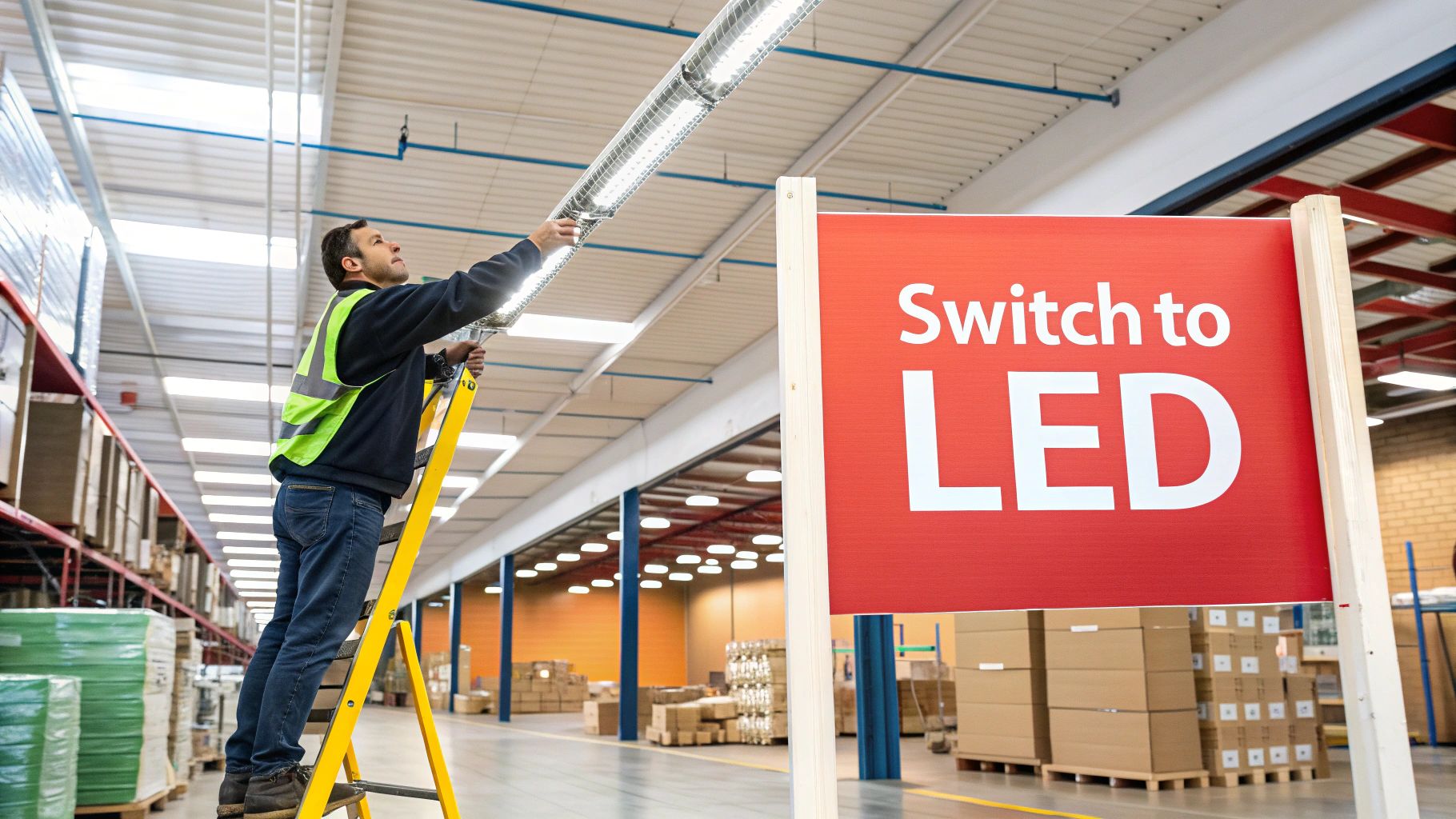
Switching to an LED tube light isn't just about changing a bulb—it's a strategic upgrade to your facility's entire infrastructure. You're ditching a legacy system for a solution engineered from the ground up to handle the region's demanding climate. This move directly tackles the biggest headaches for industrial and commercial operations from Dubai to Abu Dhabi and beyond, providing a reliable energy management solution Dubai businesses can count on.
Why Is This Shift Critical for GCC Professionals?
The payoff from an LED upgrade is both immediate and significant, and it lines up perfectly with the region's push for sustainability and operational excellence. Here’s what you stand to gain:
- Drastic Energy Reduction: LEDs use a fraction of the power of their fluorescent counterparts. This translates to instant, noticeable savings on your utility bills—a massive win considering the high cooling loads and energy demands here in the UAE.
- Reduced Maintenance Overheads: Forget the endless cycle of replacing flickering tubes and dead ballasts. With lifespans often stretching beyond 50,000 hours, LED tubes let your maintenance crew focus on more pressing tasks.
- Superior Durability and Performance: Fluorescent tubes are fragile glass. LED tubes are built tough. They provide instant, flicker-free light that isn't fazed by the high ambient heat found in warehouses and manufacturing plants across the GCC.
- Enhanced Safety and Compliance: Modern LED lights are mercury-free, making them a much safer choice for the environment. They also help your facility tick the boxes for green building regulations and sustainability mandates, like those set by ESMA in the UAE.
Ultimately, making the move to LED lighting is about future-proofing your operations. The technology's flexibility opens the door to not just simple replacements, but a whole world of innovative custom lighting solutions that can be tailored to your exact needs.
This guide will walk you through the technical know-how you need to make this smart shift, ensuring your next project is built on a foundation of efficiency, reliability, and long-term value.
How an LED Tube Light Actually Works
To really get why an LED tube light is so much better than an old-school fluorescent, you have to look at what’s happening inside. The magic isn’t in a fragile glass tube filled with gas; it's happening at a microscopic level inside a tiny piece of solid material called a semiconductor diode. It's a completely different, and way more direct, way of making light.
At the core of every LED is a process called electroluminescence. When you send a specific, low-voltage direct current (DC) through the semiconductor, it gets the electrons all excited. As these electrons jump around, they release their extra energy directly as photons—the fundamental particles of light.
Think of it like a waterfall. The water at the top has stored potential energy. The moment it tips over the edge, that energy instantly turns into the motion of falling water. An LED does something similar, converting electrical energy straight into light energy with almost no wasted steps. The only real byproduct is a little bit of heat, which is why they are so incredibly efficient.
The Key Components Driving Performance
Okay, so the tiny diode makes the light. But for an LED tube to work reliably, especially in the tough climate of the UAE and GCC, a few other parts have to work in perfect harmony. These components are just as crucial as the LEDs themselves for a long and trouble-free life.
The most important of these is the LED driver. You can think of the driver as the brain and the power supply all rolled into one. Its main job is to take the high-voltage alternating current (AC) from your wall socket and convert it into the stable, low-voltage direct current (DC) that the LEDs need to thrive.
A high-quality driver isn't just a nice-to-have; it's essential for a few reasons:
- Protection: It acts like a bodyguard, shielding the delicate LEDs from power surges and dips that could make them flicker or burn out way too soon.
- Efficiency: A good driver doesn't waste much energy during that AC-to-DC conversion, so more of your power bill goes towards making light, not heat.
- Thermal Management: Drivers get warm. Here in the GCC, choosing tubes with well-designed internal drivers or even external ones is a smart move to keep things from overheating and ensure the light lasts as long as it should.
This image gives you a peek inside a typical LED tube, showing the neat line of LEDs and the electronics that support them.
Notice how the light sources are kept separate from the power components? That's a smart design for getting rid of heat and making the whole thing last longer.
Ensuring Durability and Light Quality
Besides the driver, two other physical parts are critical to how well an LED tube light performs and how long it lasts. These are the bits that protect the guts of the light and shape what you actually see.
First up is the heat sink. Even though LEDs are super efficient, they do generate some heat. The heat sink, usually a piece of aluminum, is engineered to pull that heat away from the diodes and release it into the air. If you don't manage that heat properly, it will slowly cook the LEDs, making them dimmer and shortening their lifespan.
Then there's the diffuser. That’s the plastic or glass cover you see on the outside. It has two jobs: it protects the sensitive diodes from dust and bumps, and it scatters the light evenly so you get a smooth, comfortable glow instead of harsh, glaring spots.
The basic ideas behind LED tech show up in all kinds of fixtures; once you understand how a tube light works, it’s easier to appreciate the design of things like modern LED pendant lights. The market is certainly catching on. In the Middle East and Africa (MEA) region alone, the LED lighting market was valued at USD 2.9 billion in 2024 and is expected to hit USD 4.6 billion by 2032. This boom is fueled by government energy-saving programs and green building rules, especially in the UAE and Saudi Arabia, making the LED tube light a staple of modern construction.
Choosing Your LED Tube Light Retrofit Strategy
Picking the right retrofit strategy can save you a world of time, money, and future headaches. For engineers and procurement managers across the UAE, selecting the correct led tube light is a balancing act between upfront cost, how tricky the installation is, and long-term running costs. You’ve basically got three main paths to choose from, each with its own set of pros and cons.
Getting a handle on these options is key to making sure your project hits its mark. Are you after a quick, no-fuss upgrade, or is your goal to squeeze out every last dirham in energy savings and kill future maintenance calls? Let's break down which type fits which scenario.
Type A Plug-and-Play Tubes
Type A tubes are the express lane to an LED upgrade. Often called "Plug-and-Play," they're designed to be a straight swap for old fluorescent tubes, using the fixture's existing ballast. This makes the whole process incredibly fast because there's absolutely no rewiring needed.
- Installation Complexity: Extremely low. It’s literally as simple as changing a lightbulb. This is perfect for facilities where you don't have a large maintenance crew or can't afford any downtime.
- Upfront Cost: The tubes are well-priced, and with labor costs being next to nothing, this is your cheapest way in.
- Long-Term Maintenance: Here’s the catch. The life of your new LED tube is now shackled to the old ballast. When that ballast eventually gives up—a common problem in the high heat of the GCC—you’ll have to replace both the ballast and the tube, creating a maintenance problem you were trying to avoid.
This flowchart maps out the decision perfectly. It all comes down to whether speed or ultimate efficiency is your top priority.
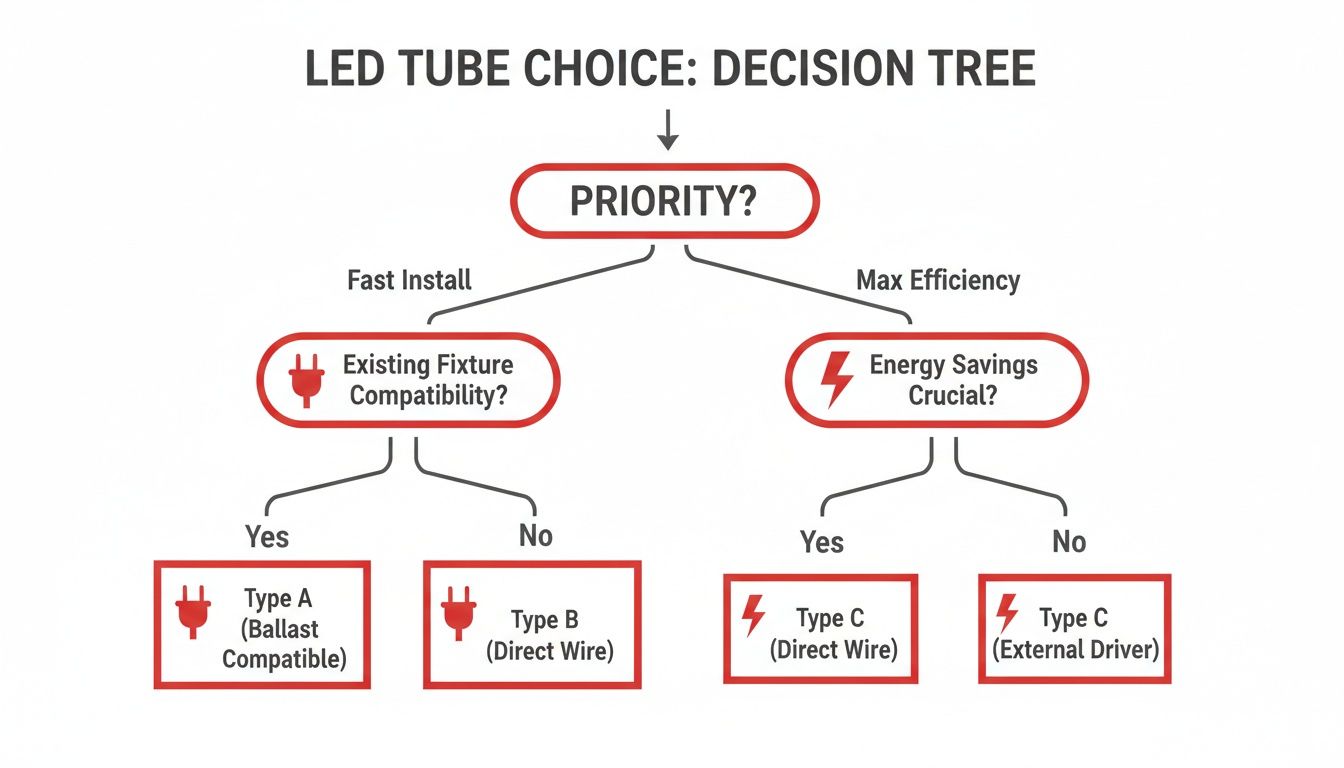
As you can see, if getting the job done fast is what matters most, Type A is your go-to. But if you're playing the long game for maximum energy savings, Type B is the clear winner.
Type B Ballast-Bypass Tubes
Also known as "Direct Wire" tubes, Type B is the most popular and solid long-term solution out there. The process involves an electrician removing—or "bypassing"—the old ballast and wiring the tube straight to the mains voltage. It takes a bit more effort upfront, but the payoff is huge.
By eliminating the ballast, you remove the single most common point of failure in a traditional lighting fixture. This drastically reduces future maintenance needs and maximises the overall energy efficiency of the system, as no power is wasted by the ballast itself.
This is exactly why Type B is the preferred method for new construction projects in Dubai and Abu Dhabi, as well as for major retrofits where long-term reliability is non-negotiable.
Type C External Driver Tubes
Think of Type C tubes as the high-performance option. They combine an LED tube with a separate, external driver. This setup gives you the best efficiency and the most control, since the driver is perfectly engineered for that specific tube. It’s also how you get advanced features like dimming and smart lighting controls.
- Installation Complexity: High. This is the most involved of the three, as it means wiring up both the tube and its separate driver.
- Upfront Cost: The highest initial investment, since you're buying both the tube and a dedicated driver.
- Long-Term Maintenance: It’s actually quite straightforward. If something fails down the line, you just replace the individual component—the driver or the tube—not the whole setup.
This route is tailor-made for high-spec projects where performance and features like 0-10V dimming are a must-have.
To help you see it all at a glance, we've put together a table comparing these three types across the key factors for any project here in the UAE.
Comparison of LED Tube Light Retrofit Types for UAE Projects
| Attribute | Type A (Plug-and-Play) | Type B (Ballast-Bypass / Direct Wire) | Type C (External Driver) |
|---|---|---|---|
| Installation Time | Fastest (Minutes) | Moderate (Requires Electrician) | Longest (Requires Electrician) |
| Upfront Cost | Lowest | Moderate | Highest |
| Energy Efficiency | Good | Excellent (Highest Savings) | Excellent |
| Maintenance | High (Ballast is a failure point) | Lowest (No ballast to fail) | Low (Components are separate) |
| Best Use Case | Quick, low-budget upgrades in existing facilities. | New builds, major retrofits, maximising ROI. | Projects requiring dimming or smart controls. |
For the vast majority of commercial and industrial jobs in the GCC, Type B tubes strike the perfect balance between cost, performance, and long-term reliability. Yes, the initial installation takes a bit more work, but the huge savings in energy and maintenance make it the smartest investment for most projects. If you need help figuring out the ideal led tube light for your specific needs, the team at GoSwitchgear is always ready to help.
Decoding Technical Specs for the GCC Climate
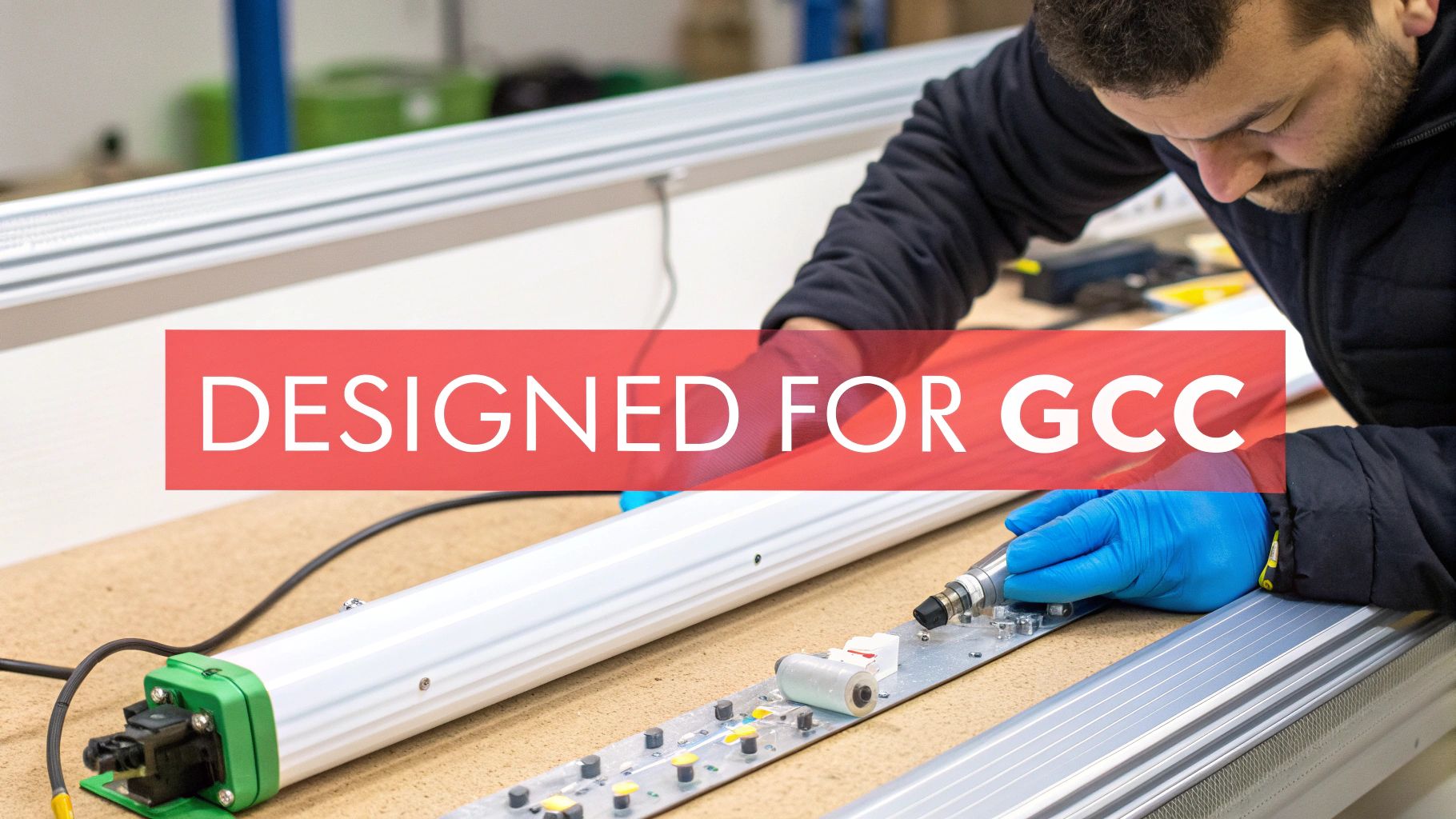
When you're specifying an led tube light for a project in the UAE or KSA, just looking at the wattage is a rookie mistake. It's a critical oversight that can lead to poor performance and early failure. For engineers and procurement teams, the real challenge is analyzing the specs through the lens of our demanding regional climate. Getting the metrics right is the key to delivering a quality lighting solution that lasts.
It all boils down to the quality of the light itself. The truth is, not all light is created equal, and the data sheet tells the real story. Three core metrics will define the visual environment your lights create.
Interpreting Light Quality and Efficiency
Whether you're lighting a bustling Dubai office or a massive warehouse in Riyadh, you need to nail these three specs to get the perfect result:
- Luminous Efficacy (Lumens per Watt): This is the true measure of efficiency. It's simple: how much visible light (lumens) are you getting for every watt of power you're paying for? A higher lumens-per-watt figure means better energy savings, plain and simple.
- Color Rendering Index (CRI): Think of CRI as a rating from 0 to 100 on how accurately a light source shows the true colors of things. For shops and offices where color accuracy is everything, a CRI of 80+ is the baseline. For high-end applications, you'll want to see a CRI of 90+.
- Color Temperature (CCT): Measured in Kelvin (K), this tells you if the light feels warm or cool. Lower values (2700K–3000K) give off a warm, cozy glow. Higher values (4000K–5000K) produce a crisp, cool light that's perfect for task-focused places like offices and workshops.
Looking at these numbers lets you move past basic power consumption and start designing a lighting environment that actually improves productivity, safety, and comfort.
Durability Standards for a Harsh Environment
Here in the GCC, durability isn't a nice-to-have; it's a must. The brutal combination of intense heat, humidity, and constant dust can wreck cheap electrical components UAE businesses rely on. For any led tube light to survive, two specs are absolutely non-negotiable.
First up is the IP (Ingress Protection) rating. This two-digit number tells you how well the fixture is sealed against solids (the first digit) and liquids (the second). In our dusty climate, you should be looking for a minimum of IP44. This ensures protection against objects bigger than 1mm and water splashes, keeping the sensitive internal parts safe from contamination.
But the single most critical feature for an LED tube light in the GCC is its thermal management system. A solid heat sink, usually made from high-grade aluminum, is vital. It pulls heat away from the LED diodes, preventing them from overheating, which leads to dimming and a drastically shorter lifespan.
Meeting Regional Compliance and Certifications
Beyond performance specs, you have to meet local rules. Products installed in the UAE need the Emirates Authority for Standardization and Metrology (ESMA) seal of approval. In Saudi Arabia, they must comply with the Saudi Standards, Metrology and Quality Organization (SASO). These certifications are your guarantee that the product has been tested and is safe for our market.
The push for certified, high-quality lighting is clear in regional market trends. Take Saudi Arabia's LED market, which is projected to skyrocket from SAR 7,202.42 million in 2025 to a staggering SAR 35,217.18 million by 2035. This isn't just happening by chance. It's fueled by government initiatives, like the plan to replace all streetlights with LEDs to slash electricity use by up to 75%. This top-down push has trickled into commercial and residential projects, where quality LED tube lights are being adopted to hit major energy-saving targets. You can dive deeper into this trend in this detailed research on the Saudi Arabia LED light market.
For expert help selecting an led tube light with the right specs for your project, our team at GoSwitchgear is ready to provide technical support. We'll make sure your solution is high-performing, long-lasting, and fully compliant.
Installation and Maintenance Best Practices
Getting your led tube light system installed correctly and keeping it in shape is the secret to making sure it performs well and lasts for years. This is a practical, hands-on guide for the electricians and technicians on the ground, laying out the essential steps for a safe, efficient retrofit that can handle the unique demands of the UAE and GCC region.
For nearly any professional job, a Type B (ballast-bypass) installation is the way to go. This approach involves completely removing the old, power-hungry fluorescent ballast—which is usually the first thing to fail anyway. This single step maximizes your energy savings and dramatically cuts down on future service calls. Pulling off a successful ballast-bypass means being precise and putting safety first.
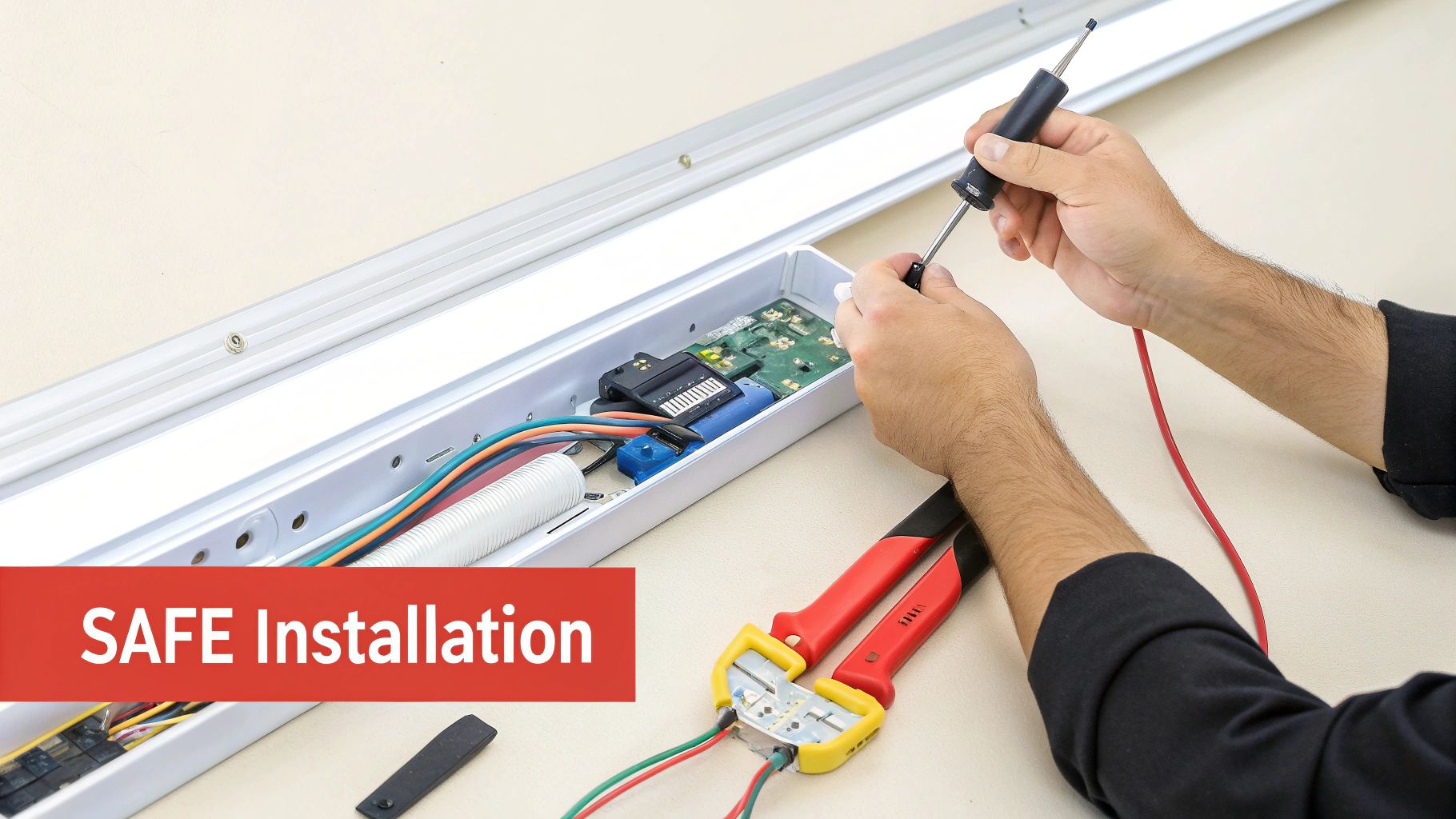
How to Install: A Safe Type B Installation
Sticking to a methodical process is non-negotiable for avoiding hazards and getting the best performance. The first step, always, is to kill the power to the circuit. Then, double-check with a multimeter to be absolutely sure the circuit is dead.
- Disconnect the Ballast: Find the wires connecting the old fluorescent ballast to the mains power and the lamp holders (often called tombstones). Snip them.
- Remove the Ballast: Take the old ballast completely out of the fixture. This gets rid of a future headache and makes the fixture a little lighter.
- Rewire the Tombstones: This is where you need to pay close attention. For single-ended power tubes, you'll wire the live and neutral wires from the main power supply directly to one tombstone. The tombstone on the other end is left unwired; its only job is to hold the tube. For double-ended tubes, you'll wire the live wire to one tombstone and the neutral to the one on the opposite end.
- Install the LED Tube: Carefully slide the new led tube light into the rewired tombstones. If you're using a single-ended tube, make sure the powered end of the tube clicks into the tombstone you just rewired.
- Label the Fixture: This is absolutely critical. Every fixture you modify needs the warning label that comes with the tube. This label clearly states the fixture has been converted for direct-wire LEDs. It’s a crucial safety measure to stop someone from trying to install an old fluorescent tube later, which would create a serious electrical hazard.
Following this process doesn't just make for a safe installation; it future-proofs the fixture. A properly converted and clearly labeled fixture is the mark of a true professional who cares about long-term safety and performance.
Common Installation Mistakes to Avoid
Even experienced pros can slip up. Watch out for these common mistakes that can shorten the life of an led tube light or create a safety issue.
- Forgetting to Label: This is the most dangerous oversight. A modified fixture without a label is an accident waiting to happen for the next person who works on it.
- Incorrect Wiring: Mixing up live and neutral wires or having loose connections can cause the tube to flicker, fail early, or not turn on at all.
- Using the Wrong Tombstones: For single-ended tubes, you must use non-shunted tombstones on the powered side. This ensures the live and neutral connections are kept separate and safe.
Maintenance Schedule for the GCC Climate
Here in the UAE and KSA, dust is a fact of life. A simple maintenance routine is all it takes to keep your lighting system shining bright.
- Quarterly Diffuser Cleaning: Dust buildup on the light covers (diffusers) can block up to 15% of the light. A quick wipe-down every few months makes sure you're getting all the brightness you paid for.
- Annual Connection Checks: Once a year, during a scheduled shutdown, take a look at the wire connections inside the fixture. Check for any signs of heat damage or corrosion, which can be a bigger issue in humid coastal areas.
If you ever run into problems like flickering, it's almost always one of two things: a bad connection from the installation or an unstable power supply. When you start with a high-quality led tube light from a reliable supplier like GoSwitchgear, you’ve already ruled out a major variable, making any troubleshooting much faster and easier.
Calculating the Real ROI of Your LED Upgrade
For any project manager or procurement team, switching to an LED tube light system isn't just a technical swap—it's a smart financial move. When you look past the initial price tag and calculate the true Return on Investment (ROI) and Total Cost of Ownership (TCO), the business case becomes undeniable. The benefits pile up far beyond just a lower monthly DEWA bill.
A proper ROI analysis doesn't just stop at energy savings. It has to include the dramatic drop in maintenance and replacement costs. This is where the numbers really start to shine.
Beyond Energy Savings: The Maintenance Multiplier
The biggest hidden drain of fluorescent lighting is the constant, frustrating cycle of maintenance. Old-school tubes give you maybe 10,000 hours before they flicker out, which means you're constantly dealing with replacements, paying for labor, and interrupting operations.
Now, compare that to a quality LED tube light, which can easily run for 50,000 hours or more. That's a five-fold leap in operational life. For years, maintenance costs practically vanish. In a large facility, that translates into thousands of saved man-hours and zero budget spent on replacement lamps and ballasts.
When calculating TCO, the initial investment in LED tubes is offset multiple times over by the near-elimination of maintenance labor and replacement part costs. This creates a rapid payback period, often in less than 24 months.
Cost-Benefit Comparison: Jebel Ali Facility
Let's run the numbers on a real-world example: a commercial warehouse in Jebel Ali that operates 12 hours a day, 6 days a week.
- Before: The facility ran 500 fluorescent tubes (36W each, plus a 9W ballast), consuming a total of 22,500W.
- After: They switched to 500 LED tubes (18W each), dropping consumption to just 9,000W.
- Energy Savings: The upgrade immediately delivered a 60% reduction in lighting energy use. With Dubai's electricity rates, that alone adds up to massive annual savings.
- Maintenance Savings: Let's say one fluorescent tube fails every year. That's 500 tube replacements, plus a 10% ballast failure rate. At local labor rates, the annual savings from avoiding this work are substantial.
Combine the energy and maintenance savings, and the payback period for the entire project often lands under 18 months. After that, it's pure profit for years.
This isn't just a one-off story; it's a trend across the entire region. The Middle East and Africa (MEA) LED market is on track to grow from USD 6.6 billion in 2024 to over USD 10.3 billion by 2030. Just look at Shoprite Holdings Ltd., which saved an incredible USD 17.5 million in a single year by installing over a million LED bulbs—including countless tube lights—across its properties. These figures show exactly how smart companies are using LED tech to fight back against high energy prices. You can dig into more data on this market shift in this comprehensive regional analysis.
Quantifying the Intangible Benefits
Finally, the ROI isn't just about dollars and cents. Better lighting has a direct, positive impact on how your business runs.
- Improved Safety: Bright, even, flicker-free light is a game-changer for safety. It reduces accidents in warehouses and on factory floors.
- Higher Productivity: In an office, high-quality light with a good CRI reduces eye strain. This can genuinely improve employee focus and output.
- Sustainability Credentials: A successful LED retrofit is a powerful, visible accomplishment. It boosts a company's corporate sustainability profile—a huge plus in the UAE's green economy.
Partner with GoSwitchgear for Your Lighting Needs
Choosing the right LED tube light isn't just a simple purchase; it's a strategic decision that directly impacts your budget, your building's operational efficiency, and even its safety. Hopefully, this guide has given you the confidence and the knowledge to understand the technology, pick the correct retrofit type, and specify products that meet the demanding standards here in the UAE and wider GCC.
The advantages are crystal clear. You're looking at significant energy savings, a massive drop in maintenance headaches, and the peace of mind that comes with full compliance with local regulations. But to get there, your next project needs a supplier who truly understands the regional landscape.
By choosing a knowledgeable local partner, you ensure access to certified products and expert advice, preventing costly compliance issues and guaranteeing long-term performance in the challenging GCC climate.
The GoSwitchgear team, right here in Dubai and Abu Dhabi, is ready to be that expert partner. We bring a complete portfolio of certified, high-performance LED lighting solutions designed for the unique challenges of projects in this region.
Contact us today for project support in Dubai, and let's make sure your lighting upgrade delivers maximum value and rock-solid reliability from day one.
Frequently Asked Questions About LED Tube Lights
To help you nail down your final decisions, here are some quick answers to the questions we hear most often from our engineering and procurement customers about led tube light retrofits here in the UAE and GCC.
Can I Use a Type A LED Tube with Any Fluorescent Ballast?
Not always. It’s a common misconception. While Type A tubes are designed to work with ballasts, they really hit their stride with modern electronic ballasts.
If you try to pair them with older, clunky magnetic ballasts, you're asking for trouble—think flickering, a shorter lifespan for your new tube, or it might not even turn on. Always check the LED tube’s compatibility sheet or just give your supplier a call to make sure your existing ballast is on the approved list before you buy.
Is a Ballast-Bypass Installation Dangerous?
Any time you're working with electricity, there are risks involved. However, a Type B ballast-bypass is a totally standard and safe procedure, as long as it's done by a qualified electrician. The process is straightforward: they’ll de-energize the fixture, take out the old ballast, and then wire the lamp holders directly to the mains voltage.
The single most critical safety step here is to apply the warning label that comes with the tube. This little sticker tells any future maintenance crew that the fixture has been modified for direct-wire use. It’s a crucial step to prevent someone from accidentally installing an old fluorescent tube, which would create a dangerous short circuit.
Why Is a High IP Rating Important in the GCC?
Living and working in the UAE and across the GCC, we all know the climate is no joke. It's a constant battle against airborne dust and high humidity. An led tube light with a low IP rating is just not built for this environment.
Particles and moisture will inevitably get inside, leading to corrosion, short circuits, and a much shorter life for the light. This is why specifying a higher IP rating, like IP44 or more, is non-negotiable. It ensures all the sensitive internal electronics are sealed and protected, guaranteeing you get the long, reliable performance you paid for.
Do LED Tube Lights Work with Dimmer Switches?
Out of the box, your standard led tube light is not dimmable. If you need to adjust the brightness for your project, you have to be intentional about it.
You'll need to purchase a specific dimmable LED tube and pair it with a compatible LED dimmer switch. Trying to use a regular, non-dimmable tube with a dimmer is a recipe for failure—it won't work, and you could easily damage the tube's internal driver.
For expert guidance on selecting the right certified LED lighting solutions for your projects in Dubai and Abu Dhabi, trust GoSwitchgear. Explore our extensive range of electrical components at https://goswitchgear.ae.
Share this post

Related
Posts
A Guide to Choosing AC to DC Converters for UAE & GCC Electrical Systems
Master AC to DC converters with this comprehensive guide for engineers in the UAE & GCC. Learn selection, installation, and...
A Guide to Drill Machine Prices in the UAE for Technical Professionals
Find the best drill machine price in UAE. Our 2026 guide helps contractors and engineers choose the right corded, cordless,...
A Professional’s Guide to Choosing AGM VRLA Batteries in the UAE Climate
Discover why AGM VRLA batteries are the superior power solution for UPS, solar, and industrial systems in the UAE. Get...
How to Choose the Right Lithium Ion Battery Charger for UAE & GCC Projects
Discover how to select the right lithium ion battery charger for UAE projects. This guide covers specs, BMS integration, and...
.jpg)